
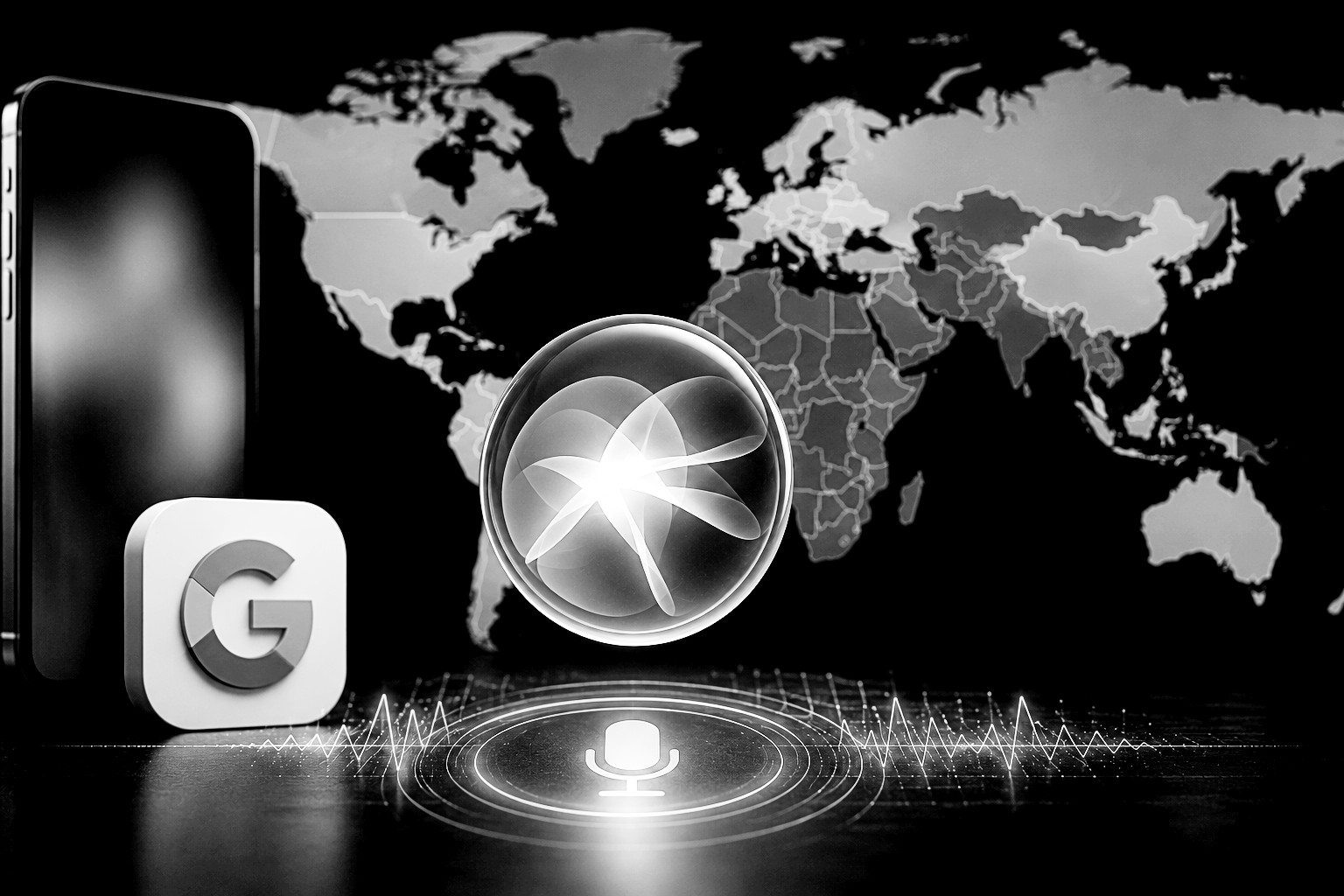
Apple has officially begun rolling out its long-awaited AI-powered Siri upgrade, integrating advanced artificial intelligence capabilities and deeper connections with Google services. While the launch represents one of the most significant developments in Apple’s software ecosystem in years, millions of users around the world remain unable to access the new features due to regional restrictions, regulatory hurdles, and language limitations.
A new generation of Siri
The latest version of Siri is designed to move beyond simple voice commands and become a more capable digital assistant. Powered by large language models and enhanced contextual understanding, the upgraded system can perform more complex tasks, engage in natural conversations, and assist users across a wider range of applications.
Apple’s strategy combines its own artificial intelligence technology with selected third-party integrations, including access to Google’s extensive information ecosystem, allowing Siri to deliver more accurate and useful responses in situations where broader web knowledge is required.

The launch marks Apple’s most ambitious attempt yet to compete with rapidly evolving AI assistants from major technology rivals.
Access remains uneven
Despite the excitement surrounding the release, access to the new AI features remains limited in many regions. Regulatory requirements, privacy frameworks, infrastructure readiness, and language support have created a fragmented rollout.
As a result, users in several countries are unable to access the full suite of AI-powered functions available in key markets such as the United States and selected developed economies.
Industry observers note that the uneven rollout highlights a growing challenge facing global AI adoption: technological innovation is often advancing faster than regulatory and operational frameworks.
Competition in the AI race intensifies
The arrival of AI-enhanced Siri comes as technology companies race to integrate generative artificial intelligence into everyday products. Smartphones are increasingly becoming the primary battleground for AI deployment, with companies competing to offer smarter assistants, productivity tools, and personalised user experiences.
For Apple, the enhanced Siri represents a crucial response to growing competition from AI-focused services that have gained significant market attention over the past two years.
Analysts believe the success of the rollout could play a major role in shaping future consumer expectations for mobile devices.
Privacy remains central
Apple continues to emphasise privacy as a core element of its AI strategy. The company says many AI functions are processed directly on users’ devices whenever possible, while more complex requests can be handled through secure cloud infrastructure designed to minimise data exposure.
This approach reflects Apple’s longstanding effort to differentiate itself from competitors by positioning privacy and security as central features rather than afterthoughts.
The beginning of a broader transformation
The launch of AI-powered Siri is widely viewed as the beginning rather than the end of Apple’s artificial intelligence strategy. Future updates are expected to expand capabilities, add language support, and increase availability across more regions.
For now, however, the rollout illustrates both the enormous potential of consumer AI and the reality that access to the latest technology remains uneven across the world.
Newshub Editorial in North America – 11 June 2026

If you have an account with ChatGPT you get deeper explanations,
background and context related to what you are reading.
Open an account:
Open an account
Recent Comments