
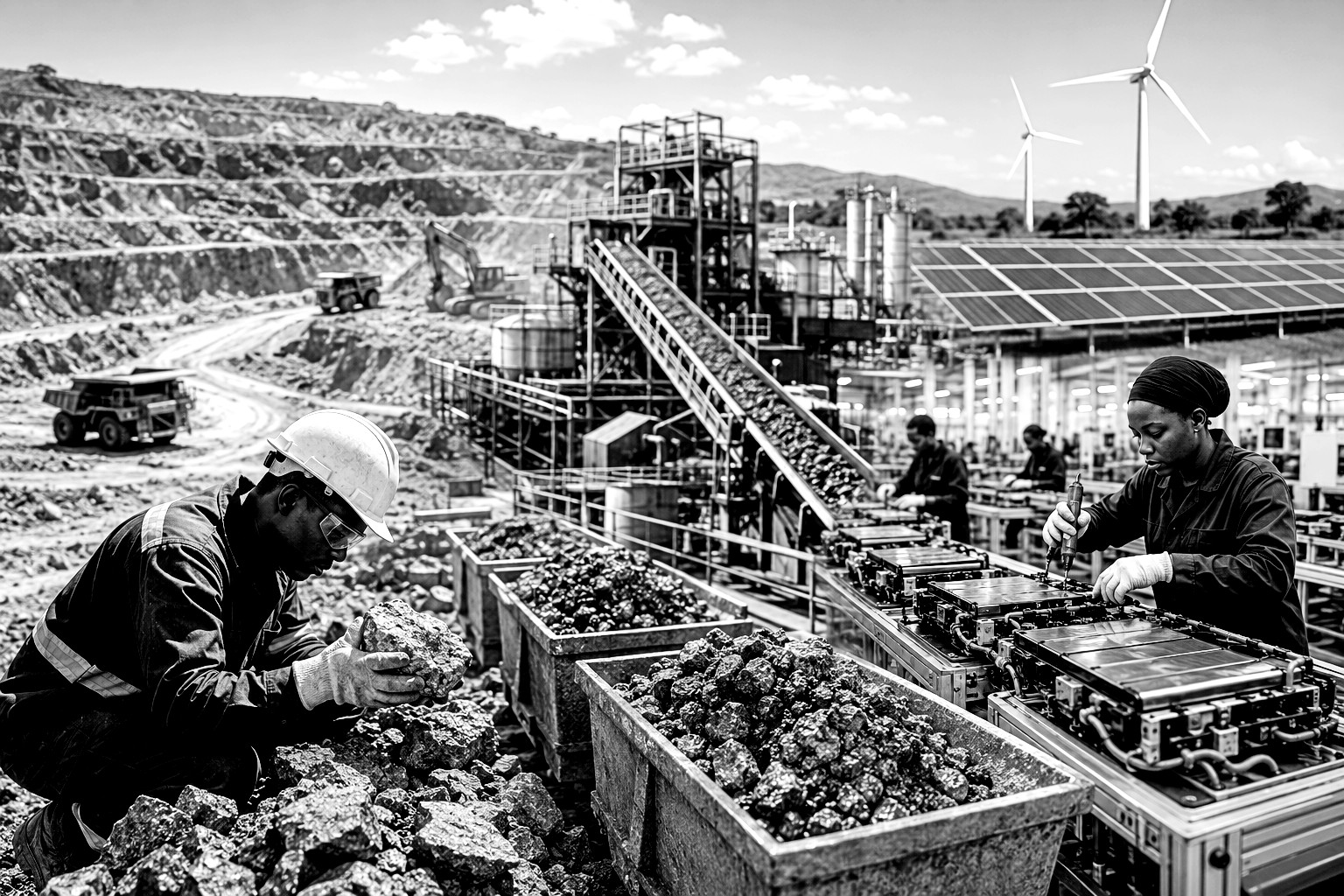
Africa possesses some of the world’s largest reserves of critical minerals essential for the global energy transition, yet experts increasingly warn that refining raw materials alone will not guarantee long-term economic benefits. As global competition intensifies, many processing facilities are finding it difficult to remain profitable in an increasingly crowded market.
The continent is rich in cobalt, lithium, manganese, graphite, rare earth elements, and other minerals vital for electric vehicles, batteries, renewable energy systems, and advanced technologies. Governments across Africa have sought to move beyond simple extraction by encouraging domestic refining and processing industries.
While this strategy represents an important step towards greater value addition, industry analysts argue that refining by itself is no longer sufficient to secure sustainable economic growth.

Global competition is intensifying
New refining capacity has expanded rapidly across several regions, particularly in Asia, where established industrial ecosystems and economies of scale provide significant competitive advantages. As additional facilities enter the market, profit margins have come under pressure.
In some cases, processing plants are struggling to remain commercially viable due to fluctuating commodity prices, oversupply concerns, and increasing international competition. This has highlighted the risks of relying solely on refining as a development strategy.
Moving up the value chain
Experts increasingly argue that Africa’s greatest opportunity lies in developing complete industrial value chains rather than focusing exclusively on mineral processing.
This could include manufacturing battery components, electric vehicle parts, energy storage systems, and other higher-value products that utilise locally sourced minerals. Such industries generate more employment, create specialised skills, and retain a larger share of economic value within national economies.
Several African governments are already exploring policies aimed at attracting downstream manufacturing investments alongside mining and refining projects.
Infrastructure remains a key challenge
Achieving these ambitions will require significant improvements in infrastructure, including reliable electricity supplies, transportation networks, industrial zones, and workforce development programmes.
Access to financing also remains a major obstacle. Many projects require substantial capital investment and long development timelines, making them vulnerable to global market volatility and higher borrowing costs.
Nevertheless, international demand for critical minerals is expected to remain strong as countries accelerate efforts to decarbonise their economies and reduce dependence on fossil fuels.
A strategic opportunity for the continent
Africa’s critical mineral wealth presents a rare opportunity to participate more fully in the industries shaping the twenty-first century. However, policymakers increasingly recognise that extracting and refining resources alone may not deliver the transformative economic benefits many countries seek.
The next phase of development will likely depend on the continent’s ability to build integrated industrial ecosystems that capture greater value from its natural resources and position Africa as a key player in the global clean-energy economy.
Newshub Editorial in Africa – 9 June 2026

If you have an account with ChatGPT you get deeper explanations,
background and context related to what you are reading.
Open an account:
Open an account
Recent Comments