
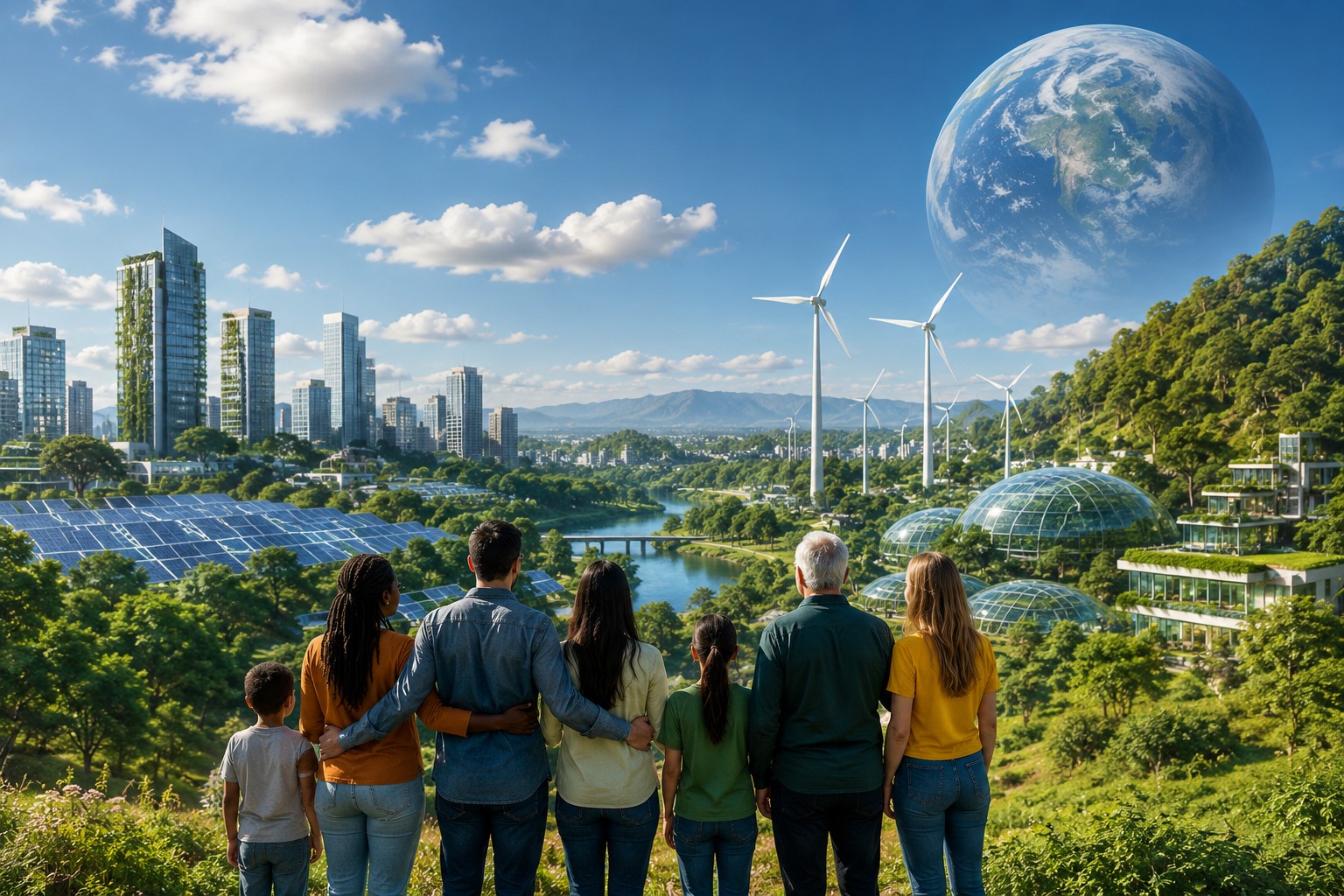
A major international report by leading academics has presented an ambitious vision for creating a more equal, sustainable and habitable world, arguing that humanity still has the capacity to avoid climate catastrophe, reduce political instability and ease growing economic tensions. The report offers a comprehensive alternative to the increasingly interconnected crises that have come to define the global landscape.
A vision beyond crisis management
The report challenges the notion that environmental degradation, social inequality and geopolitical conflict are inevitable consequences of modern development. Instead, researchers argue that coordinated action across governments, businesses and civil society can deliver a future that is both environmentally sustainable and economically inclusive.
According to the authors, addressing climate change requires moving beyond short-term crisis management and embracing long-term structural reforms that place human wellbeing and ecological stability at the centre of policy decisions.

Climate action linked to social justice
One of the report’s central themes is the connection between environmental sustainability and social equity. The authors argue that climate policies are more likely to succeed when they also improve living standards, reduce poverty and expand economic opportunities.
The report highlights investments in renewable energy, public transport, education, healthcare and resilient infrastructure as examples of policies capable of delivering both environmental and social benefits. Such measures, researchers contend, can strengthen public support for the transition to a low-carbon economy.
Economic systems under scrutiny
Academics involved in the study also call for a reassessment of economic priorities. They argue that traditional measures of success, focused primarily on economic growth, often fail to capture broader indicators of societal wellbeing and environmental health.
The report advocates policies that promote sustainable production, responsible consumption and greater resilience against economic shocks. It also emphasises the importance of reducing extreme wealth disparities and ensuring that the benefits of technological progress are more widely shared.
Democracy and global cooperation
Political polarisation and rising extremism are identified as significant risks to achieving long-term sustainability goals. The authors stress the importance of strengthening democratic institutions, improving public trust and fostering international cooperation on shared challenges.
They argue that climate change, biodiversity loss, migration pressures and economic instability cannot be solved by individual nations acting alone. Instead, coordinated global responses will be required to address increasingly interconnected risks.
Reasons for cautious optimism
Despite the scale of the challenges, the report adopts a notably optimistic tone. Researchers point to rapid advances in renewable energy technologies, growing public awareness of environmental issues and expanding international collaboration as evidence that meaningful progress remains possible.
The authors conclude that while the path ahead will require difficult political and economic choices, a future that is both prosperous and environmentally sustainable remains within reach. Their message is clear: the choices made during the coming decade will play a decisive role in determining whether the world moves towards greater instability or a more equitable and habitable future.
Newshub Editorial in Europe – 5 June 2026

If you have an account with ChatGPT you get deeper explanations,
background and context related to what you are reading.
Open an account:
Open an account
Recent Comments