
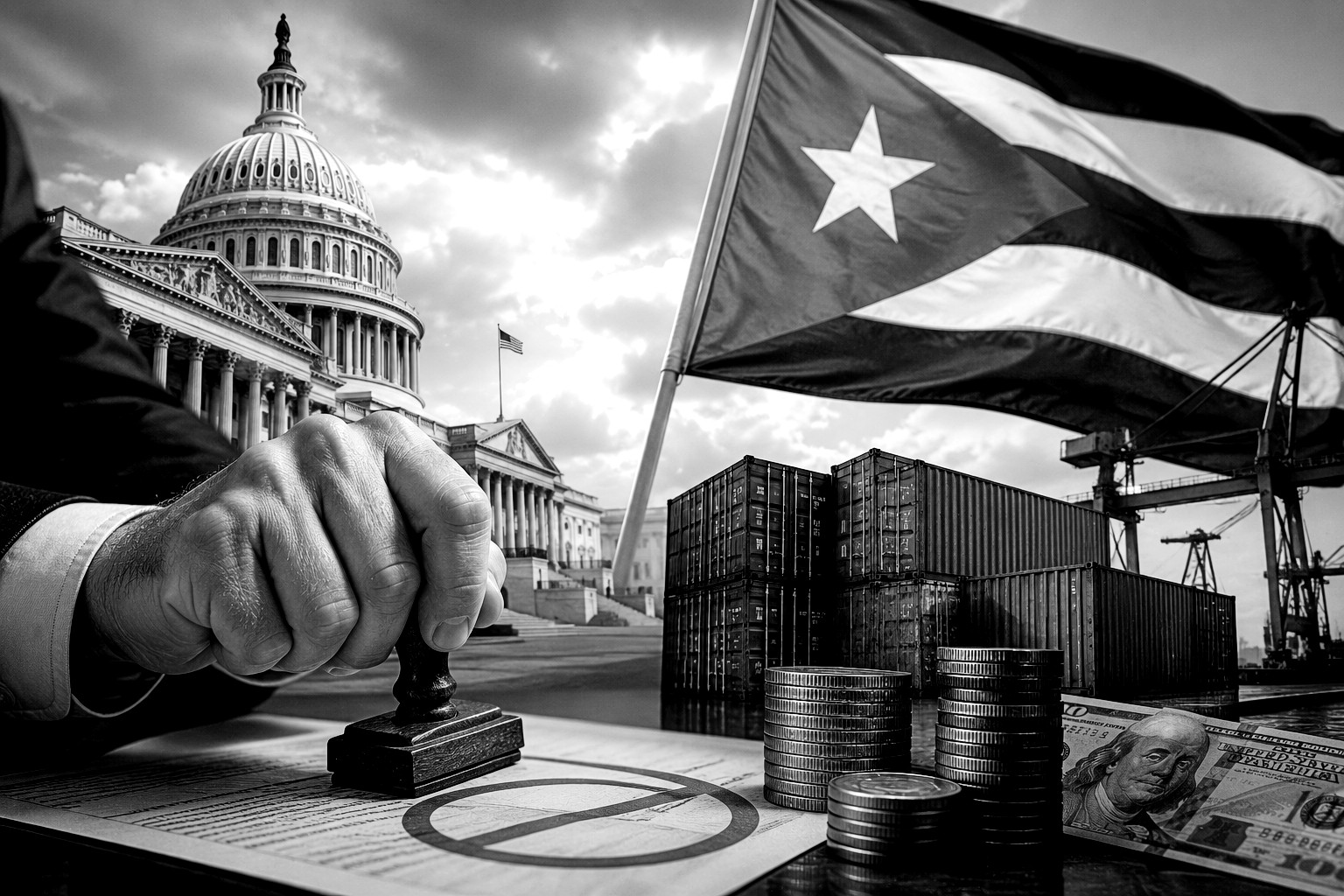
The United States has announced a further round of sanctions targeting Cuban regime elites as the Trump administration intensifies pressure on Havana’s communist leadership. US officials stated that the measures are intended to restrict access to illicit assets, weaken the regime’s financial networks and support the democratic aspirations of the Cuban people.
New sanctions signal tougher stance
The latest actions, announced on 18 May, form part of a broader strategy aimed at increasing economic and political pressure on Cuba’s ruling structures, including individuals connected to the military, intelligence services and state-controlled enterprises.
According to US officials, the sanctions are designed to limit the Cuban regime’s ability to access international financial systems and suppress internal opposition movements.

The administration also indicated that additional measures could follow in the coming days and weeks, signalling a more aggressive posture toward Havana.
Focus on military-linked structures
Washington has long argued that large parts of Cuba’s economy remain controlled by military-linked organisations and regime-connected elites. Tourism, logistics, import infrastructure and foreign-currency operations are areas that US policymakers have repeatedly identified as key sources of regime financing.
The new sanctions are expected to increase restrictions on transactions involving entities or individuals tied to Cuba’s state security apparatus and military networks.
Political tensions remain high
Relations between Washington and Havana have remained strained for years, with sanctions policy becoming one of the central points of confrontation. The United States continues to accuse the Cuban government of political repression, restrictions on civil liberties and detentions of dissidents.
Cuban authorities, meanwhile, have consistently denounced US sanctions as economic warfare designed to destabilise the country and worsen living conditions for ordinary citizens.
Economic pressure on an already fragile system
The Cuban economy has struggled under inflation, shortages, declining tourism revenues and infrastructure difficulties. Power outages, food scarcity and fuel constraints have increased social frustration in recent years, while emigration from the island has accelerated significantly.
Analysts note that further US restrictions could deepen financial isolation for Cuba at a time when the government is already facing severe economic pressure.
Regional implications closely watched
The renewed sanctions campaign is also being monitored across Latin America, where governments remain divided on US policy toward Cuba. Some regional leaders support stronger pressure on Havana over human rights concerns, while others argue that sanctions contribute to economic suffering without producing political reform.
For financial markets and regional diplomacy alike, the latest measures reinforce expectations that US-Cuba relations may enter another prolonged period of confrontation and economic restriction.
Newshub Editorial in North America – 19 May 2026

If you have an account with ChatGPT you get deeper explanations,
background and context related to what you are reading.
Open an account:
Open an account
Recent Comments