
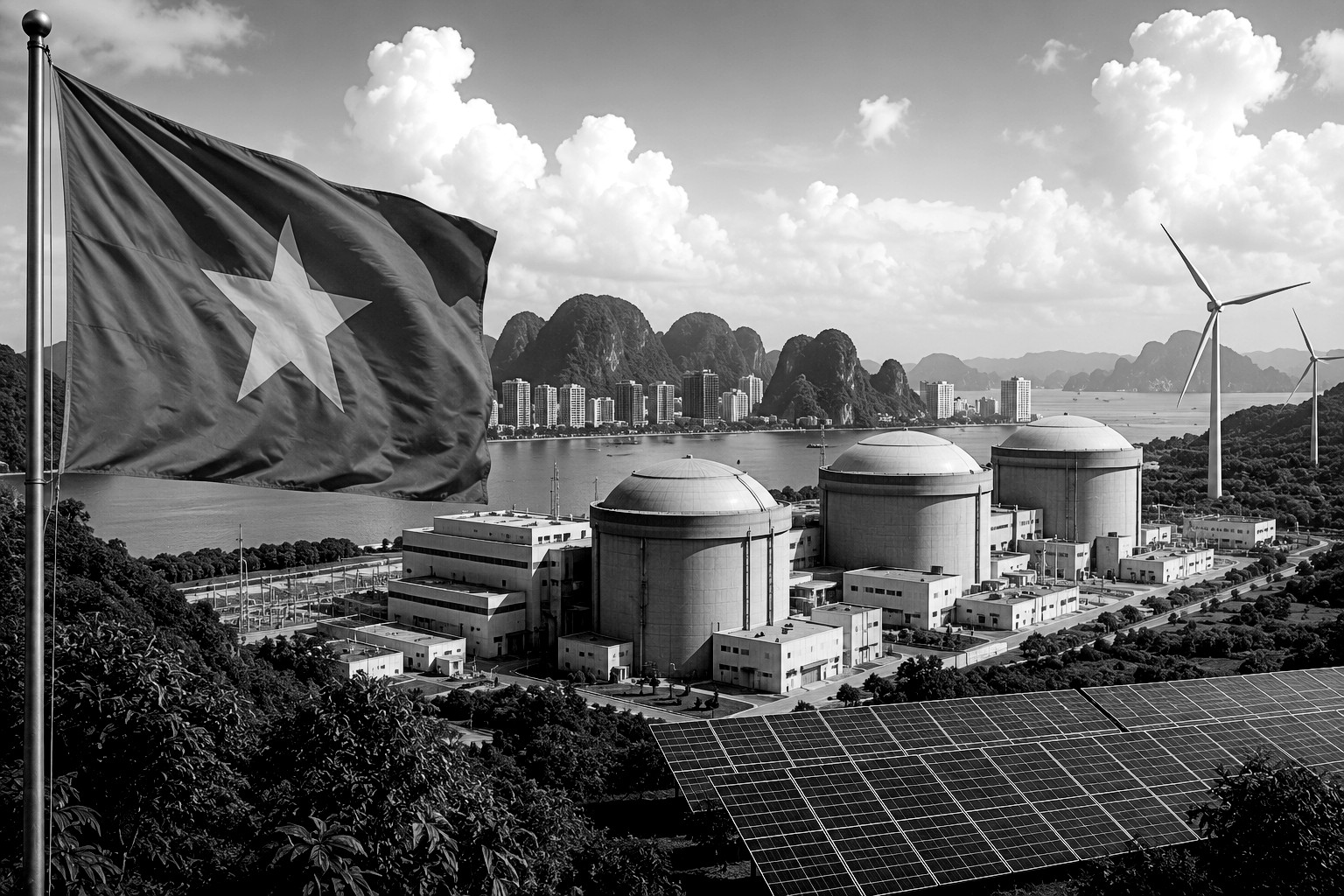
Vietnam is increasingly exploring long-term energy solutions as the country seeks stable electricity supplies capable of supporting rapid industrialisation, urban expansion and rising domestic consumption. Interest in Small Modular Reactors (SMRs) has grown significantly as policymakers evaluate low-carbon technologies that could strengthen national energy security while supporting economic growth.
Energy demand rising rapidly
Vietnam’s economy has expanded quickly over the past decade, transforming the country into one of Southeast Asia’s major manufacturing hubs. Foreign investment, industrial production and urban development have sharply increased electricity demand across the country.
Authorities are now facing growing pressure to ensure stable long-term energy supplies capable of supporting factories, infrastructure projects and digital economic expansion without excessive dependence on imported fossil fuels.


SMRs attracting attention
Small Modular Reactors have emerged as one of the technologies increasingly discussed within Vietnam’s long-term energy planning. Unlike traditional large-scale nuclear plants, SMRs are designed to be smaller, more flexible and potentially faster to deploy.
Supporters argue that SMRs could provide reliable baseload electricity while helping Vietnam reduce carbon emissions and diversify its energy mix. The technology is also viewed as potentially suitable for regions where large conventional reactors may be less practical.
Balancing growth and climate goals
Vietnam has committed to reducing emissions and expanding cleaner energy sources, but balancing environmental targets with economic growth remains challenging. Coal still plays a major role in the country’s electricity generation, even as renewable energy investments in solar and wind continue to grow.
Energy planners are increasingly focused on ensuring grid stability as renewable capacity expands. Nuclear technologies such as SMRs are being evaluated partly because they could provide continuous electricity generation regardless of weather conditions.
Industrial competitiveness at stake
Stable electricity supplies are becoming strategically important for Vietnam’s manufacturing ambitions. Global companies relocating supply chains into Southeast Asia increasingly require dependable power infrastructure for electronics, semiconductors and industrial production.
Energy shortages or grid instability could risk undermining Vietnam’s competitiveness at a time when the country is positioning itself as an alternative regional manufacturing centre.
Long-term decisions ahead
While SMRs remain an emerging technology globally, Vietnam’s growing interest reflects broader international discussions surrounding energy security, decarbonisation and industrial resilience. Analysts caution that regulatory frameworks, financing structures and technical expertise would all need substantial development before deployment becomes realistic.
Nevertheless, the debate itself signals how Vietnam is increasingly thinking beyond short-term energy supply issues toward broader strategic infrastructure planning tied to long-term national growth.
Newshub Editorial in Asia – 19 May 2026

If you have an account with ChatGPT you get deeper explanations,
background and context related to what you are reading.
Open an account:
Open an accountVietnam is increasingly exploring long-term energy solutions as the country seeks stable electricity supplies capable of supporting rapid industrialisation, urban expansion and rising domestic consumption. Interest in Small Modular Reactors (SMRs) has grown significantly as policymakers evaluate low-carbon technologies that could strengthen national energy security while supporting economic growth.
Recent Comments