
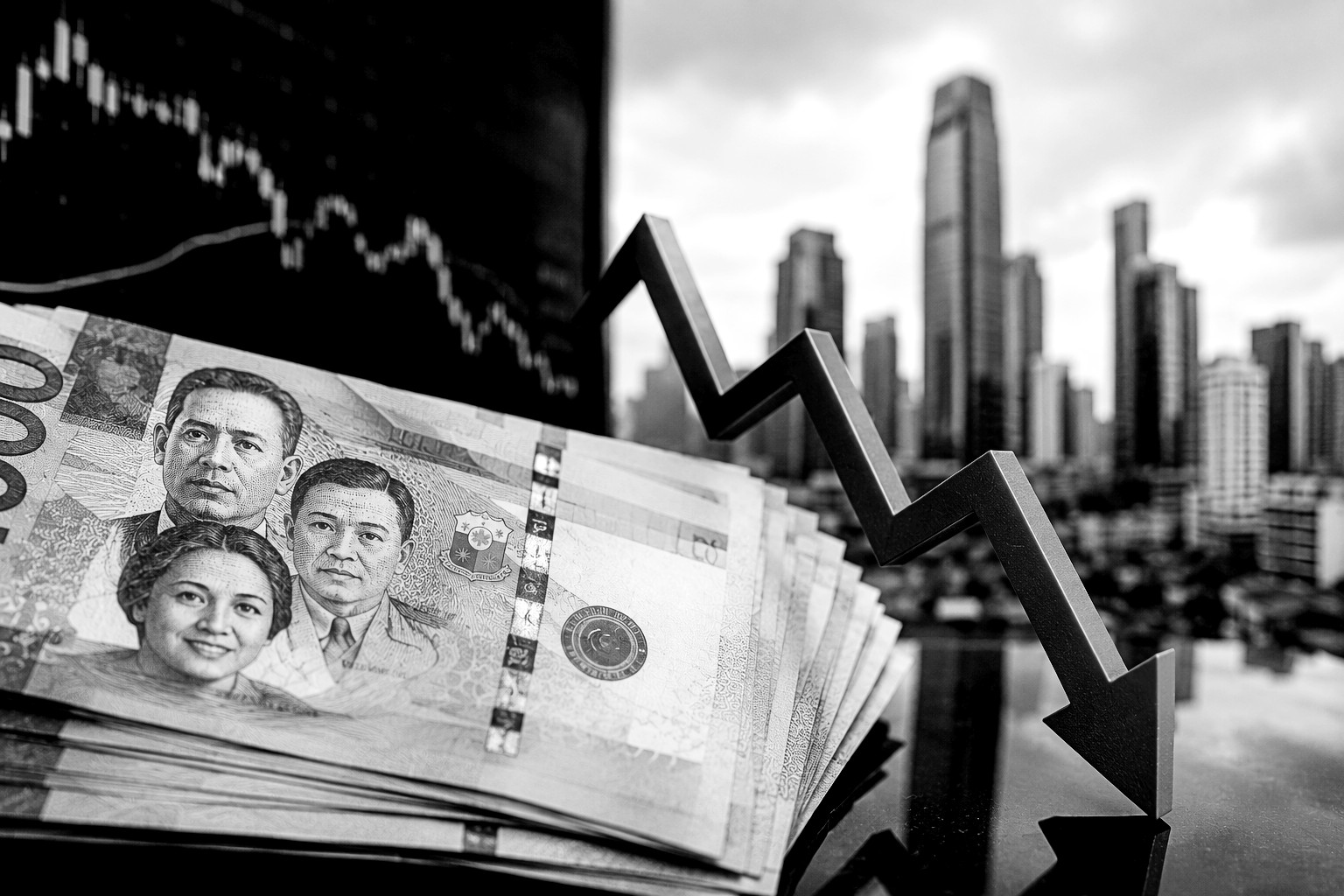
The Philippine peso extended its decline on Tuesday, weakening to a new record low of 61.75 against the US dollar as investors reacted to growing expectations that the US Federal Reserve may raise interest rates further to combat inflation. Analysts warned that the Philippine currency could face additional pressure in the coming months if global monetary conditions tighten further.
Dollar strength dominates markets
The peso’s latest decline reflects broader global demand for the US dollar, which continues to strengthen amid expectations of prolonged higher interest rates in the United States. Investors have increasingly shifted capital toward dollar-denominated assets, placing pressure on emerging-market currencies across Asia and Latin America.
For the Philippines, the weaker peso raises concerns over imported inflation, particularly because the country remains heavily dependent on imported fuel, food products and industrial goods.

Import costs likely to rise
A weaker currency makes imports more expensive, potentially increasing costs for businesses and consumers alike. Fuel prices, transportation expenses and imported consumer goods may all face upward pressure if the peso continues weakening against the dollar.
The development comes at a sensitive time for the Philippine economy, where authorities have been attempting to balance economic growth with inflation control following several years of global volatility.
Central bank under scrutiny
Financial markets are now closely watching the Bangko Sentral ng Pilipinas for potential policy responses. Higher domestic interest rates could help support the currency, but they may also slow borrowing activity and economic expansion.
Analysts noted that the central bank faces a difficult balancing act between defending the peso and maintaining momentum in domestic consumption and investment.
Remittances provide partial support
One stabilising factor for the Philippines remains overseas remittances. Millions of Filipinos working abroad continue sending money home, generating a major source of foreign currency inflows for the economy.
However, economists caution that remittance strength alone may not fully offset broader global financial pressures if US yields continue rising and investor appetite for emerging-market assets weakens further.
Regional pressure across Southeast Asia
The peso’s decline also reflects wider pressure across Southeast Asian currencies as global investors reassess risk exposure. Regional economies with trade deficits or high import dependence remain particularly sensitive to sustained dollar appreciation and volatile commodity markets.
Despite the weakening currency, Philippine economic fundamentals remain comparatively resilient by regional standards, supported by demographics, domestic consumption and continued infrastructure investment. Nevertheless, markets are increasingly cautious as the global interest-rate environment becomes more uncertain.
Newshub Editorial in Asia – 19 May 2026

If you have an account with ChatGPT you get deeper explanations,
background and context related to what you are reading.
Open an account:
Open an account
Recent Comments