
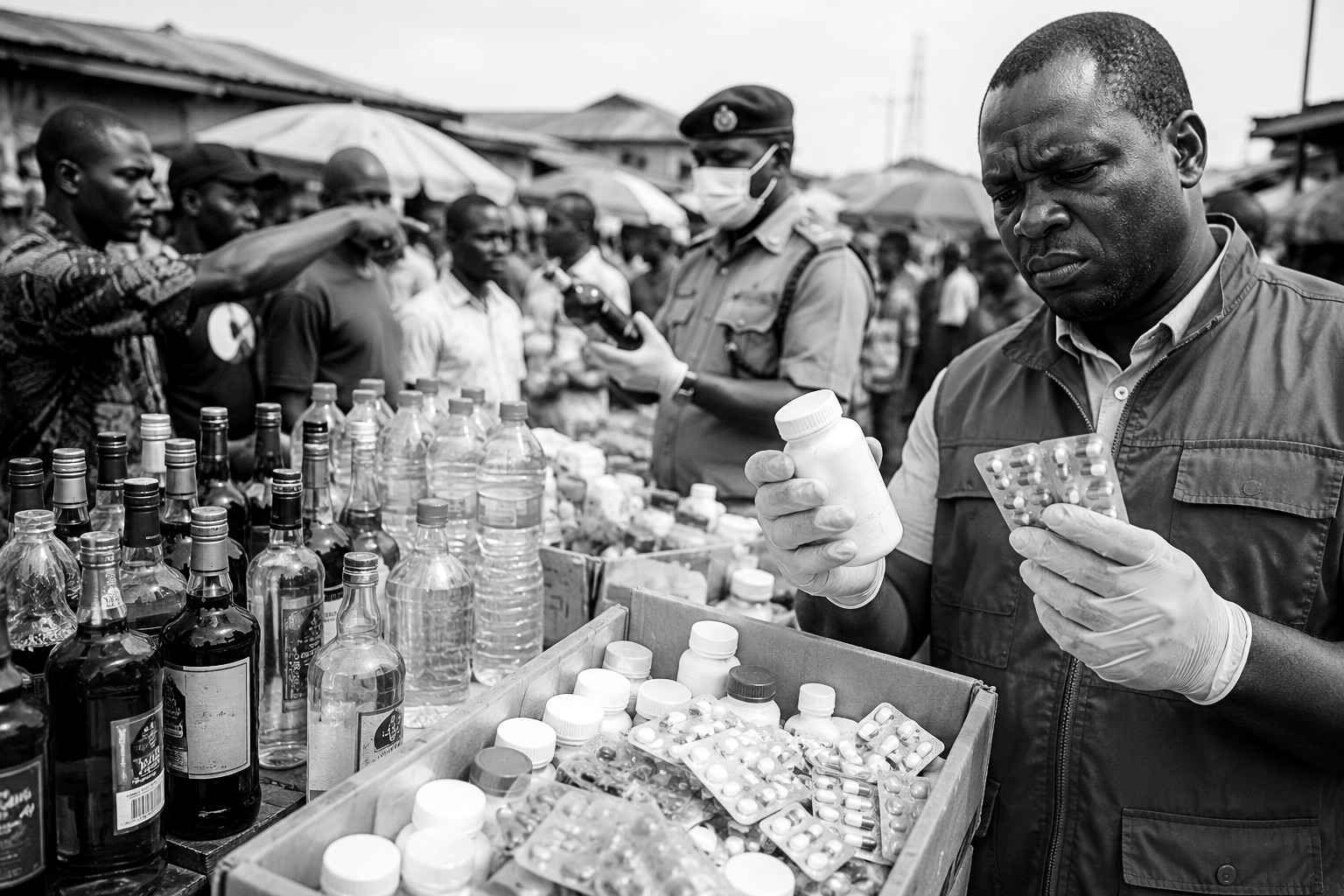
Nigeria is facing an expanding counterfeit goods crisis that stretches far beyond fake luxury products. Counterfeit medicines, fraudulent alcoholic beverages, imitation cosmetics and even fake bottled water are increasingly circulating through markets and informal supply chains, creating growing public health and economic risks across Africa’s most populous nation.
Fake pharmaceuticals remain the gravest threat
Among the most dangerous counterfeit products are fake and substandard medicines. Health officials, pharmacists and consumer groups have repeatedly warned that falsified antibiotics, malaria treatments and painkillers continue to reach both urban and rural consumers through informal distribution networks.
In some cases, counterfeit drugs contain incorrect ingredients or no active medical compounds at all. Others may contain dangerous substances that can worsen illnesses or trigger severe health complications. The problem is particularly acute in regions where formal healthcare access remains limited and price-sensitive consumers often rely on open-air markets.

Counterfeit alcohol and food products expanding
Authorities have also intensified warnings over fake alcoholic beverages, some of which have reportedly caused poisoning incidents linked to methanol contamination. Counterfeit spirits packaged in imitation bottles resembling international brands have become increasingly common in parts of Lagos and other major commercial centres.
Food and beverage fraud has widened as well. Nigerian regulators have uncovered fake bottled water operations using reused containers and unregulated filling processes. In poorer districts, consumers may struggle to distinguish genuine products from counterfeit alternatives due to sophisticated packaging and branding imitation.
Economic pressures driving demand
Nigeria’s inflation pressures and currency weakness have created conditions that counterfeit operators increasingly exploit. As household purchasing power declines, cheaper imitation products become more attractive to consumers already struggling with rising living costs.
The country’s vast informal economy also complicates enforcement efforts. Many counterfeit goods move through fragmented supply chains, roadside vendors and informal wholesalers that are difficult for regulators to monitor consistently.
Authorities struggle to contain the trade
Nigeria’s regulatory agencies, including the National Agency for Food and Drug Administration and Control, have conducted raids, seizures and public awareness campaigns aimed at reducing counterfeit activity. However, enforcement remains challenging due to the scale of the market and the profitability of illegal trade networks.
Cross-border smuggling further complicates the situation, with counterfeit goods entering through ports and regional trade corridors across West Africa.
Public trust under pressure
Beyond the immediate health dangers, the counterfeit crisis is also undermining consumer confidence in legitimate businesses and public institutions. Trust in pharmacies, food suppliers and consumer brands becomes increasingly fragile when counterfeit products circulate widely within everyday commerce.
For Nigeria, the challenge now extends beyond policing fake goods alone. It has become a broader question of public health, economic governance and the integrity of one of Africa’s largest consumer markets.
Newshub Editorial in Africa – 19 May 2026

If you have an account with ChatGPT you get deeper explanations,
background and context related to what you are reading.
Open an account:
Open an account
Recent Comments