
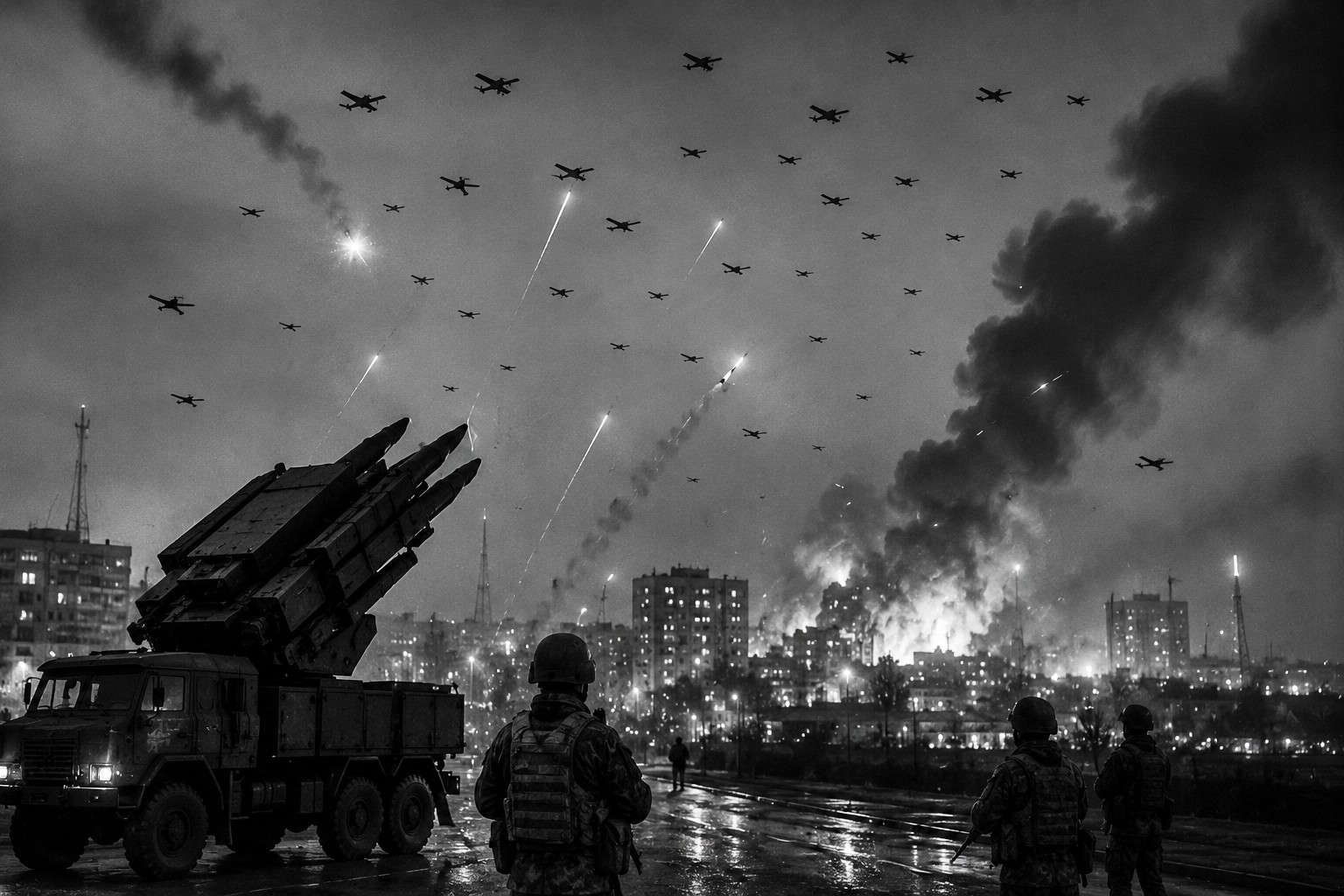
More than 500 drones reportedly targeted Russian territory in one of the largest long-range aerial attacks since the beginning of the war, with Russian authorities stating that at least three people were killed during the strikes. The large-scale Ukrainian operation came shortly after Volodymyr Zelenskyy pledged retaliation for earlier Russian bombardments, further intensifying a conflict that continues to reshape global security, energy markets and geopolitical alliances.
Large-scale strikes hit multiple regions
Russian officials said the drone attacks affected several regions overnight, including areas linked to military logistics, fuel infrastructure and industrial facilities. Air defence systems were activated across multiple locations as authorities attempted to intercept incoming drones.
Although full independent verification remains difficult during wartime conditions, the scale of the operation appears significantly larger than many previous Ukrainian drone offensives targeting Russian territory.


The attacks highlight Ukraine’s growing ability to conduct long-range operations despite Russia’s extensive military resources and layered air defence systems. Analysts believe such strikes are increasingly intended not only to damage infrastructure but also to create political and economic pressure within Russia itself.
Escalation follows renewed Russian attacks
The strikes came after intensified Russian bombardments across Ukrainian cities and infrastructure during recent days. President Zelenskyy had warned that Ukraine would respond following missile and drone attacks that caused civilian casualties and damage to energy facilities.
The continuing escalation reflects how both sides are increasingly relying on drone warfare as a central component of the conflict. Drones have become strategically important due to their relatively lower cost, flexibility and ability to reach targets deep behind front lines.
Military analysts note that drone warfare is transforming modern conflict by allowing sustained pressure on infrastructure, logistics and civilian morale without relying exclusively on traditional missile systems.
US sanctions shift adds pressure to oil markets
At the same time, the United States has reportedly allowed a sanctions waiver connected to Russian oil transactions to expire, potentially increasing financial and operational pressure on Russia’s energy sector.
The waiver had previously allowed limited flexibility within parts of the global energy market despite broader sanctions targeting Russian exports following the invasion of Ukraine.
Energy markets are now closely watching whether the move could tighten global oil supply conditions or complicate international shipping and insurance arrangements linked to Russian crude exports.
The development also reinforces broader geopolitical fragmentation within global commodity markets, where sanctions, conflict and strategic trade restrictions continue influencing pricing and investment decisions.
Global energy and security concerns intensify
Oil traders and financial markets reacted cautiously to the combined military escalation and sanctions developments. Investors remain concerned that further attacks on energy infrastructure or tighter restrictions on Russian exports could increase volatility in global fuel markets.
European governments also continue monitoring the conflict closely due to its implications for regional security, inflation and industrial energy costs. Although Europe has reduced dependence on Russian energy since 2022, disruptions affecting oil and gas markets continue influencing economic conditions across the continent.
Meanwhile, diplomatic prospects remain limited as both sides continue signalling long-term military commitment rather than immediate negotiations.
Drone warfare reshaping modern conflict
The latest attacks further demonstrate how drone technology is altering the strategic landscape of modern warfare. Relatively inexpensive unmanned systems are now capable of affecting infrastructure, logistics and energy security across vast geographic distances.
Analysts increasingly believe future conflicts worldwide will involve far greater reliance on drones, cyber systems and decentralised attacks against economic infrastructure rather than exclusively traditional battlefield operations.
As the Russia-Ukraine war continues evolving, its military innovations and geopolitical consequences are likely to influence global security strategy for years to come.
Newshub Editorial in Europe – 17 May 2026

If you have an account with ChatGPT you get deeper explanations,
background and context related to what you are reading.
Open an account:
Open an accountMore than 500 drones reportedly targeted Russian territory in one of the largest long-range aerial attacks since the beginning of the war, with Russian authorities stating that at least three people were killed during the strikes. The large-scale Ukrainian operation came shortly after Volodymyr Zelenskyy pledged retaliation for earlier Russian bombardments, further intensifying a conflict that continues to reshape global security, energy markets and geopolitical alliances.
Recent Comments