
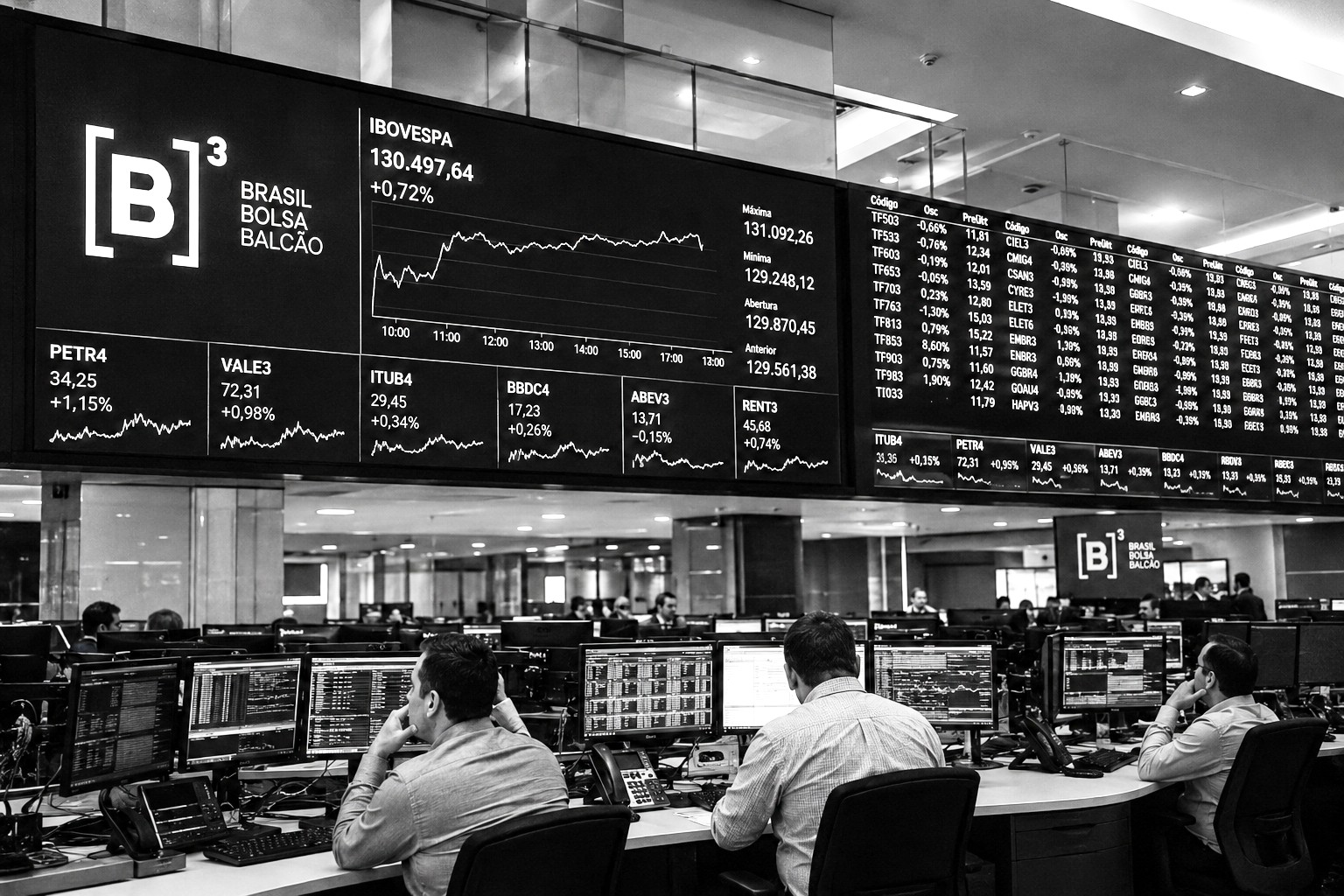
Financial markets in Brazil faced renewed political uncertainty this week after a widening fraud scandal reached figures connected to the powerful Bolsonaro political family, triggering concerns among investors about governance, institutional stability and the country’s broader economic outlook ahead of future elections.
Political fallout expands
The controversy intensified after Flávio Bolsonaro reportedly acknowledged receiving funds linked to a banker now under investigation in an expanding financial fraud case. The developments immediately attracted attention across Brazil’s financial and political sectors, as markets assessed the potential impact on investor confidence and future political alignments.
Although the investigation remains ongoing, the scandal has added another layer of instability to an already polarised political environment. Analysts warned that any prolonged uncertainty surrounding high-profile political figures could affect both domestic investment flows and international sentiment towards Latin America’s largest economy.

Brazilian equities traded cautiously following the reports, while the Brazilian real also faced renewed pressure against the US dollar during periods of market volatility.
Investors focused on institutional credibility
For investors, the primary concern extends beyond the specific allegations themselves. Financial institutions and foreign investors are closely watching how Brazilian authorities handle the investigation and whether institutional independence remains intact during politically sensitive proceedings.
Brazil has spent years attempting to rebuild confidence following multiple corruption and governance scandals that previously shook both the political system and major state-linked corporations. Many international investors have viewed stronger regulatory oversight and judicial independence as critical pillars supporting Brazil’s long-term investment attractiveness.
The latest developments therefore risk reviving concerns about political interference, reputational risk and broader governance standards within Latin America’s largest economy.
Markets balancing risk and opportunity
Despite the political turbulence, Brazil continues to attract significant foreign interest due to its vast natural resources, agricultural exports, energy production and large domestic consumer market. Banking, commodities and infrastructure sectors remain central to investor strategies in the country.
At the same time, political risk remains deeply embedded in Brazilian asset pricing. Elections, judicial investigations and fiscal policy disputes have repeatedly generated sharp market swings over the past decade.
Some investors believe the current volatility may create selective buying opportunities if institutional processes continue functioning transparently. Others, however, warn that prolonged political instability could slow investment decisions and weaken economic momentum at a time when Brazil is also navigating inflation pressures and global trade uncertainty.
Election dynamics now under scrutiny
The scandal may also influence future presidential positioning and coalition-building ahead of upcoming electoral cycles. Business-friendly political factions within Brazil have traditionally enjoyed strong support from financial markets, particularly when associated with deregulation, privatisation and fiscal restraint.
Any erosion of credibility among prominent political figures could therefore reshape market expectations regarding future economic policy direction.
For now, investors appear focused on risk management rather than aggressive positioning, with Brazilian markets likely to remain highly sensitive to further political developments in the weeks ahead.
Newshub Editorial in South America – May 15, 2026

If you have an account with ChatGPT you get deeper explanations,
background and context related to what you are reading.
Open an account:
Open an account
Recent Comments