
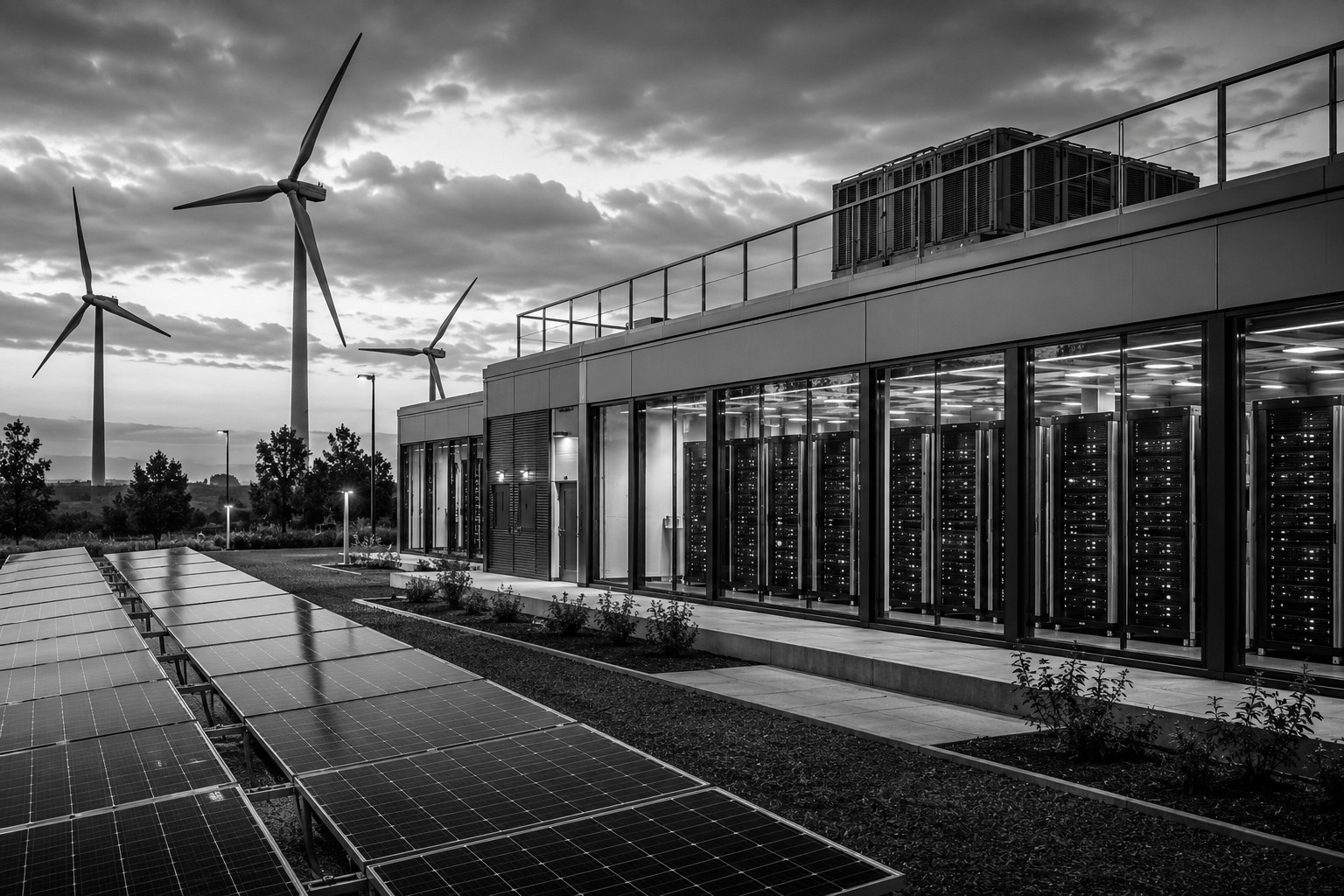
Australian state and federal energy ministers are moving toward stricter requirements for datacentres to directly support renewable energy investment, arguing that the rapidly expanding sector must offset its growing electricity demand through new wind, solar and energy storage capacity. Queensland, however, has emerged as the sole state resisting the proposal.
The debate reflects mounting concern across Australia over the surging energy consumption associated with artificial intelligence infrastructure, cloud computing and large-scale digital storage facilities.
Under the proposed approach, new datacentres would be expected to “fully offset” their additional energy usage by investing in renewable power generation and storage systems. Supporters say the policy is necessary to prevent the sector from placing excessive pressure on national electricity grids and climate targets.

Datacentres have become one of the fastest-growing sources of industrial electricity demand globally, driven largely by the expansion of AI systems, streaming services, financial infrastructure and cloud-based applications.
AI boom driving energy concerns
The rapid rise of artificial intelligence has intensified scrutiny of datacentre energy consumption worldwide. Advanced AI models require enormous computing power, increasing electricity demand from hyperscale server facilities operating around the clock.
Australian energy officials argue that future digital infrastructure expansion must align with national decarbonisation goals rather than undermine them.
Most Australian states and territories reportedly support a coordinated framework requiring new datacentre developments to contribute directly to renewable energy generation and battery storage investments.
The proposal is designed to ensure that additional electricity demand created by new facilities does not increase dependence on fossil-fuel-based power generation.
Queensland, however, has reportedly resisted the plan, highlighting growing divisions over energy policy, industrial development and climate strategy within the country.
Balancing digital growth with energy transition
The issue illustrates a broader global challenge as governments attempt to balance digital economic growth with environmental commitments.
Datacentres are increasingly viewed as critical national infrastructure, supporting everything from banking systems and healthcare platforms to AI development and cloud services. At the same time, their expanding energy footprint has become politically sensitive as countries pursue carbon reduction targets.
Industry groups argue that Australia has strong potential to become a major datacentre hub due to its political stability, connectivity and renewable energy resources. However, analysts warn that long-term expansion will require substantial investment into grid capacity and clean power generation.
Supporters of the renewable-offset proposal say linking datacentre approvals to green energy investment could accelerate infrastructure development while helping stabilise electricity markets.
Battery storage systems are also expected to play a central role, helping manage intermittent supply from wind and solar projects while supporting grid resilience during peak demand periods.
Global infrastructure race intensifies
The Australian debate mirrors similar discussions unfolding across Europe, North America and Asia as governments grapple with the infrastructure demands of the digital economy.
Major technology companies have increasingly announced direct renewable energy partnerships and long-term power purchase agreements in an effort to reduce emissions and secure stable electricity supply.
Environmental groups argue that mandatory renewable investment requirements should become standard policy globally as AI-driven energy demand continues to rise.
Meanwhile, investors are increasingly focusing on sustainable infrastructure strategies when evaluating large-scale datacentre projects.
For Australia, the outcome of the current negotiations may shape not only future energy policy but also the country’s competitiveness in attracting international technology investment during the next decade of digital expansion.
As AI infrastructure growth accelerates worldwide, the question facing policymakers is becoming increasingly clear: who will pay for the enormous energy systems needed to power the digital future?
Newshub Editorial in Oceania – May 13, 2026

If you have an account with ChatGPT you get deeper explanations,
background and context related to what you are reading.
Open an account:
Open an account
Recent Comments