
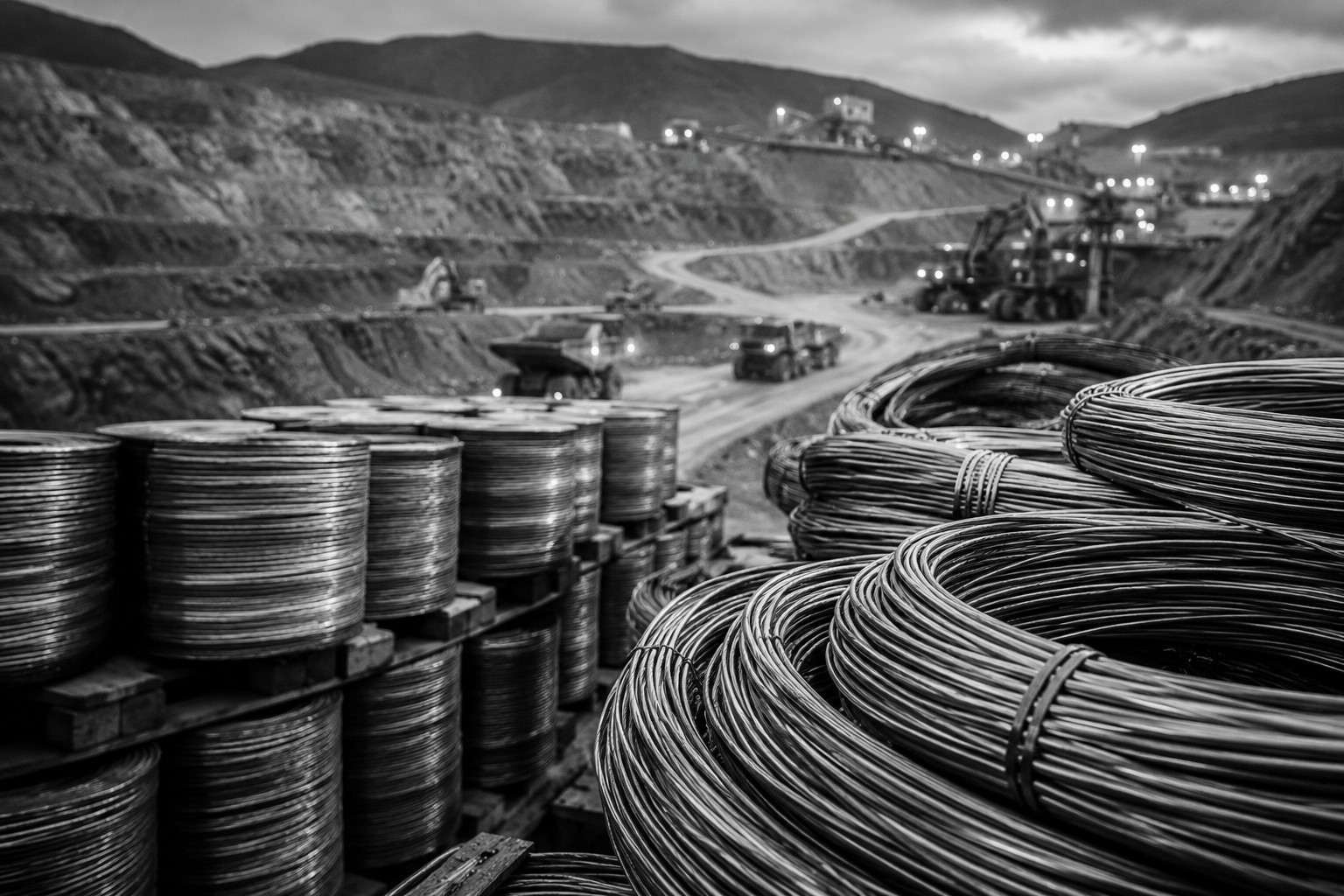
Copper prices have risen sharply in recent months as investors, industrial groups and commodity traders position themselves for what many analysts believe could become a prolonged global supply shortage. The combined impact of artificial intelligence infrastructure, electrification, renewable energy expansion and geopolitical uncertainty is transforming the outlook for one of the world’s most important industrial metals.
Copper has long been viewed as a key indicator of global industrial activity, but the current rally reflects far more than a traditional economic cycle.
Demand is accelerating simultaneously across multiple sectors. The rapid expansion of AI-driven datacentres, electric grids, battery storage systems, electric vehicles and renewable energy infrastructure is creating enormous new consumption requirements for copper used in wiring, transformers and energy distribution systems.


At the same time, mining production has struggled to keep pace with rising global needs.
AI infrastructure reshaping commodity markets
The explosive growth of artificial intelligence has emerged as a major new driver of copper demand. Modern AI datacentres require enormous electricity capacity and highly advanced cooling systems, both of which depend heavily on copper-intensive infrastructure.
Technology giants including Microsoft, Google, Amazon and Meta continue investing billions of dollars into new digital infrastructure projects worldwide, further increasing long-term demand for industrial metals.
The global energy transition is also contributing to the pressure. Electric vehicles require substantially more copper than traditional combustion-engine vehicles, while wind farms, solar parks and battery systems rely on extensive copper cabling and transmission infrastructure.
Many analysts now argue that copper is becoming one of the most strategically important resources of the modern industrial economy.
Supply constraints intensify market pressure
On the supply side, the market faces growing structural challenges. Several major copper-producing regions, particularly in Chile and Peru, have experienced political uncertainty, labour disruptions, environmental restrictions and regulatory changes affecting mining operations.
Meanwhile, developing new mining projects often takes more than a decade from discovery to full-scale production, limiting the industry’s ability to respond quickly to rising demand.
As a result, investors increasingly fear that long-term structural deficits may emerge as electrification accelerates globally.
Several major investment banks and commodity analysts have already raised their long-term copper price forecasts, warning that volatility could remain elevated as supply pressures intensify.
Copper becomes a strategic global asset
The rising price of copper is already affecting industries ranging from construction and electronics manufacturing to automotive production and energy infrastructure development.
At the same time, governments are increasingly treating copper as a strategic resource linked directly to national industrial policy and energy security.
Countries are seeking to secure long-term access through mining investments, supply agreements and geopolitical partnerships tied to critical mineral production.
Financial markets have also shifted their focus toward metals associated with AI infrastructure and the energy transition. Institutional investors and commodity funds have significantly increased exposure to industrial metals expected to benefit from long-term structural demand growth.
For many market participants, the central question is no longer whether copper prices will continue rising — but whether global supply systems can expand fast enough to avoid serious shortages during the next decade.
As the world simultaneously electrifies, digitalises and builds AI infrastructure at unprecedented speed, copper has rapidly become one of the defining strategic commodities of the modern era.
Newshub Editorial in Europe – May 13, 2026

If you have an account with ChatGPT you get deeper explanations,
background and context related to what you are reading.
Open an account:
Open an accountCopper prices have risen sharply in recent months as investors, industrial groups and commodity traders position themselves for what many analysts believe could become a prolonged global supply shortage. The combined impact of artificial intelligence infrastructure, electrification, renewable energy expansion and geopolitical uncertainty is transforming the outlook for one of the world’s most important industrial metals.
Recent Comments