
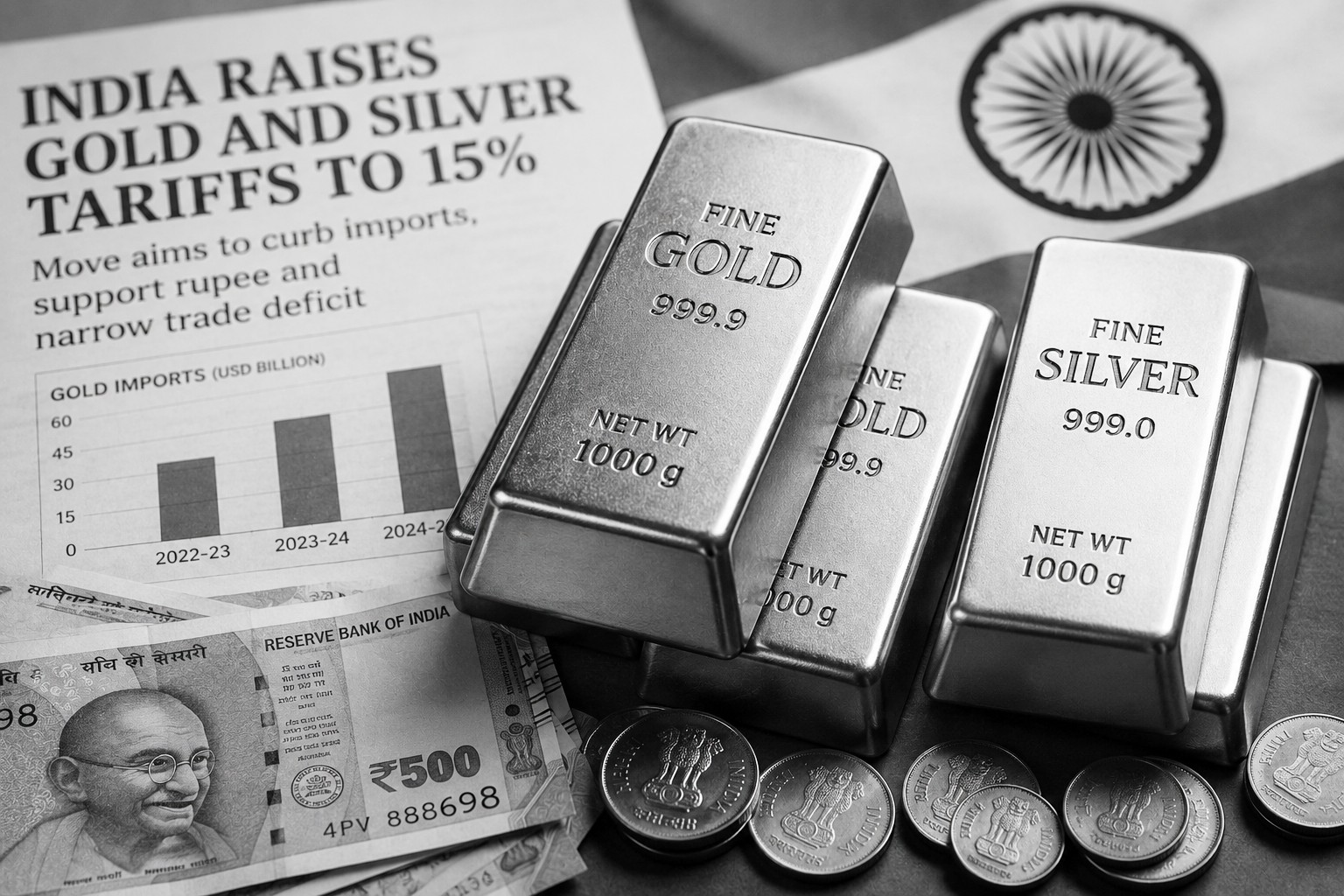
India’s government has increased import tariffs on gold and silver to 15% as authorities attempt to reduce precious metal imports, narrow the country’s trade deficit and provide support for the Indian rupee, which has remained among Asia’s weakest-performing major currencies this year. The move is expected to affect demand in one of the world’s largest precious metals markets while signalling growing concern over external financial pressures.
India is the world’s second-largest consumer of gold and a major importer of silver, with domestic demand driven by jewellery, weddings, investment buying and cultural traditions. Rising imports have historically placed pressure on the country’s current account balance, particularly during periods of elevated global commodity prices.
Officials believe higher import duties could discourage excessive inflows of precious metals and help improve foreign exchange stability at a time when the rupee faces continued depreciation pressure against the US dollar.


Trade deficit concerns intensify
The tariff increase comes as Indian policymakers seek to manage widening trade imbalances caused by energy imports, global inflationary pressures and fluctuating capital flows.
Gold imports have long represented a challenge for Indian economic planners. While gold remains deeply embedded in household savings culture across the country, large-scale imports can significantly increase demand for foreign currency, thereby weakening the rupee and increasing pressure on external balances.
By raising duties to 15%, the government hopes to reduce non-essential imports while encouraging more disciplined consumption patterns. Economists note that policymakers are increasingly prioritising currency stability amid broader uncertainty across global markets.
The rupee has faced pressure from higher US interest rates, volatile oil prices and shifting investor sentiment towards emerging markets. Authorities are therefore seeking multiple tools to strengthen the currency and reduce exposure to external shocks.
Jewellery sector faces potential slowdown
The tariff increase may create difficulties for India’s large jewellery industry, which relies heavily on imported gold and silver supplies. Traders and retailers warned that higher duties could raise domestic prices and potentially dampen consumer demand, particularly outside major festive and wedding seasons.
Some analysts also suggested that elevated tariffs may increase incentives for smuggling, a recurring issue during previous periods of high import duties on precious metals in India.
Nevertheless, government officials appear focused on macroeconomic stability rather than short-term market discomfort. Maintaining confidence in the rupee and controlling the trade deficit are viewed as increasingly important as global economic conditions remain uncertain.
Global precious metals market reacts
India’s policy changes are closely watched by international commodity markets due to the country’s enormous influence on physical gold demand. Any sustained decline in Indian imports could potentially affect global pricing dynamics, particularly if consumer demand weakens significantly.
At the same time, investors worldwide continue to view gold as a safe-haven asset amid geopolitical tensions, inflation concerns and financial market volatility. This has kept international gold prices relatively elevated despite tighter monetary policy conditions in several major economies.
The Indian government’s latest tariff decision therefore reflects the difficult balancing act faced by emerging market economies attempting to protect currencies and manage trade flows while navigating volatile global commodity markets.
Newshub Editorial in Asia – May 13, 2026

If you have an account with ChatGPT you get deeper explanations,
background and context related to what you are reading.
Open an account:
Open an accountIndia’s government has increased import tariffs on gold and silver to 15% as authorities attempt to reduce precious metal imports, narrow the country’s trade deficit and provide support for the Indian rupee, which has remained among Asia’s weakest-performing major currencies this year. The move is expected to affect demand in one of the world’s largest precious metals markets while signalling growing concern over external financial pressures.
Recent Comments