
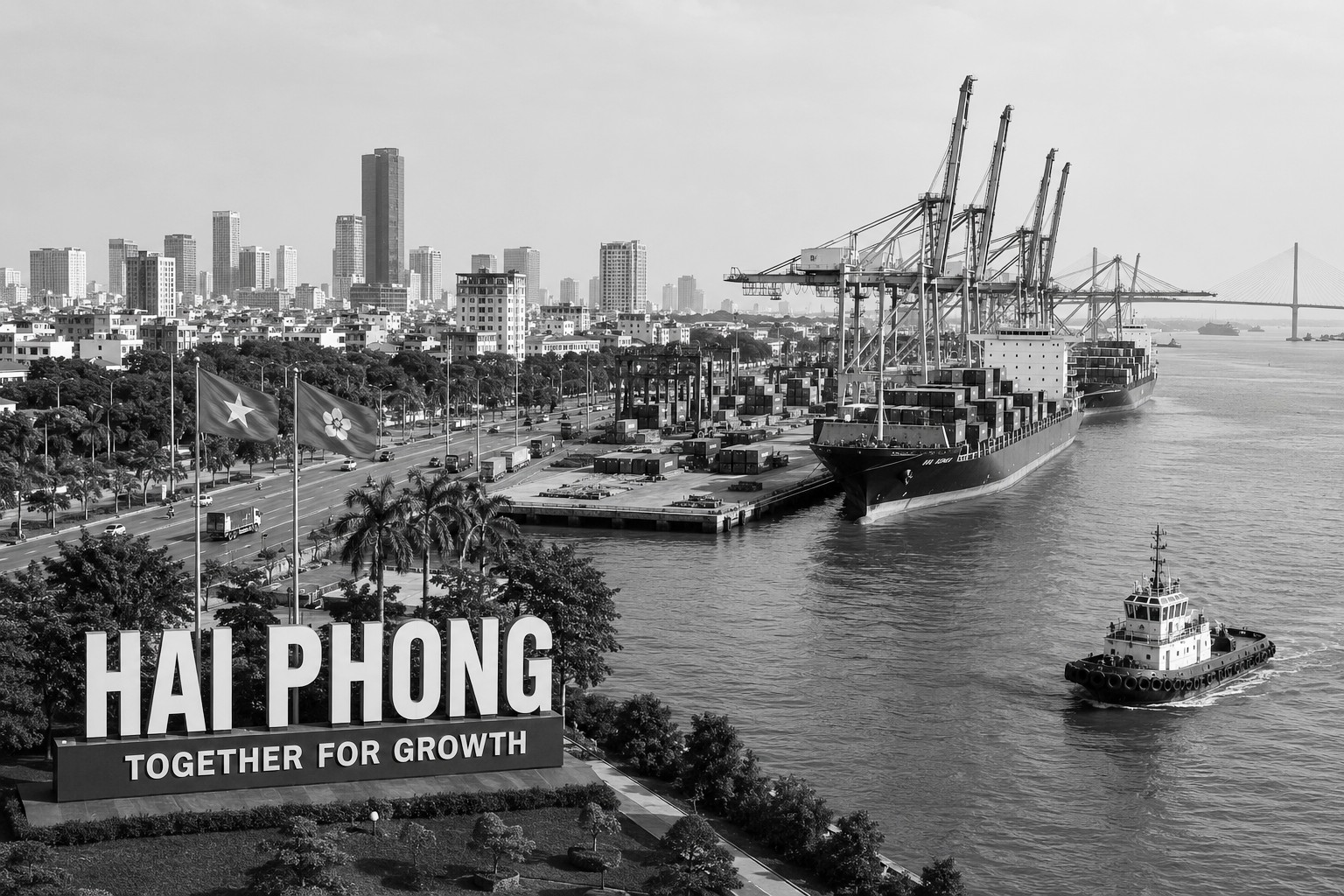
Vietnam’s northern port city of Hai Phong has approved an ambitious socio-economic development plan for the 2026–2030 period, targeting annual economic growth of between 13% and 14% as the city seeks to strengthen its position as one of the country’s leading industrial, logistics and maritime hubs. The strategy reflects Vietnam’s broader push towards rapid industrial expansion, infrastructure modernisation and export-driven growth.
Hai Phong, located along Vietnam’s northern coast near Hanoi, has become increasingly important to the country’s manufacturing and international trade network over the past decade. The city’s port infrastructure, industrial parks and strategic access to regional shipping routes have helped attract significant domestic and foreign investment.
Under the newly approved plan, city authorities intend to accelerate industrial development, logistics expansion, urban modernisation and technology investment while improving infrastructure connectivity across the wider northern economic corridor.

Officials described the growth targets as challenging but achievable given Hai Phong’s expanding industrial base and growing importance within regional supply chains.
Port infrastructure remains central to expansion
Hai Phong’s deep-water port system continues to play a critical role in Vietnam’s export economy, handling increasing volumes of manufacturing goods, electronics, machinery and industrial materials linked to the country’s rapidly expanding production sector.
The city has benefited significantly from global supply-chain diversification trends, with international manufacturers increasingly expanding operations in Vietnam amid shifting regional trade dynamics and geopolitical uncertainty elsewhere in Asia.
Authorities plan to continue investing heavily in transport infrastructure, logistics systems and industrial zones in order to support rising trade volumes and attract additional foreign direct investment.
Road, rail and port connectivity improvements are expected to remain among the central pillars of the development programme through 2030.
Industrialisation and technology drive growth strategy
Hai Phong’s economic ambitions are closely tied to Vietnam’s wider industrial transformation strategy. The country continues positioning itself as a major manufacturing destination for sectors including electronics, automotive components, renewable energy equipment and technology assembly.
Foreign investment has played an increasingly important role in the city’s growth, with international companies expanding operations across industrial parks and export-processing zones surrounding Hai Phong.
Officials also aim to strengthen digital infrastructure, innovation capacity and high-value manufacturing activities as part of efforts to move beyond labour-intensive production models.
Analysts note that Vietnam’s competitive labour costs, improving infrastructure and strategic location continue attracting strong international interest despite rising global economic uncertainty.
Urban growth and sustainability gain importance
Alongside industrial expansion, Hai Phong’s development strategy also emphasises urban planning, environmental sustainability and quality-of-life improvements. Rapid industrial growth has created increasing pressure on housing, transport systems and environmental management across many Vietnamese cities.
Authorities therefore aim to balance economic expansion with improved public infrastructure, green development initiatives and urban modernisation projects.
The city’s coastal location also places additional importance on climate resilience and long-term infrastructure planning as Vietnam continues addressing environmental and sustainability challenges linked to rapid urbanisation.
Hai Phong strengthens regional role
Hai Phong is increasingly viewed as one of Vietnam’s most strategically important economic centres outside Hanoi and Ho Chi Minh City. Its role within northern Vietnam’s industrial ecosystem continues expanding as the country deepens integration into global manufacturing and trade networks.
The city’s ambitious growth targets reflect broader confidence surrounding Vietnam’s long-term economic trajectory, particularly within export-oriented industries and logistics infrastructure.
However, analysts caution that maintaining sustained double-digit growth will require continued investment efficiency, stable global trade conditions and successful management of infrastructure pressures associated with rapid expansion.
Even so, Hai Phong’s latest development plan highlights Vietnam’s determination to remain one of Asia’s fastest-growing industrial economies during the coming decade.
Newshub Editorial in Asia – May 12, 2026

If you have an account with ChatGPT you get deeper explanations,
background and context related to what you are reading.
Open an account:
Open an account
Recent Comments