
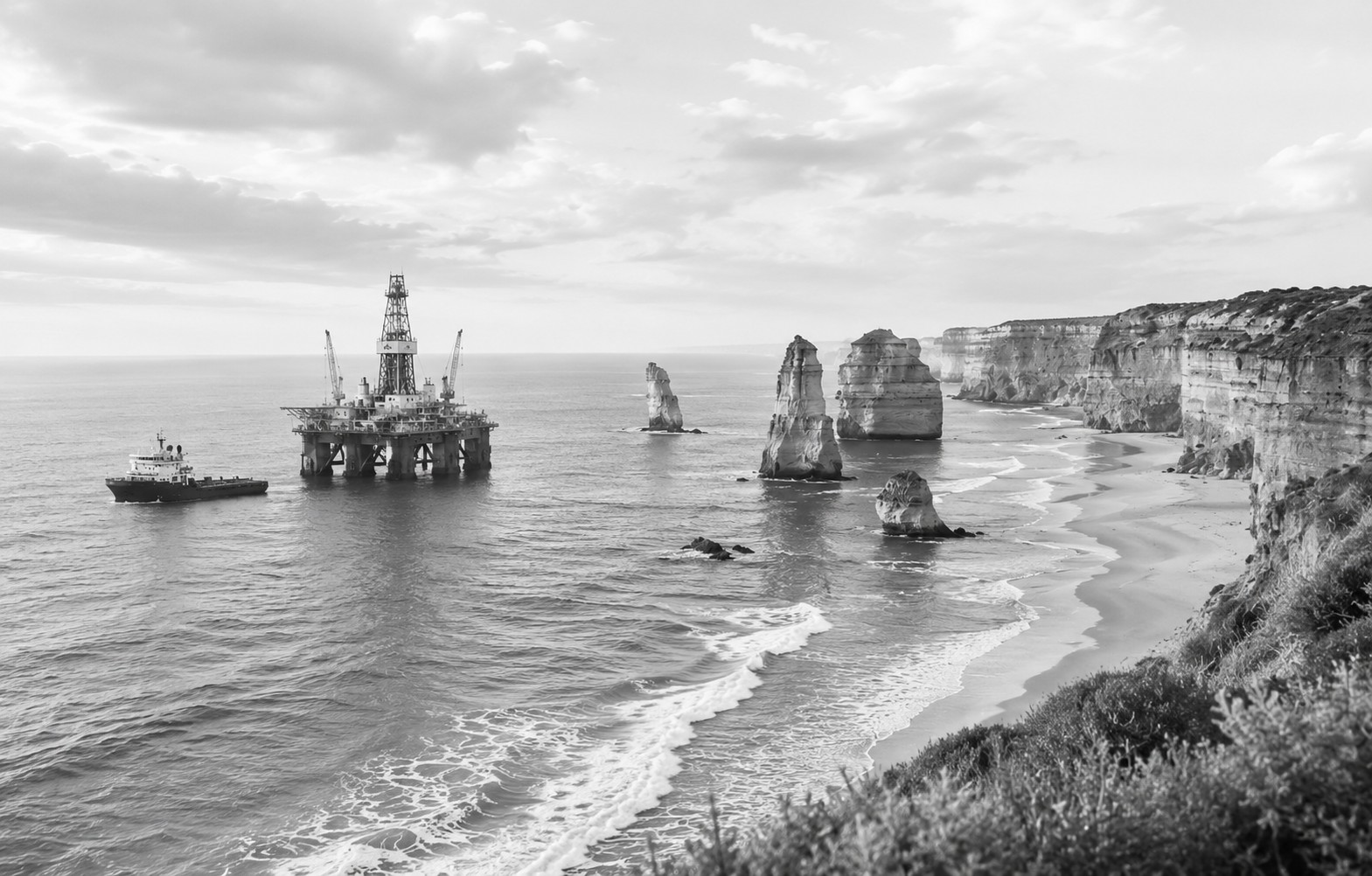
A newly approved offshore gas drilling project near the Twelve Apostles coastline has triggered strong criticism from environmental groups, who warn the development could place fragile marine ecosystems and climate goals at risk. The project, located in the Otway Basin off the coast of Victoria, has received approval from both the Victorian and Australian federal Labor governments and is expected to become a major new source of natural gas supply for the state.
Supporters of the project argue the gasfield could eventually provide up to one-third of Victoria’s domestic gas demand, helping stabilise energy supply as older production sites decline and energy prices remain volatile.
However, environmental organisations and marine conservation groups have sharply criticised the decision, arguing that expanding fossil fuel extraction near one of Australia’s most iconic coastal regions contradicts national climate commitments and threatens a largely untouched marine environment.

Concerns over marine ecosystems
The Otway Basin sits close to ecologically sensitive waters known for biodiversity, whale migration routes and complex marine habitats. Environmental campaigners warn that offshore drilling activity, seismic testing and increased industrial traffic could affect marine species and damage fragile underwater ecosystems.
The Twelve Apostles region is internationally recognised for its dramatic limestone formations, tourism value and coastal landscapes. Critics argue that industrial expansion in nearby waters risks undermining both environmental protection and the area’s global natural reputation.
Several environmental groups have also raised concerns about the long-term climate implications of approving new fossil fuel infrastructure at a time when governments publicly support emissions reductions and renewable-energy expansion.
Campaigners accuse authorities of sending mixed policy signals by simultaneously promoting net-zero targets while allowing additional oil and gas projects to move forward.
Governments defend energy security argument
Federal and state officials have defended the decision by pointing to Victoria’s continuing dependence on natural gas for electricity generation, industrial operations and household energy use.
Australia’s southeastern gas market has faced increasing supply concerns in recent years as existing reserves decline and domestic demand remains relatively strong. Authorities argue that locally produced gas may help reduce future shortages and limit dependence on imported energy.
The project’s supporters also claim modern offshore drilling technology and regulatory oversight can minimise environmental risks while maintaining economic and energy-security benefits.
Energy companies involved in the development have stated that the project complies with environmental standards and will undergo ongoing monitoring throughout operational phases.
Climate debate intensifies in Australia
The approval highlights broader political tensions surrounding Australia’s energy transition strategy. While renewable-energy investment continues accelerating across the country, fossil fuels remain deeply integrated into both domestic energy systems and export revenues.
Environmental groups increasingly argue that approving new oil and gas fields risks locking Australia into higher long-term emissions and slowing the shift toward cleaner energy infrastructure.
Meanwhile, governments continue balancing climate commitments against concerns over affordability, industrial competitiveness and energy reliability.
The Otway Basin approval is therefore likely to become another focal point in Australia’s increasingly polarised climate and energy debate, particularly as pressure grows globally for faster reductions in fossil fuel production and consumption.
Newshub Editorial in Oceania – May 10, 2026

If you have an account with ChatGPT you get deeper explanations,
background and context related to what you are reading.
Open an account:
Open an account
Recent Comments