
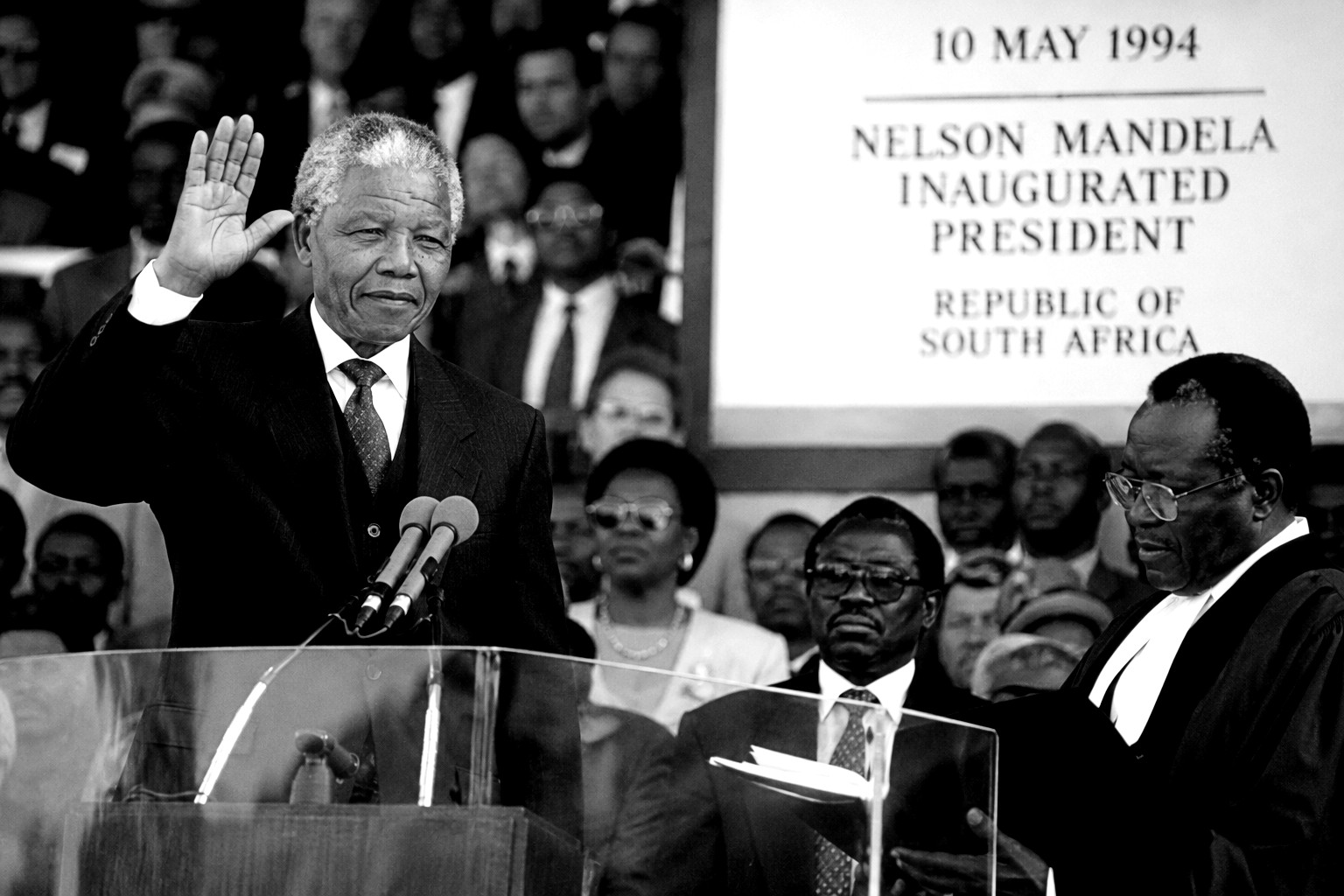
On 10 May 1994, Nelson Mandela was inaugurated as the first Black president of South Africa, marking one of the most significant political turning points of the twentieth century. The historic ceremony in Pretoria symbolised the formal end of apartheid and the beginning of a democratic era after decades of racial segregation, political repression and international isolation.
Mandela’s inauguration followed South Africa’s first fully democratic national election, held in April 1994, where citizens of all races were allowed to vote together for the first time. The election was won by the African National Congress (ANC), the liberation movement that Mandela had led through years of resistance against white minority rule.
The moment carried enormous global significance. Millions watched as Mandela, after spending 27 years in prison, stood before world leaders and South Africans of all backgrounds to pledge unity, reconciliation and democratic governance. His rise from political prisoner to president became one of the defining stories of modern history.

The end of apartheid
Apartheid had officially been introduced in 1948 by South Africa’s National Party government. The system enforced racial separation across every part of society, including housing, education, employment, healthcare and political representation. Black South Africans were denied voting rights and subjected to strict movement controls and economic discrimination.
International pressure against apartheid intensified during the 1970s and 1980s. Economic sanctions, cultural boycotts and growing internal unrest weakened the government’s position. Mandela, imprisoned since 1962 for anti-apartheid activities, became the global symbol of resistance and justice.
In 1990, President F.W. de Klerk announced Mandela’s release and legalised previously banned liberation organisations. Negotiations between the government and the ANC followed, eventually paving the way for democratic elections four years later.
A presidency focused on reconciliation
Rather than pursuing revenge against former apartheid leaders, Mandela promoted national reconciliation. His administration worked to stabilise the country politically while attempting to reduce racial tensions and build democratic institutions.
One of the most notable initiatives was the Truth and Reconciliation Commission, chaired by Archbishop Desmond Tutu, which investigated human rights abuses committed during apartheid. The process aimed to expose past crimes while encouraging national healing rather than civil conflict.
Mandela also sought to improve South Africa’s international standing. The country quickly re-entered global institutions, restored diplomatic relations and attracted new foreign investment after years of isolation.
A global symbol of leadership
Mandela served only one presidential term before stepping down in 1999, reinforcing democratic norms in a country emerging from authoritarian rule. Even after leaving office, he remained one of the world’s most respected political figures and a symbol of dignity, forgiveness and resilience.
Today, Mandela’s inauguration remains a defining event not only for South Africa but for global democratic history. It demonstrated that political transition, even after decades of conflict and division, could be achieved through negotiation rather than large-scale civil war.
Newshub Editorial in Africa – May 10, 2026

If you have an account with ChatGPT you get deeper explanations,
background and context related to what you are reading.
Open an account:
Open an account
Recent Comments