
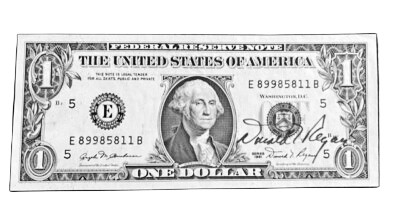
The US Treasury has announced that President Donald Trump’s signature will be added to future American banknotes, marking a historic departure from long-standing conventions and intensifying debate over the politicisation of national currency.
A historic break with precedent
The decision makes Donald Trump the first sitting US president whose name will appear on paper currency. Traditionally, US banknotes carry the signatures of the Treasury Secretary and the Treasurer of the United States, reflecting institutional authority rather than political leadership.
By introducing the president’s signature, the Treasury is effectively redefining the symbolic framework of US currency, shifting part of its identity from administrative representation to executive association. The move follows earlier proposals to mint coins bearing Trump’s image, signalling a broader effort to imprint presidential identity on national monetary instruments.

Institutional implications and debate
The announcement has sparked immediate discussion among economists, historians and policy analysts. Critics argue that US currency has historically functioned as a politically neutral instrument, designed to represent continuity and institutional stability rather than individual leadership.
Supporters, however, frame the decision as a modernisation of tradition, aligning the currency more closely with contemporary governance and presidential visibility. They argue that the change is largely symbolic and does not affect the functional integrity of the dollar.
From a governance perspective, the move raises questions about precedent. If adopted as a permanent feature, future administrations may face pressure to follow suit, potentially leading to a rotating set of presidential identifiers on US currency.
Market reaction: limited but watchful
Financial markets have, so far, reacted with relative calm. Currency markets showed no material volatility following the announcement, reflecting the understanding that the measure is cosmetic rather than structural.
However, institutional investors and central banks are likely to monitor the broader narrative implications. The US dollar’s global dominance is underpinned not only by economic strength but also by perceptions of institutional independence and predictability. Any shift—symbolic or otherwise—that introduces political branding into core financial instruments may invite scrutiny over time.
Cultural and geopolitical signalling
Beyond markets, the decision carries cultural and geopolitical weight. US currency is one of the most widely circulated symbols of American power globally. Alterations to its design are therefore interpreted not only domestically but also internationally.
The inclusion of a sitting president’s signature could be viewed by some as reinforcing executive authority, while others may interpret it as a departure from the institutional neutrality that has historically characterised US financial governance.
In an era of heightened geopolitical competition and currency diversification efforts among emerging economies, even symbolic changes can carry strategic implications.
What comes next
The Treasury has not yet provided a detailed timeline for when the new banknotes will enter circulation, nor whether existing notes will be phased out or coexist indefinitely alongside the updated versions.
As the policy moves from announcement to implementation, attention will shift to design specifics, production timelines and potential legal or legislative challenges. For now, the decision stands as a notable moment in the evolution of US currency—one that blends symbolism, politics and finance in a way rarely seen in modern monetary history.
Newshub Editorial in North America – March 28, 2026

If you have an account with ChatGPT you get deeper explanations,
background and context related to what you are reading.
Open an account:
Open an account
Recent Comments