
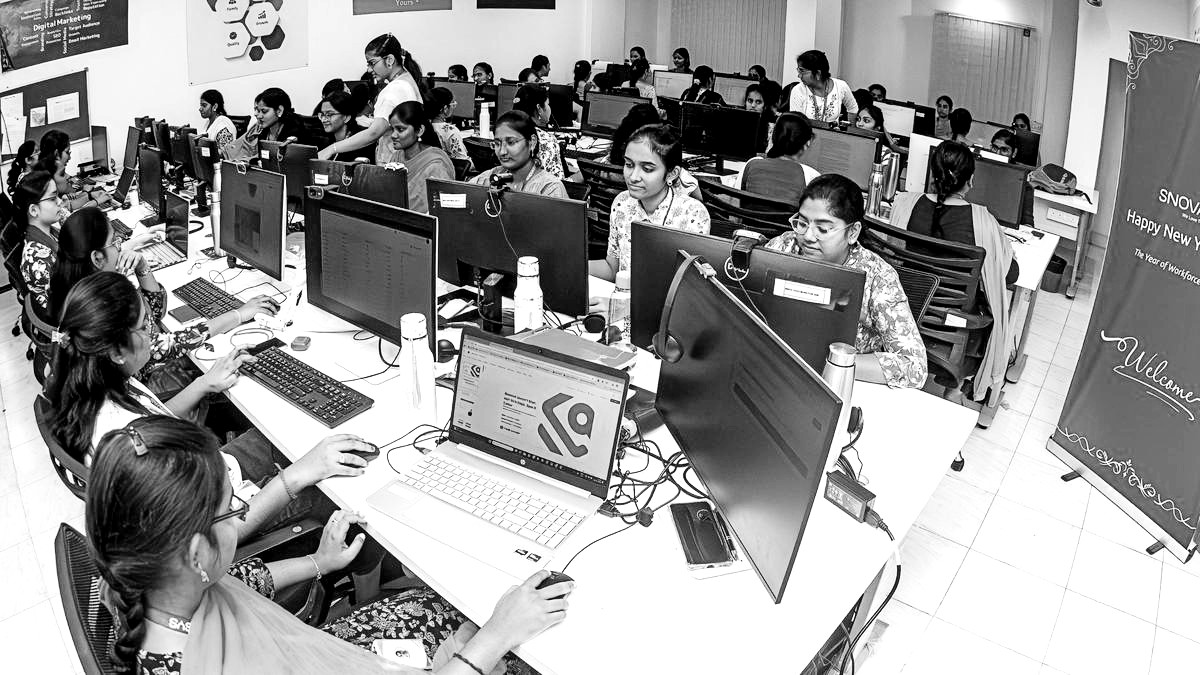
Nearly half of companies listed on India’s National Stock Exchange have no women serving in key managerial positions, according to a new study highlighting persistent gender disparities across corporate leadership structures. The findings have renewed debate over workplace equality in India, with analysts warning that women continue to lose access to higher-paid executive roles despite the country’s rapid economic expansion and growing global business influence.
Large gap remains in senior management
The study found that approximately 48 per cent of NSE-listed companies have no women occupying key managerial roles, including positions such as chief executive officer, chief financial officer and other senior operational leadership posts.
Researchers also noted that very few firms have more than two women serving on corporate boards, reflecting limited female representation at the highest levels of decision-making within India’s corporate sector.

The findings come despite years of discussion around diversity, inclusion and corporate governance reforms aimed at improving gender balance across listed companies.
Analysts say the figures demonstrate that while female workforce participation has increased in some industries, advancement into senior leadership positions remains significantly restricted.
Higher-paid roles remain difficult to access
Economists and labour market specialists argue that women continue to face structural barriers preventing access to higher-paid executive and technical positions.
While women are increasingly represented in entry-level and mid-level corporate roles, representation declines sharply in senior management, board positions and strategic leadership functions.
The disparity has implications not only for income equality but also for long-term economic productivity and corporate performance. Several international studies have linked gender-diverse leadership teams with stronger governance, improved innovation and broader organisational resilience.
Indian business leaders and advocacy groups have repeatedly called for stronger policies supporting career advancement, mentorship opportunities and workplace flexibility to improve female participation in leadership pipelines.
Corporate India under growing scrutiny
The issue is receiving greater attention as India positions itself as a global economic powerhouse and an increasingly important destination for international investment.
Global investors are placing growing emphasis on environmental, social and governance standards, including gender diversity metrics, when evaluating companies and markets.
Some Indian corporations have introduced diversity initiatives and leadership development programmes aimed at increasing female representation. However, progress remains uneven across sectors and regions.
Industries such as technology, finance and pharmaceuticals have generally shown somewhat stronger female participation compared with more traditional industrial sectors, though significant gaps remain throughout the economy.
Experts also point to broader social and cultural factors that continue to affect women’s career progression, including unequal caregiving responsibilities, workplace bias and limited access to senior professional networks.
Economic growth alone may not close the gap
India remains one of the world’s fastest-growing major economies, with expanding digital industries, manufacturing investment and rising global influence. However, analysts argue that economic growth alone is unlikely to resolve longstanding gender inequalities in employment and compensation.
Labour economists warn that excluding large numbers of women from higher-paid leadership positions may ultimately reduce economic efficiency and limit long-term workforce development.
International organisations including the World Bank and International Labour Organization have repeatedly highlighted the importance of increasing female workforce participation and leadership representation as part of sustainable economic development strategies.
The latest findings are expected to intensify pressure on regulators, corporate boards and policymakers to strengthen diversity efforts and improve opportunities for women within India’s business sector.
Newshub Editorial in Asia – May 3, 2026

If you have an account with ChatGPT you get deeper explanations,
background and context related to what you are reading.
Open an account:
Open an accountNearly half of companies listed on India’s National Stock Exchange have no women serving in key managerial positions, according to a new study highlighting persistent gender disparities across corporate leadership structures. The findings have renewed debate over workplace equality in India, with analysts warning that women continue to lose access to higher-paid executive roles despite the country’s rapid economic expansion and growing global business influence.
Recent Comments