
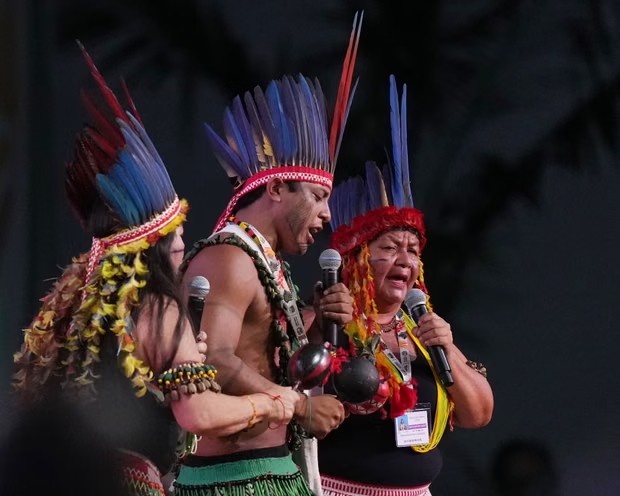
World leaders, ministers, and senior officials from nearly 200 countries have gathered in the Amazonian city of Belém as the long-anticipated Cop30 climate summit begins, with Brazil declaring its ambition for this to be the “Cop of implementation.”
Focus on turning commitments into results
Unlike previous summits that centred on pledges and negotiations, this year’s conference is being framed as a turning point where nations must demonstrate tangible progress. Brazil’s environment minister, Marina Silva, opened the event by emphasising the need for “real actions, not declarations,” calling on industrialised nations to fulfil financial commitments for adaptation and mitigation in developing countries.
Deforestation and finance take centre stage
With the Amazon rainforest as the backdrop, Brazil is pressing for global cooperation to end deforestation by 2030 and to strengthen mechanisms that reward countries for protecting biodiversity. Delegates are also expected to debate reforms to climate financing, including expanding the “loss and damage” fund created at Cop27 and introducing stricter accountability for carbon-offset schemes. These discussions are seen as critical to restoring trust between developed and developing nations.

Divisions over fossil fuels persist
Despite calls for unity, divisions remain over the phase-out of fossil fuels. Several major oil-producing nations, including Saudi Arabia and Russia, have resisted language committing to a complete transition away from coal, oil, and gas. European and Pacific island nations, meanwhile, are pushing for a firm timetable to end fossil fuel subsidies and accelerate renewable energy deployment.
A symbolic setting for global climate diplomacy
Hosting Cop30 in Belém carries symbolic weight: the city lies at the gateway to the Amazon Basin, which plays a crucial role in absorbing global carbon emissions. President Luiz Inácio Lula da Silva described the conference as a chance to “redefine the global climate order,” positioning Brazil as a bridge between industrialised and developing economies.
Challenges ahead
Analysts warn that despite growing urgency, translating ambition into implementation remains the summit’s greatest challenge. Success in Belém will depend on whether nations can agree on measurable timelines, reliable funding, and transparent monitoring frameworks — conditions that have eluded previous conferences.
Newshub Editorial in South America – 11 November 2025
Recent Comments