
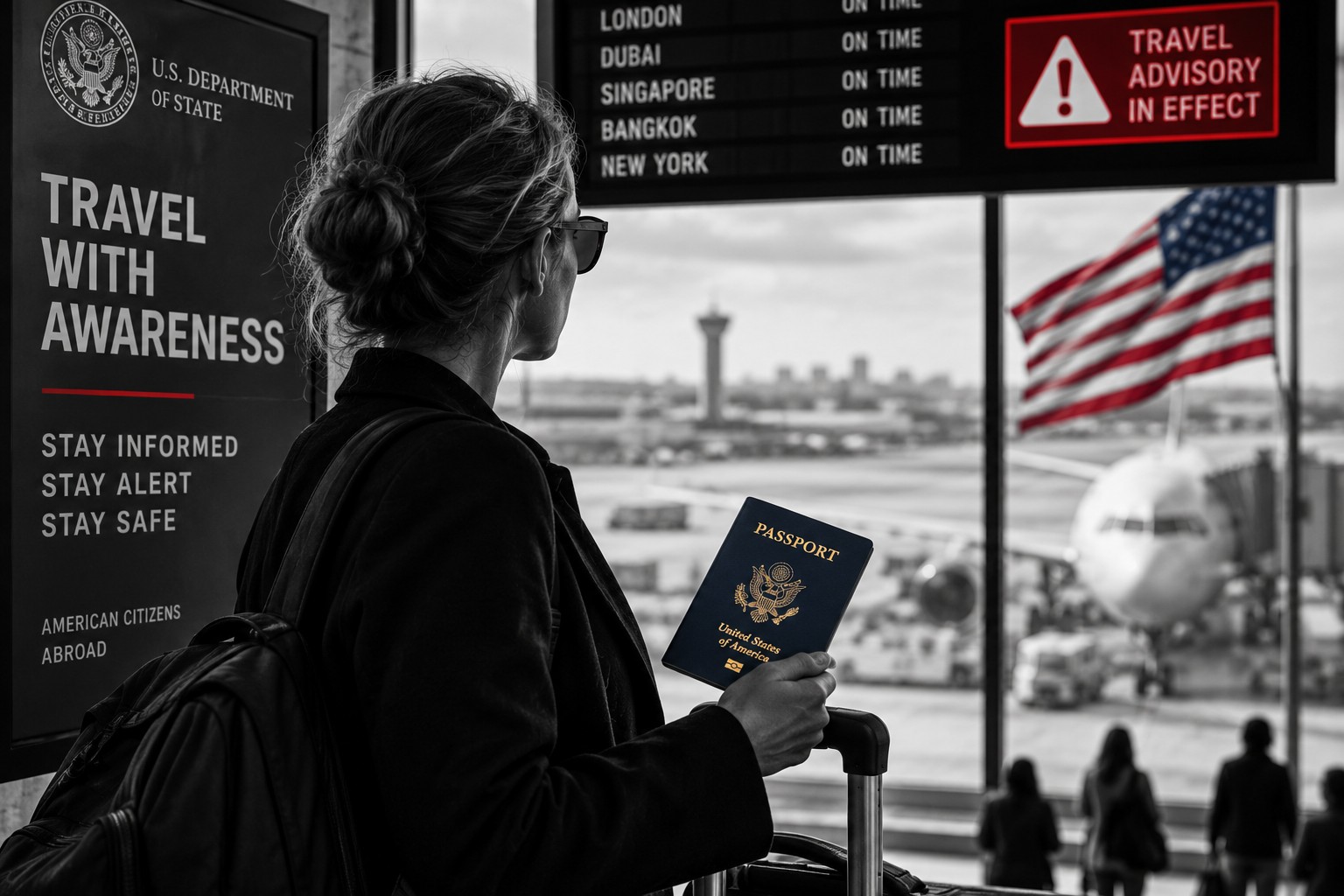
The United States government is warning American citizens travelling or living overseas to exercise increased caution as tensions in the Middle East continue to create security risks, potential flight disruption and threats to US interests around the world.
Worldwide caution remains in place
The US Department of State continues to display a Worldwide Caution for American citizens. The alert says the international security environment remains complex and warns of the possibility of unforeseen escalation linked to tensions in the Middle East.
The warning applies globally, although particular attention is directed towards the Middle East. Americans in the region are advised to maintain heightened vigilance and prepare for possible flight cancellations, temporary airspace closures and other travel disruption.


Americans outside the Middle East are advised to reconsider travel to or through the region and to monitor airport and airline information closely.
US interests could be targeted
The State Department says US diplomatic facilities have previously been targeted, including facilities outside the Middle East. It also warns that Iran and groups supportive of Iran could target US interests overseas or locations associated with American citizens, companies and institutions.
The warning does not mean Americans have been instructed to leave every foreign country. The United States maintains a separate four-level advisory system for individual destinations, ranging from Level 1, Exercise Normal Precautions, to Level 4, Do Not Travel.
Saudi Arabia, for example, currently carries a Level 3 advisory telling Americans to reconsider travel because of risks including Iranian drone and missile attacks against American interests, armed conflict and terrorism. The advisory was updated on 15 September.
Americans told to remain prepared
Washington is urging citizens overseas to follow security alerts from their nearest US embassy or consulate, monitor local and international news and obey instructions from local authorities.
Travellers are also encouraged to register with the Smart Traveler Enrollment Program, STEP, which allows US embassies and consulates to distribute security information and can help authorities contact citizens during emergencies.
The State Department additionally recommends leaving dangerous areas while normal commercial transport remains available rather than waiting for a government-organised evacuation. In a serious crisis, US authorities may help citizens leave when commercial options are unavailable, but their ability to provide transport inside a country can be limited.
For millions of Americans living and travelling overseas, the message from Washington is therefore one of increased vigilance rather than a general instruction to return home.
Newshub Editorial in North America – 20 September 2026

Ask NF GPT
If you have an account with ChatGPT you get deeper explanations,
background and context related to what you are reading.
The United States government is warning American citizens travelling or living overseas to exercise increased caution as tensions in the Middle East continue to create security risks, potential flight disruption and threats to US interests around the world.
Recent Comments