
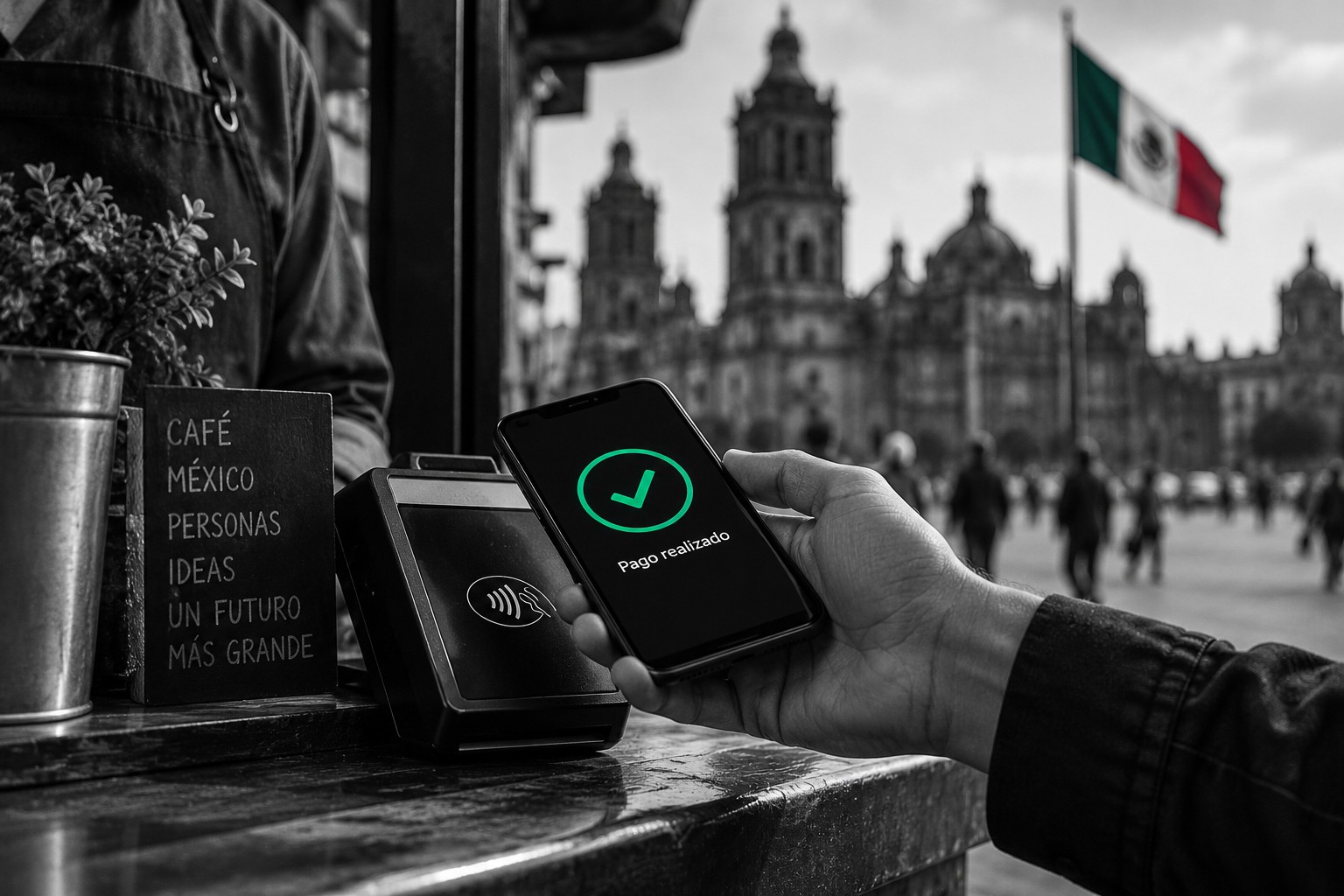
Mexico is taking a potentially significant step towards a more digital financial system after the government submitted legislation designed to accelerate electronic payments, digital identity and remote access to financial services across Latin America’s second-largest economy.
President Claudia Sheinbaum’s administration submitted the proposed Digital Payments Law to Congress on 8 September, creating a framework that could eventually require digital payments to be accepted — and in selected sectors potentially become the only permitted form of payment.
The proposal could provide another major boost for Mexico’s rapidly developing fintech industry.

Building the infrastructure for digital finance
The legislation would formally recognise government-backed digital identity systems for opening and contracting financial services remotely.
It would also give Banco de México and financial regulator CNBV additional authority over payment acceptance infrastructure and the design of financial applications.
Perhaps the most significant provision would allow the Finance Ministry to identify sectors where payments could gradually move entirely away from cash.
Gas stations and toll roads have previously been identified as possible early areas for the transition.
Cash still dominates
Mexico presents an unusual fintech opportunity because digital financial infrastructure has developed considerably faster than consumer adoption.
Cash remains the dominant payment method for smaller purchases.
For transactions of MXN 500 or less, cash accounted for more than 85 per cent of the most frequently used payment methods in 2024.
At the same time, electronic transfers and mobile applications are gaining ground.
Mexico already has important domestic payment infrastructure including SPEI, CoDi and Dimo, while smartphone penetration provides the physical gateway required for wider digital financial participation.
A potentially important fintech market
For fintech companies, payment processors, banks and merchants, greater digital-payment adoption could significantly expand the addressable market.
Digital transactions create opportunities extending beyond payments themselves.
Once consumers enter a digital financial ecosystem, providers can potentially add savings, credit, insurance, remittances and other financial products.
The legislation is not yet law and must pass both chambers of Congress. Important details, including which sectors could become cash-free and when, would subsequently be determined through secondary regulation.
But the direction is clear.
Mexico is no longer looking only at building digital payment technology.
It is looking at how to make people use it.
And if the transition succeeds, one of Latin America’s largest economies could become an important test of how rapidly an emerging market can move from cash towards a genuinely digital financial infrastructure.
Newshub Editorial in Latin America – 14 September 2026

Ask NF GPT
If you have an account with ChatGPT you get deeper explanations,
background and context related to what you are reading.
Recent Comments