
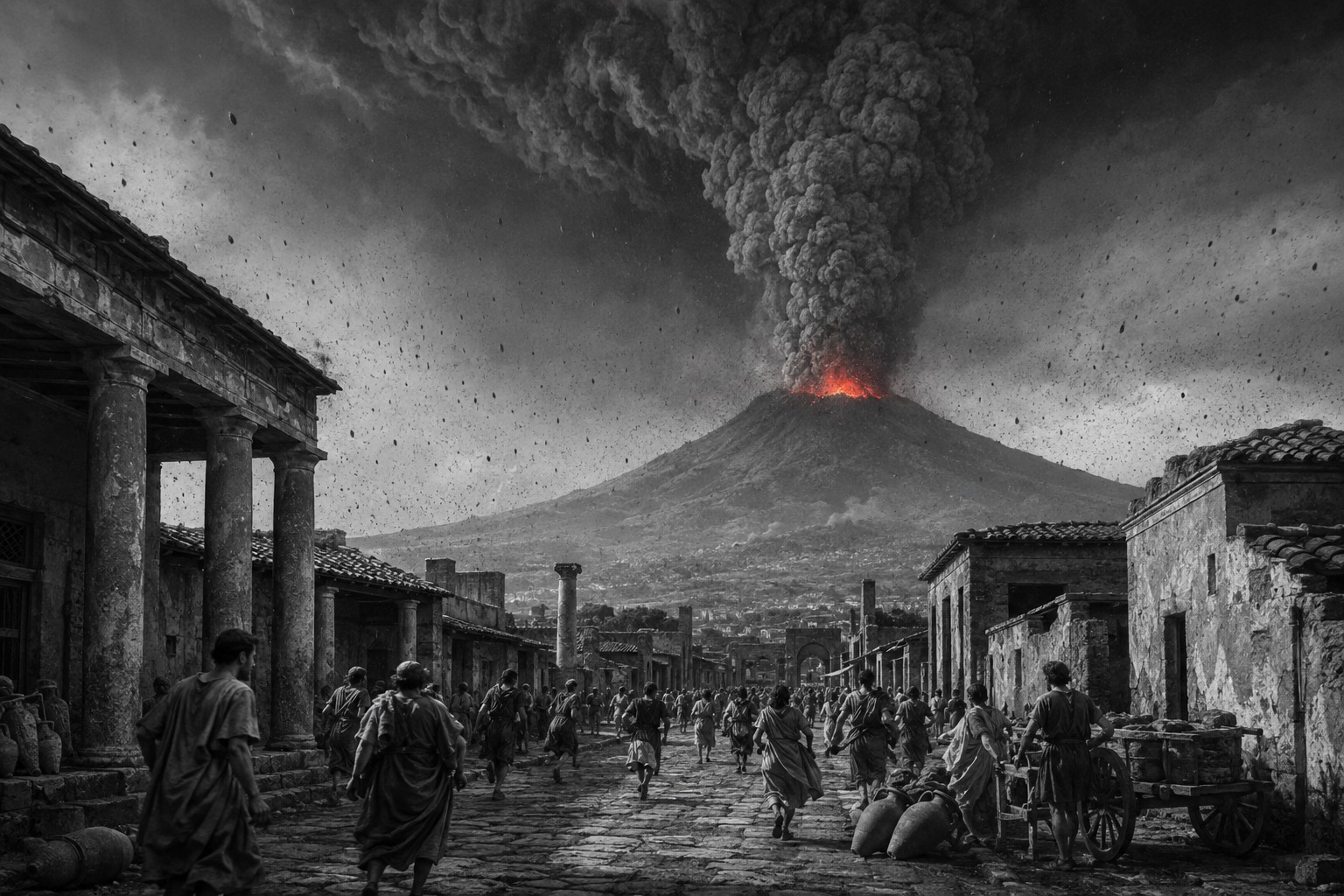
In 79 CE, Mount Vesuvius erupted with devastating force, burying prosperous Roman communities beneath ash, pumice and volcanic debris. Pompeii and Herculaneum disappeared from view, thousands fled or died, and an ordinary corner of the Roman Empire became one of history’s most extraordinary archaeological records.
Warnings beneath the ground
The region around the Bay of Naples was densely populated and admired for its fertile land, vineyards and coastal villas. Although a powerful earthquake had struck the area in 62 CE, most inhabitants did not recognise the smaller tremors before the eruption as signs of an approaching catastrophe. Vesuvius had been quiet for generations and was not widely understood to be an active volcano.
The mountain explodes
The eruption began when a vast column of ash, gas and rock rose high above Vesuvius. The Roman writer Pliny the Younger, observing from across the bay, later described the cloud as resembling an umbrella pine, with a great trunk rising before spreading into branches.
Pompeii was bombarded with pumice for hours. Streets became increasingly difficult to cross, daylight disappeared and roofs collapsed under the accumulating weight. Some residents escaped during the early stages, while others sheltered inside buildings or attempted to protect valuables before fleeing.
Death arrives without warning
The most lethal phase came when the eruption column began to collapse. Superheated clouds of gas, ash and volcanic material raced down the mountain in pyroclastic surges. Herculaneum, closer to Vesuvius, was overwhelmed and buried beneath deep layers of volcanic debris. Pompeii was later struck by surges powerful enough to kill those who remained almost instantly.
Pliny the Elder, a Roman commander and naturalist, sailed across the bay to investigate the eruption and assist people attempting to escape. He died near Stabiae, probably after being overcome during the disaster. His nephew’s surviving letters provide the most important eyewitness account.
A disputed date
The eruption was traditionally dated to 24 August 79 CE, based on surviving copies of Pliny the Younger’s writings. Archaeological evidence, however, points towards an autumn eruption. Seasonal fruit, warmer clothing, heating braziers and an inscription apparently written shortly before the catastrophe have led many researchers to favour a date in October.
Cities preserved beneath the ash
Pompeii and Herculaneum were gradually forgotten until systematic excavations began during the eighteenth century. Archaeologists uncovered houses, temples, shops, workshops, political notices, graffiti, food remains and human victims. Empty spaces left by decomposed bodies at Pompeii were later filled with plaster, creating the haunting casts associated with the disaster.
The precise death toll remains unknown. More than 1,500 victims have been discovered across the affected settlements, but many bodies were never recovered and much of the surrounding region remains unexplored.
A catastrophe that revealed everyday Rome
Vesuvius destroyed communities, families and livelihoods, yet the material it deposited preserved details rarely found elsewhere. Painted rooms, election slogans, bread ovens, taverns and personal possessions reveal how ordinary Romans worked, worshipped, traded and lived.
Nearly two thousand years later, the eruption remains both a human tragedy and an enduring warning: beneath a landscape of wealth and beauty, nature was preparing to erase an entire world.
Newshub Editorial in Europe – 24 August 2026

Ask NF GPT
If you have an account with ChatGPT you get deeper explanations,
background and context related to what you are reading.

Recent Comments