
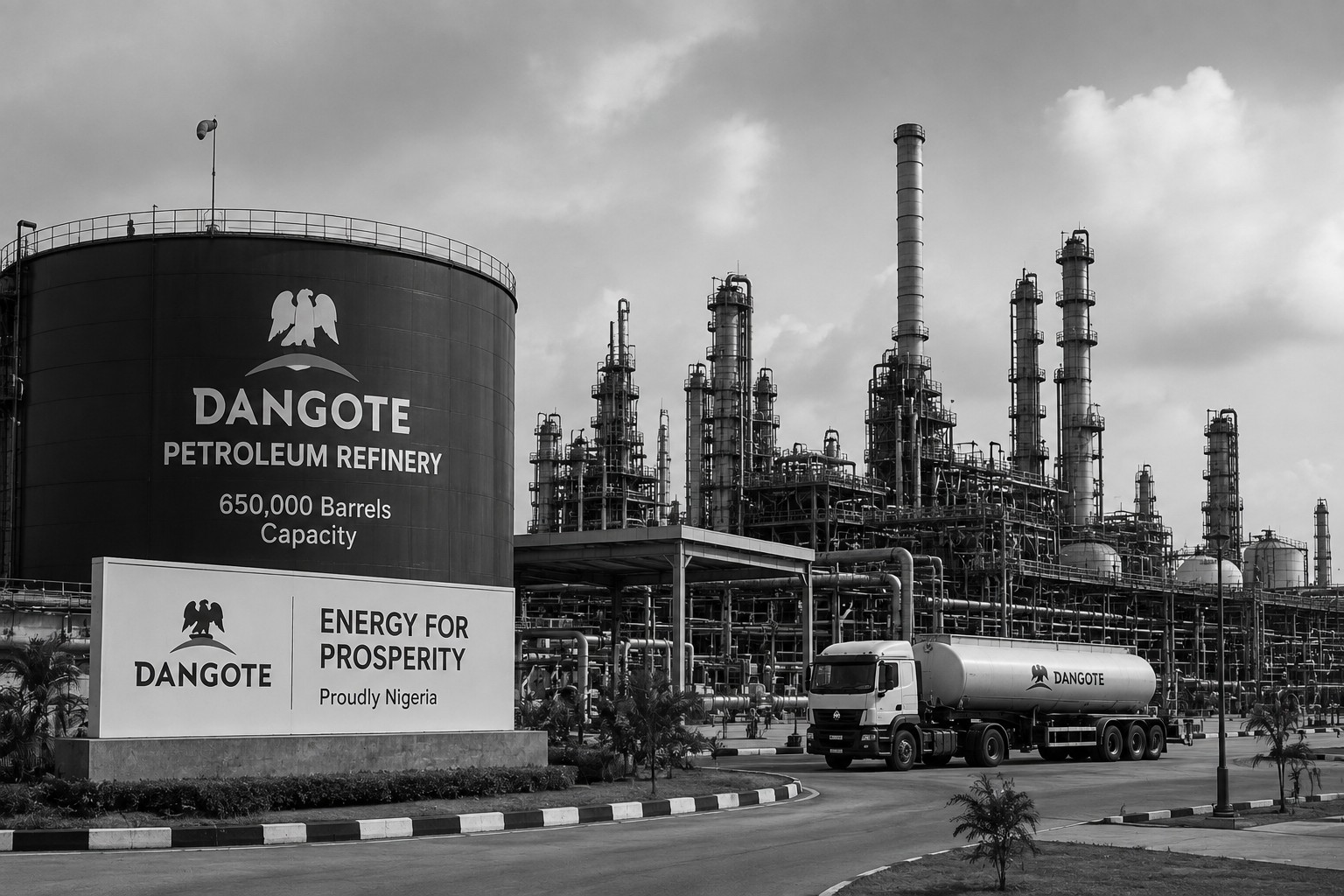
Nigeria’s Dangote Petroleum Refinery is preparing for a potentially landmark initial public offering aimed primarily at Nigerian retail investors, as Africa’s largest refinery seeks fresh capital to support an ambitious expansion. The company is targeting an IPO as early as October 2026, in a transaction that could become one of the largest public offerings ever undertaken in Africa.
Nigerian investors placed at centre of IPO
The refinery does not currently intend to pursue an overseas listing, with chief executive David Bird indicating that a foreign flotation is unlikely for at least three years. Instead, the initial offering is being designed to broaden Nigerian ownership of an asset that has fundamentally changed the country’s downstream petroleum industry.
The company has submitted a $5 billion application to Nigeria’s Securities and Exchange Commission, although the eventual size of the flotation has not yet been determined. Management has emphasised that the transaction should allow ordinary Nigerian investors to participate rather than concentrating ownership exclusively among large institutions.

Private investors already show strong appetite
Investor interest appears substantial. A $2.5 billion private placement completed in July valued the refinery at approximately $40 billion and was reportedly 3.7 times oversubscribed. The Africa Finance Corporation led the investment round.
That demand provides an important indicator ahead of the proposed public offering and could strengthen confidence in Nigeria’s capital markets if retail participation proves similarly strong.
For Nigeria, a successful flotation would also represent something larger than another corporate listing. The country has been attempting to deepen its domestic capital markets while attracting investment into productive infrastructure rather than relying primarily on government debt and commodity exports.
Expansion could double refining capacity
Dangote’s ambitions extend well beyond its existing operations. The company plans to double refining capacity to approximately 1.4 million barrels per day within three years, with the expansion expected to be financed through a combination of IPO proceeds and debt.
The refinery already supplies most of Nigeria’s domestic fuel requirements, reducing the country’s historic dependence on imported refined petroleum products despite being one of Africa’s largest crude oil producers.
Its increasing international role is equally significant. Recent geopolitical disruption has altered global petroleum flows, and the Nigerian refinery became Europe’s largest supplier of jet fuel during June and July, according to company figures reported by Reuters.
A test for African industrialisation
The development highlights a broader economic question facing Africa: whether the continent can retain more value from its natural resources by processing them domestically.
For decades, many African economies have exported crude oil, minerals and agricultural commodities before importing considerably more expensive finished products. Dangote’s model attempts to reverse that structure by combining African resources, large-scale industrial processing and domestic consumer demand.
If the planned IPO succeeds, it could therefore become an important demonstration of African capital financing African industrial infrastructure.
The implications extend beyond Nigeria. Across the continent, governments are increasingly promoting domestic processing and manufacturing as they seek employment, stronger export revenues and greater economic resilience.
Dangote Refinery now sits at the centre of that transformation. Its proposed flotation will test whether Nigeria’s enormous domestic investor base can become an important source of capital for the next stage of African industrial growth.
Newshub Editorial in Africa – 15 August 2026

Ask NF GPT
If you have an account with ChatGPT you get deeper explanations,
background and context related to what you are reading.
Open article chat
Nigeria’s Dangote Petroleum Refinery is preparing for a potentially landmark initial public offering aimed primarily at Nigerian retail investors, as Africa’s largest refinery seeks fresh capital to support an ambitious expansion. The company is targeting an IPO as early as October 2026, in a transaction that could become one of the largest public offerings ever undertaken in Africa.
Recent Comments