
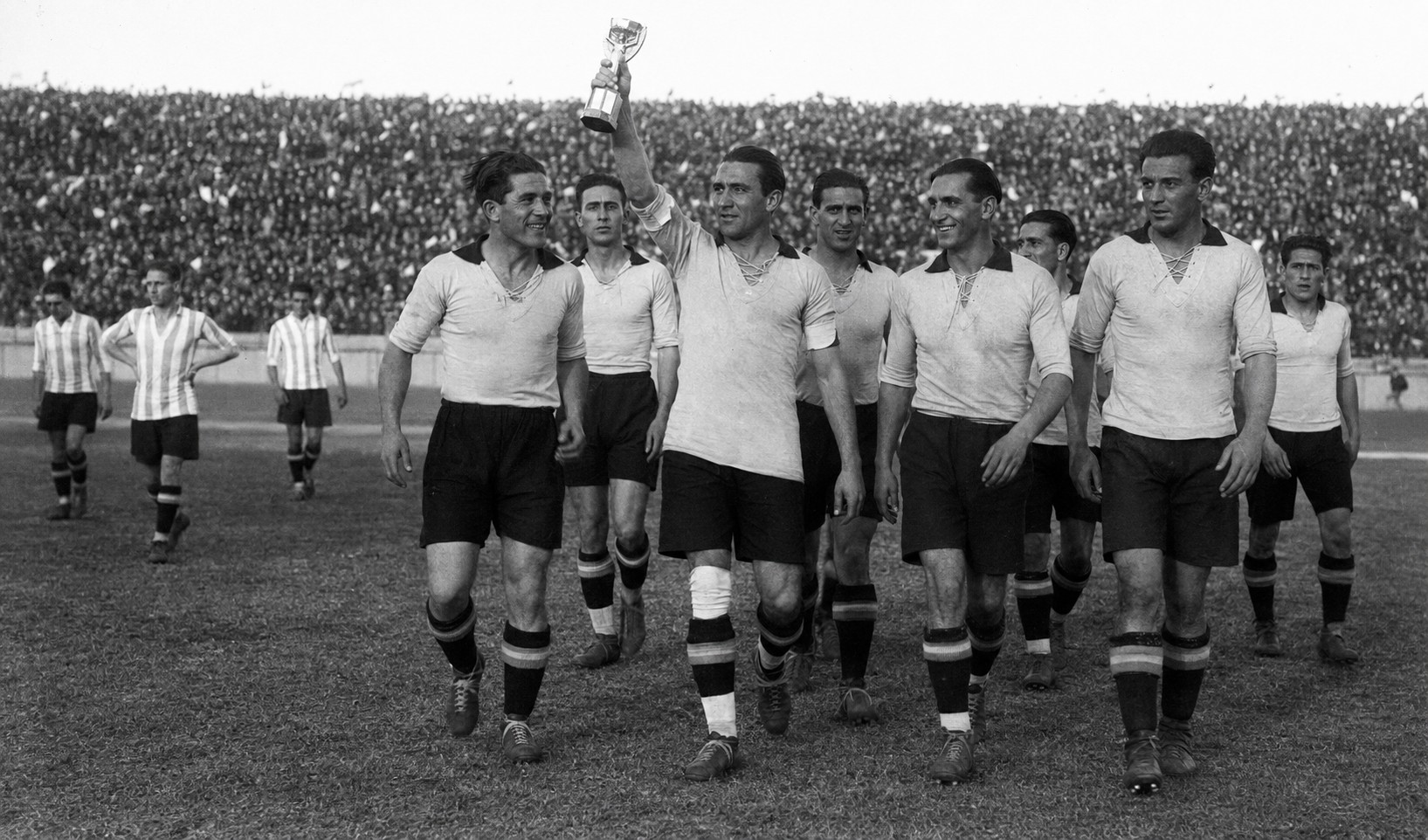
On this day in 1930, Uruguay defeated Argentina 4–2 in Montevideo to become the first world champions in football. Played before more than 60,000 spectators at the newly constructed Estadio Centenario, the final delivered a dramatic comeback, intense rivalry and a defining moment in the development of the world’s most popular sport.
A tournament unlike any before it
The inaugural FIFA World Cup brought together 13 national teams in Uruguay from 13 to 30 July 1930. The hosts had been chosen partly because they were the reigning Olympic champions, having won football gold in both 1924 and 1928, and because Uruguay was celebrating the centenary of its constitution. Although several leading European countries declined to make the long journey across the Atlantic, the tournament established the foundations of a truly international football championship.
Old rivals reach the final
Uruguay and Argentina entered the deciding match with perfect records. Argentina had defeated France, Mexico and Chile in the group stage before overwhelming the United States 6–1 in the semi-final. Uruguay had beaten Peru and Romania before recording an identical 6–1 semi-final victory over Yugoslavia. The final was also a rematch of the 1928 Olympic gold-medal contest, which Uruguay had won 2–1.

The rivalry was evident even before kick-off. The teams disagreed over which football should be used, as both had brought their own. Belgian referee John Langenus resolved the dispute by allowing Argentina’s ball to be used during the first half and Uruguay’s during the second.
Argentina take control
Uruguay opened the scoring after 12 minutes through Pablo Dorado, but Argentina responded quickly. Carlos Peucelle equalised before Guillermo Stábile, the tournament’s leading scorer, gave the visitors a 2–1 advantage. Argentina entered half-time seemingly in control, while the home crowd waited anxiously for a response from the Olympic champions.
Uruguay emerged transformed after the interval. Pedro Cea equalised shortly before the hour mark, shifting the momentum decisively towards the hosts. Victoriano Iriarte then struck from distance to restore Uruguay’s lead as Argentina struggled to contain the growing pressure.
Castro seals the championship
With Argentina searching for an equaliser, Uruguay launched one final attack. Héctor Castro headed home the fourth goal in the closing minutes, completing the 4–2 victory and triggering celebrations across Montevideo. Castro, who had lost part of his right arm in a childhood accident, became one of the enduring figures of the first World Cup.
Captain José Nasazzi lifted the trophy for Uruguay, confirming the small South American nation as the dominant force of football’s early international era. Uruguay would later capture a second world title in 1950 by defeating Brazil in the legendary Maracanazo.
A lasting football legacy
The 1930 final transformed the World Cup from an ambitious experiment into a competition with enormous global potential. Uruguay’s victory established traditions that remain central to the tournament today: national pride, fierce rivalry, dramatic comebacks and the crowning of a world champion.
Newshub Editorial in South America – 30 July 2026

Ask NF GPT
If you have an account with ChatGPT you get deeper explanations,
background and context related to what you are reading.
Recent Comments