
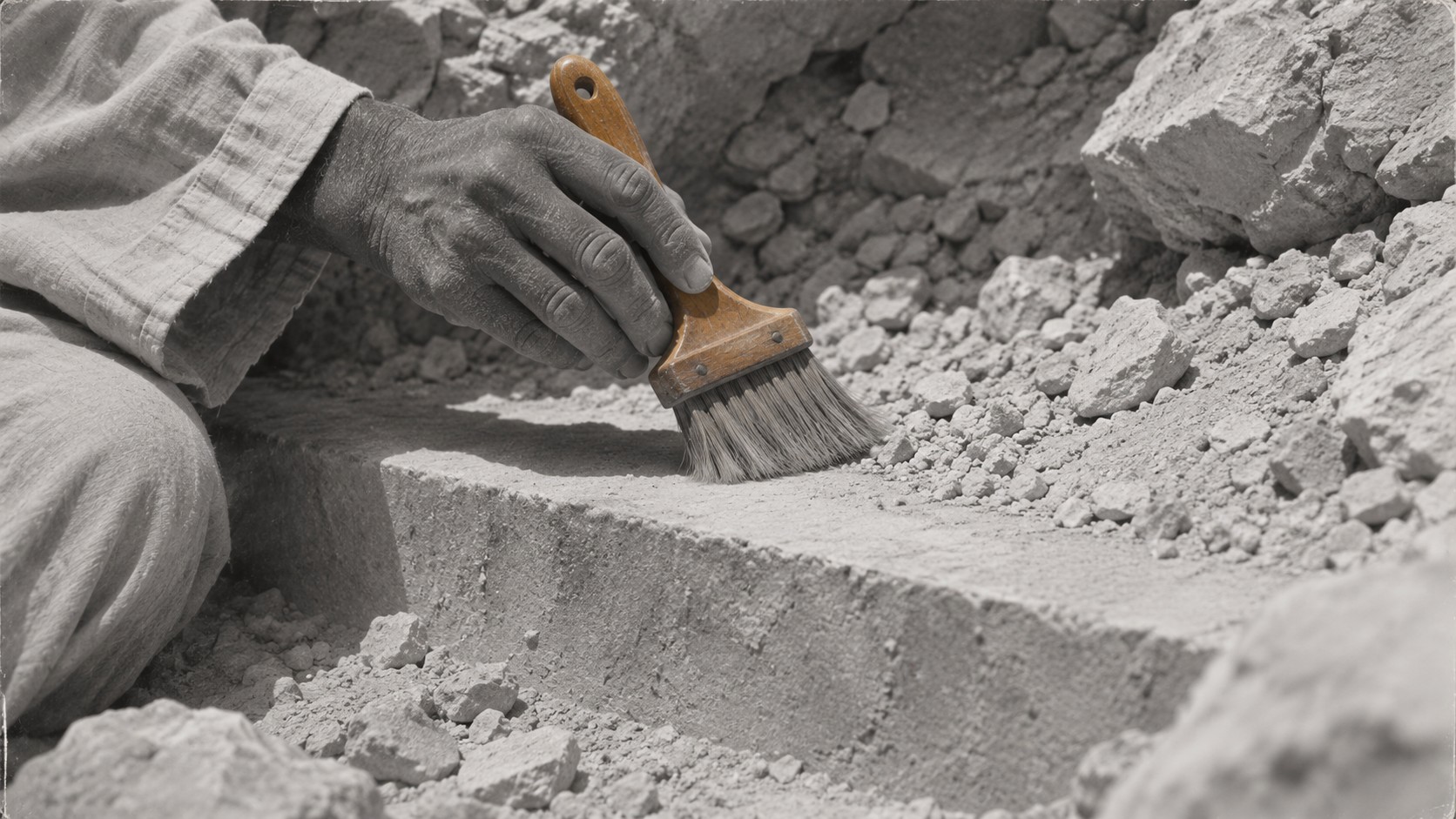
On 4 November 1922, Egyptian excavators working with British archaeologist Howard Carter uncovered a step cut into the bedrock in Egypt’s Valley of the Kings. It lay beneath the remains of ancient workmen’s huts near the tomb of Ramesses VI. Another three weeks would pass before Carter could look through a doorway and see what had survived of Tutankhamun’s burial.
A staircase beneath the huts
Carter had spent several seasons searching the valley, on the west bank of the Nile opposite Luxor, with financial backing from Lord Carnarvon. By 5 November, the excavators had followed the steps down to the upper part of a plastered doorway. An impression in the plaster showed a jackal above nine captives, the seal of the royal burial ground. The identity of the tomb’s owner was still uncertain.
Carter had the entrance covered again and sent a telegram to Carnarvon in England. When work resumed later that month, the team cleared the full doorway and found seal impressions bearing Tutankhamun’s name. There were also signs that someone had broken through the entrance in antiquity and that it had subsequently been resealed.


The first glimpse by candlelight
Beyond the entrance lay a passage packed with rubble. On 26 November, Carter made a small opening in a second doorway and held up a candle. As his eyes adjusted, he could make out gilded couches in the shapes of animals, parts of chariots and two dark guardian statues. He was looking into the antechamber. The burial chamber itself was opened on 16 February 1923.
What survived alongside the gold
The excavation occupied a decade. Egyptian workers, conservators, photographers and other specialists helped document and remove thousands of objects, many of them fragile. Photographer Harry Burton recorded the position of objects before they were moved, preserving details that would otherwise have been lost as each room was emptied.
Tutankhamun’s gold funerary mask became the best-known object from the tomb. The linen garments, sandals, baskets and food buried with the young king offered evidence of a different kind. Their survival allowed researchers to examine how Egyptian craftspeople wove cloth, worked leather and prepared provisions for a royal burial more than 3,000 years ago.
Newshub Editorial in Africa – 4 November 2026
On 4 November 1922, Egyptian excavators working with British archaeologist Howard Carter uncovered a step cut into the bedrock in Egypt’s Valley of the Kings. It lay beneath the remains of ancient workmen’s huts near the tomb of Ramesses VI. Another three weeks would pass before Carter could look through a doorway and see what had survived of Tutankhamun’s burial.

Recent Comments