
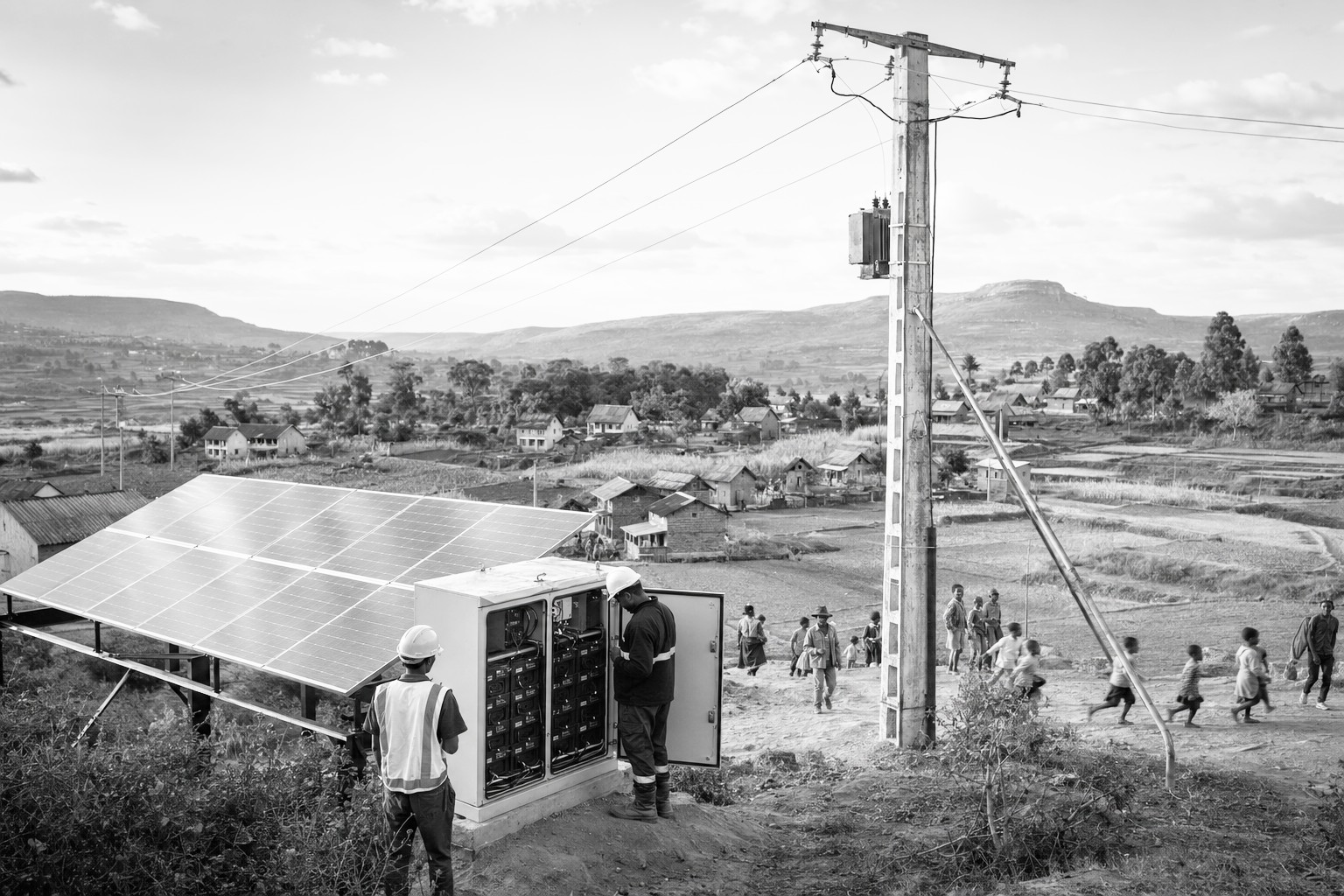
Madagascar’s struggle to provide reliable electricity is entering a potentially decisive phase. While power cuts, expensive generation and the financial weakness of the state utility continue to constrain households and businesses, new solar, hydropower and off-grid investments offer cautious hope that electrification can finally accelerate.
A system unable to meet demand
Only about 36% of Madagascar’s population has access to reliable electricity, according to the World Bank. Rural communities are particularly underserved, while customers connected to the national grid regularly endure outages and voltage instability.
The problems extend far beyond insufficient generating capacity. State-owned utility Jirama depends heavily on costly diesel and fuel-oil generation, operates ageing infrastructure and loses substantial amounts of electricity through technical faults, illegal connections and unpaid bills.

An International Monetary Fund assessment found that Madagascar had approximately 718 megawatts of installed capacity in 2023. Thermal plants accounted for more than half, while hydropower supplied about one-third and solar represented 14%. However, poor maintenance means that much of this capacity is not consistently available.
Solar projects offer faster relief
Near Moramanga, east of Antananarivo, a 15-megawatt solar farm combined with 10 megawatt-hours of battery storage is expected to strengthen supplies to the capital and surrounding districts. The project illustrates both Madagascar’s potential and its difficulties: construction has advanced, but customs disputes involving imported equipment have contributed to delays.
The government and energy agencies have also announced agreements covering 46 solar initiatives with a combined proposed capacity of approximately 932 megawatts. If financed and completed, these plants would represent a major expansion of the country’s electricity system. Yet agreements and development pipelines do not immediately produce power. Developers must still secure land, finance, grid connections and commercially sustainable purchasing arrangements.
Hydropower could transform supply
Madagascar possesses an estimated 7,800 megawatts of economically viable hydropower potential, but only a small proportion has been developed. Major proposals include the Sahofika and Volobe plants, which could provide dependable electricity on a scale far greater than most existing projects.
Such schemes could reduce dependence on imported fuel and help stabilise electricity prices. Nevertheless, large dams require substantial capital, lengthy construction periods and careful management of environmental and community impacts. Previous delays demonstrate why hydropower cannot be the country’s only answer.
New programme targets millions of people
A $250 million World Bank-backed programme aims to provide electricity and modern cooking services to more than 2.5 million people by 2030. Its targets include 200,000 new Jirama household connections, 312,500 off-grid connections and the conversion of 30 isolated power centres to hybrid solar-and-battery systems.
Mini-grids and solar home systems could produce the fastest gains in remote communities where extending conventional transmission lines is prohibitively expensive. They may also support clinics, schools, small businesses and agricultural processing without requiring residents to wait for the national grid.
Reforming Jirama remains decisive
New generating plants will not resolve Madagascar’s electricity crisis unless Jirama becomes financially and operationally stronger. Reducing losses, improving bill collection, maintaining equipment and setting tariffs that balance affordability with cost recovery will be essential.
Madagascar therefore has genuine reasons for optimism, but little room for complacency. Its mission for megawatts will succeed only when ambitious announcements become functioning projects—and when new capacity is supported by a utility capable of delivering dependable power.
Newshub Editorial in Africa – 30 July 2026

Ask NF GPT
If you have an account with ChatGPT you get deeper explanations,
background and context related to what you are reading.
Recent Comments