
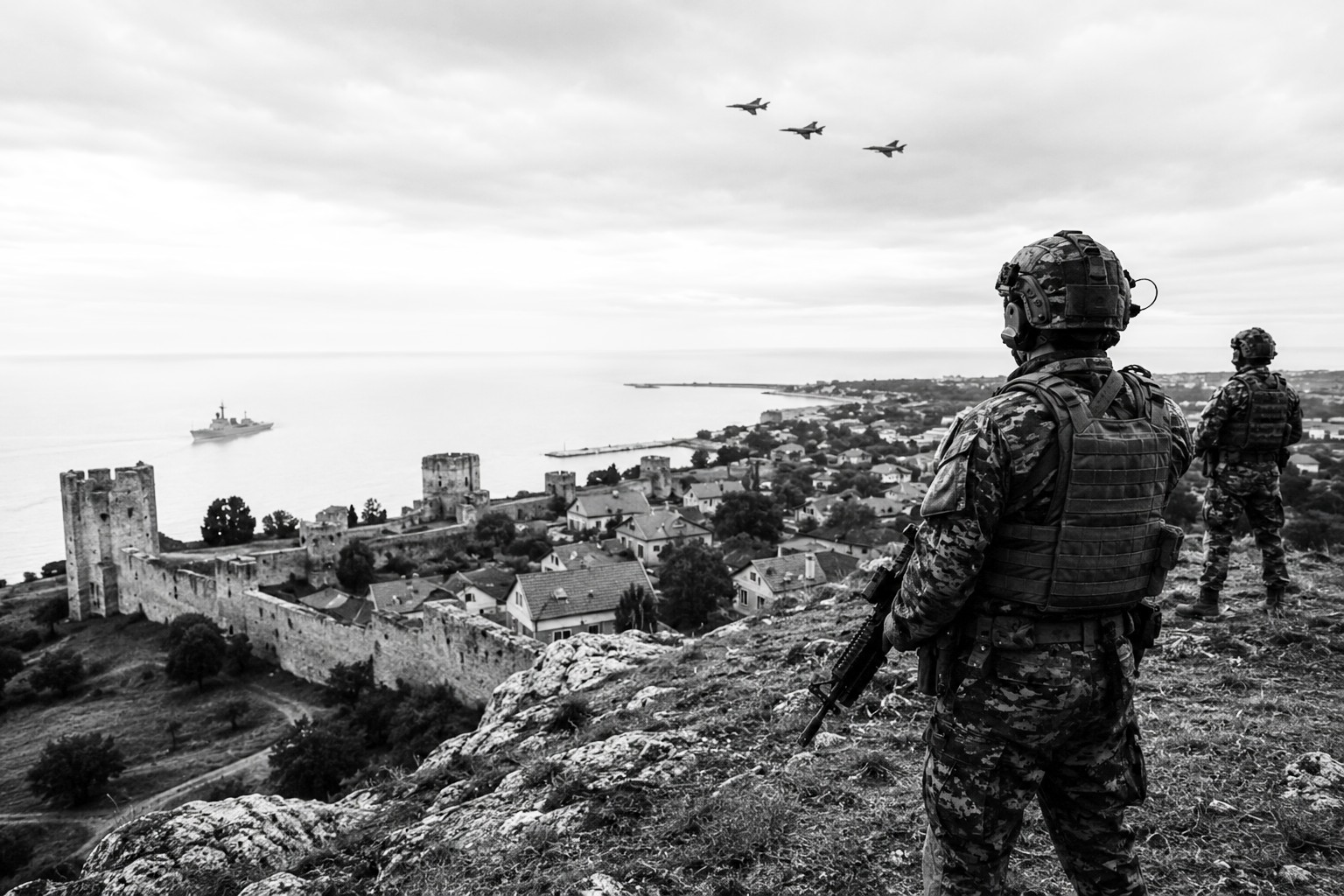
Sweden’s Baltic Sea island of Gotland has become a focal point of the country’s defence strategy as military authorities and local communities intensify preparations against the possibility of future Russian aggression. While officials stress there is no imminent threat of invasion, the island is undergoing a broad transformation designed to strengthen both military readiness and civilian resilience in an increasingly uncertain security environment.
A strategic island at the heart of the Baltic
Situated between mainland Sweden and the Baltic states, Gotland occupies one of the most strategically important locations in northern Europe. Control of the island would provide significant influence over maritime and air routes across much of the Baltic Sea, making it a key asset for both Sweden and NATO.
Since Sweden joined NATO in 2024, the island’s importance has grown further. Military planners regard Gotland as a critical component of the alliance’s ability to reinforce and defend the Baltic region should tensions with Russia escalate.

Military presence expands
The Swedish Armed Forces have substantially increased their presence on the island following years of renewed investment in national defence. Young conscripts now undergo extensive military training at the re-established P18 regiment near Visby, while larger exercises involving Swedish and allied NATO forces have become increasingly common.
Military leaders believe a visible and capable force acts as a deterrent against any potential attempt to challenge NATO’s resolve. Defence officials have also warned that if Russia’s war against Ukraine were eventually to subside, Moscow could redirect military resources towards the Baltic region, making continued preparedness essential.
Civil society prepares alongside the military
Preparation on Gotland extends well beyond the armed forces. Local residents are organising neighbourhood emergency groups, mapping water supplies, expanding food storage and developing community resilience plans designed to maintain essential services during any crisis.
Initiatives such as the “Strong Parish” programme encourage communities to become more self-sufficient while supporting vulnerable residents. Authorities are also planning emergency evacuation exercises and strengthening local infrastructure to ensure the island can continue functioning even under severe disruption.
Officials emphasise that national defence today involves the entire population rather than the military alone, reflecting Sweden’s renewed emphasis on its long-standing concept of total defence.
Deterrence through preparedness
Swedish officials consistently underline that the objective is to prevent conflict rather than prepare for its inevitability. By combining stronger armed forces with resilient civilian communities, Sweden hopes to convince any potential adversary that aggression would come at an unacceptable cost.
With tensions in the Baltic Sea remaining elevated and Russia continuing to project military power throughout the region, Gotland has become both a symbol and a practical example of Sweden’s wider defence strategy. The island’s evolving role illustrates how European nations are adapting to a rapidly changing security landscape while seeking to reinforce NATO’s collective deterrence.
Newshub Editorial in Europe – 6 July 2026

Ask NF GPT
If you have an account with ChatGPT you get deeper explanations,
background and context related to what you are reading.
Open an account:
Recent Comments