
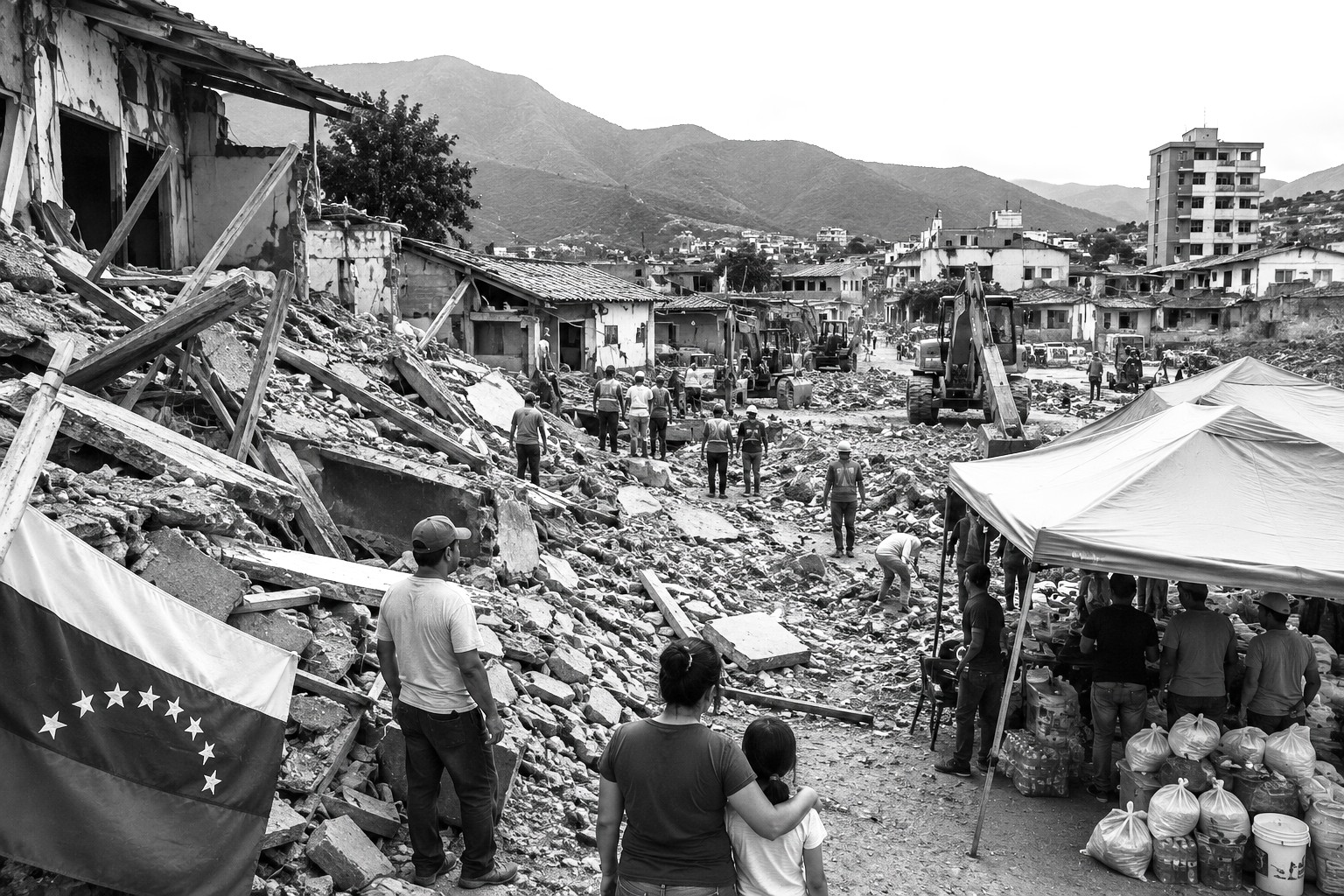
Venezuela has begun discussions with the International Monetary Fund (IMF) over financial assistance to support reconstruction following the devastating earthquakes that struck the country on 24 June. The announcement marks an important step in the government’s efforts to rebuild damaged infrastructure, restore essential services and provide long-term support to affected communities.
Government seeks international support
On 2 July, President Delcy Rodríguez confirmed that the government had opened talks with the IMF to explore access to emergency financing for the country’s reconstruction programme. The discussions come as authorities continue to assess the scale of destruction caused by the twin earthquakes, which damaged homes, transport infrastructure, healthcare facilities and public utilities across several regions.
Officials have indicated that rebuilding efforts will require substantial financial resources extending well beyond Venezuela’s domestic capacity, making international support increasingly important.

Enormous reconstruction challenge
Engineers and emergency planners are continuing structural assessments in the worst-affected areas, where thousands of buildings have either collapsed or sustained severe damage. Roads, bridges, electricity networks and water systems remain priority targets for repair as authorities work to restore normal economic activity.
Housing reconstruction is expected to become one of the largest components of the recovery programme, with many families still displaced and relying on temporary accommodation. Healthcare services are also under pressure as hospitals continue treating injured residents while operating with damaged infrastructure.
The government has stated that reconstruction will be carried out in phases, prioritising critical public services before longer-term rebuilding projects begin.
Economic pressure intensifies
The earthquakes have placed additional strain on an economy that has already faced years of financial challenges. Rebuilding costs are expected to reach several billion dollars, creating significant pressure on public finances.
Economists note that securing international funding could accelerate reconstruction while reducing the immediate burden on government budgets. However, negotiations with international financial institutions are likely to involve detailed discussions regarding financing mechanisms, transparency and the administration of reconstruction projects.
Businesses across affected regions are also assessing losses, with damage to commercial property and transport infrastructure disrupting local economic activity.
Recovery likely to take years
Humanitarian organisations continue to provide emergency assistance while attention gradually shifts from rescue operations towards long-term recovery. Alongside rebuilding infrastructure, authorities face the challenge of restoring schools, healthcare facilities and public services that are essential for communities returning to normal life.
Experts emphasise that reconstruction offers an opportunity to improve building standards and strengthen resilience against future natural disasters. Investment in earthquake-resistant infrastructure is expected to become a central element of the rebuilding strategy.
As discussions with the IMF continue, the focus is increasingly moving beyond the immediate humanitarian response towards securing the financial resources needed for Venezuela’s recovery. The success of those negotiations could play a significant role in determining both the speed and the effectiveness of the country’s reconstruction over the coming years.
Newshub Editorial – South America – 4 July 2026

Ask NF GPT
If you have an account with ChatGPT you get deeper explanations,
background and context related to what you are reading.
Open an account:
Recent Comments