
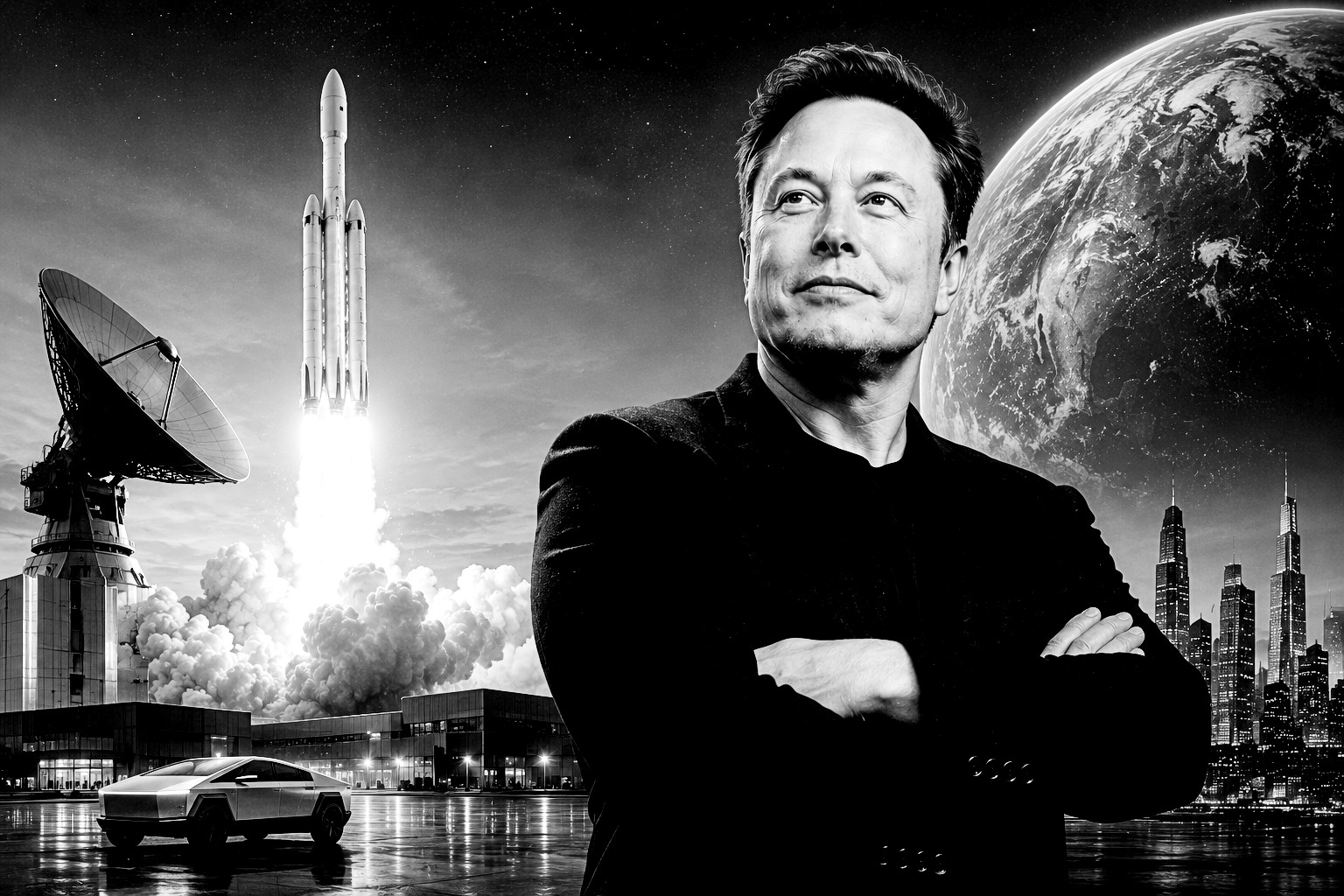
Everyday investors are set to gain access to one of the world’s most closely watched private companies as Elon Musk’s SpaceX begins trading on public markets on Friday. The listing is expected to become the largest initial public offering in history, with the company targeting a valuation of approximately $1.75 trillion, instantly placing it among the world’s ten most valuable publicly traded corporations.
A landmark moment for financial markets
The debut represents a watershed moment for both the aerospace industry and global capital markets. SpaceX has spent more than two decades transforming commercial spaceflight, satellite communications and launch services, while remaining privately held throughout its rapid expansion.

The company has priced its shares at $135, raising approximately $75 billion in fresh capital. The proceeds are expected to fund future growth across its launch business, the Starlink satellite internet network and its expanding artificial intelligence initiatives.
From rockets to artificial intelligence
While SpaceX built its reputation through reusable rockets and government launch contracts, investors are increasingly viewing the company as a broader technology and AI infrastructure business.
Analysts point to Starlink as the company’s primary revenue engine today, providing global broadband services through thousands of low-Earth orbit satellites. At the same time, management has outlined ambitious plans involving AI-powered infrastructure, advanced computing capabilities and future space-based data centres designed to support next-generation artificial intelligence applications.
This broader technology strategy has significantly expanded investor interest beyond the traditional aerospace sector.
Historic valuation attracts both enthusiasm and caution
A valuation approaching $1.75 trillion would eclipse every previous IPO, surpassing even the landmark listing of Saudi Aramco. Such a valuation would immediately place SpaceX alongside the world’s largest publicly traded companies by market capitalisation.
Investor demand has reportedly been exceptionally strong, with institutional and retail orders greatly exceeding the available allocation of shares ahead of the listing.
However, not everyone is convinced the valuation is fully justified. Some analysts argue that much of the company’s future value depends on ambitious long-term projects, including AI infrastructure and deep-space initiatives that remain years away from commercial maturity. Others note that significant capital expenditure and continued investment may keep profitability under pressure in the near term.
A defining test for technology IPOs
The success of SpaceX’s public debut could have far-reaching consequences for global equity markets. A strong performance may encourage other high-profile private technology and AI companies to accelerate their own listing plans, potentially opening a new wave of mega-cap IPOs over the coming years.
For Elon Musk, the listing marks another milestone in an already remarkable entrepreneurial career. For investors, it offers the first opportunity to directly participate in a company that has reshaped commercial spaceflight while positioning itself at the intersection of aerospace, satellite communications and artificial intelligence.
Whether SpaceX ultimately justifies its historic valuation will depend on its ability to convert bold technological ambitions into sustainable long-term financial performance.
Newshub Editorial in Europe – 12 June 2026

If you have an account with ChatGPT you get deeper explanations,
background and context related to what you are reading.
Open an account:
Open an account
Recent Comments