
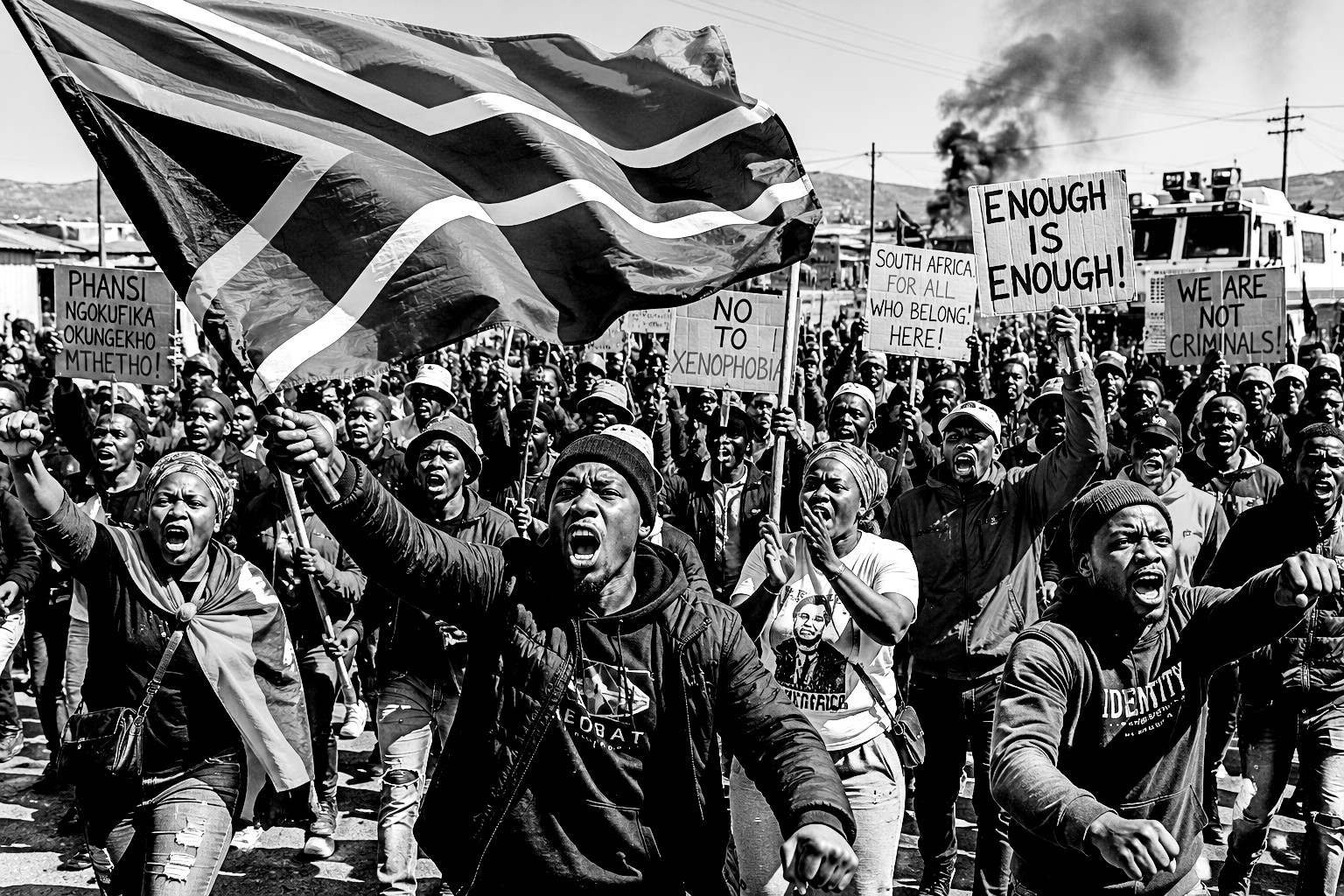
Many African migrants living in South Africa say they are experiencing “extreme fear” as anti-immigration protests and political pressure campaigns gain momentum across parts of the country. Although many migrants possess valid legal documentation, community leaders report that growing hostility is making daily life increasingly uncertain.
Growing tensions over immigration
The latest wave of concern follows a series of demonstrations organised by groups demanding stricter immigration enforcement and tougher action against undocumented migrants. Protest organisers argue that illegal immigration places pressure on public services, employment opportunities and housing in a country already struggling with high unemployment and economic challenges.
While many demonstrations have remained peaceful, migrant communities say the rhetoric surrounding the issue has become increasingly aggressive, creating an atmosphere of anxiety among both documented and undocumented foreign residents.

Legal status offers limited reassurance
Many migrants from Zimbabwe, Mozambique, Malawi, Ethiopia, Nigeria, the Democratic Republic of the Congo and other African nations say that possessing legal permits no longer guarantees a sense of security.
Community organisations report that some foreign nationals have reduced travel, avoided public gatherings and become reluctant to engage with authorities due to fears of harassment or being wrongly targeted during immigration enforcement operations.
Several migrant advocacy groups have warned that anti-immigration sentiment risks affecting people regardless of their legal status, contributing to uncertainty within communities that have lived in South Africa for years.
Economic frustrations driving the debate
South Africa continues to face one of the highest unemployment rates in the world, particularly among young people. Political parties and activist groups have increasingly linked immigration to broader economic frustrations, arguing that stronger border controls and enforcement measures are necessary to protect local employment opportunities.
Economists, however, note that unemployment and economic inequality stem from a complex mix of structural factors, including slow economic growth, skills mismatches, infrastructure challenges and investment shortages.
The debate has therefore become one of the country’s most politically sensitive issues, with immigration often emerging as a central topic during election campaigns and public policy discussions.
Calls for calm and dialogue
Human rights organisations, religious leaders and community groups have urged restraint, warning that inflammatory rhetoric could increase the risk of xenophobic incidents similar to those seen in previous years.
South African authorities have reiterated that immigration laws will be enforced while also emphasising the importance of protecting the rights and safety of all residents regardless of nationality.
Advocates argue that a balanced approach is needed—one that addresses legitimate concerns about border management while avoiding discrimination against migrants who contribute to the country’s economy and society.
A challenge for Africa’s largest economy
The growing backlash highlights the difficult balance facing South Africa as it seeks to manage migration, economic pressures and social cohesion simultaneously. As public debate intensifies, many migrants remain uncertain about what the future holds, with some describing the current atmosphere as the most unsettling they have experienced in years.
For policymakers, the challenge will be finding solutions that address public concerns without deepening divisions in one of Africa’s most diverse societies.
Newshub Editorial in Africa – 8 June 2026

If you have an account with ChatGPT you get deeper explanations,
background and context related to what you are reading.
Open an account:
Open an account
Recent Comments