
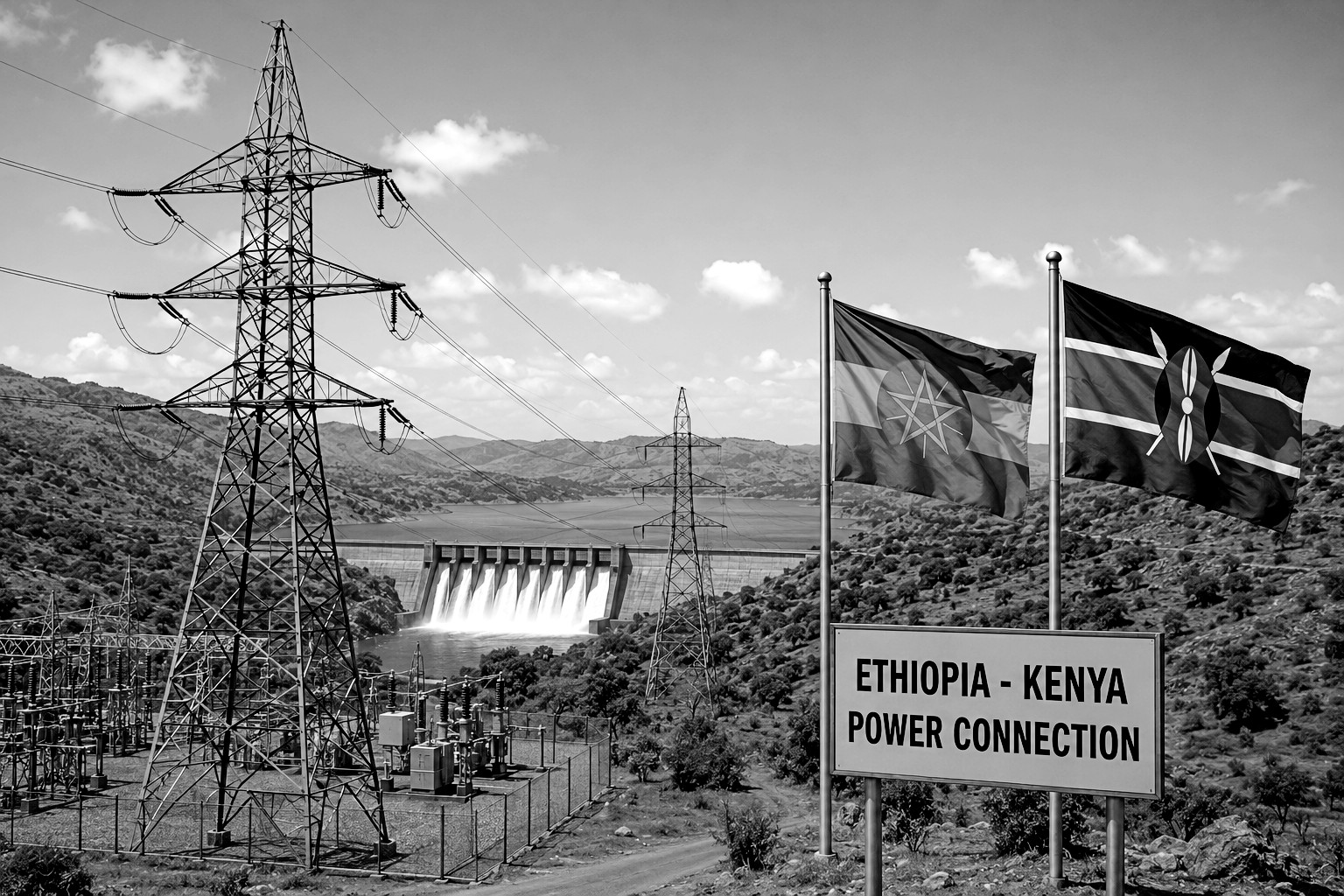
Kenya has increasingly turned to neighbouring Ethiopia for electricity imports, seeking lower-cost energy supplies to support its growing economy and meet rising power demand. While the arrangement offers economic benefits for Kenya and export revenues for Ethiopia, it has also sparked debate in both countries over energy security, pricing and national priorities.
A growing cross-border energy partnership
The electricity trade is made possible through a high-voltage transmission line connecting the two East African nations. The interconnection forms part of broader efforts to strengthen regional energy cooperation and create a more integrated African power market.
Ethiopia, which has invested heavily in hydroelectric generation over the past two decades, has developed substantial surplus capacity during periods of strong rainfall. Kenya has viewed these imports as an opportunity to supplement domestic generation while reducing overall energy costs.

Lower costs drive Kenyan demand
One of the primary reasons for Kenya’s increased purchases is price. Hydropower generated in Ethiopia is often cheaper than electricity produced from thermal power plants that rely on imported fossil fuels.
By importing lower-cost electricity, Kenya aims to reduce pressure on consumers and businesses facing rising energy expenses. Access to affordable power is also seen as important for industrial growth, manufacturing competitiveness and economic development.
Kenyan officials argue that regional energy trading helps improve efficiency by allowing countries to benefit from comparative advantages in power generation.
Debate over national energy priorities
Despite the economic rationale, the policy has generated controversy. Some Kenyan stakeholders question whether increased imports could discourage investment in domestic power generation projects or create excessive dependence on external suppliers.
Meanwhile, critics in Ethiopia argue that electricity exports should not take priority over domestic needs, particularly in regions where access to reliable power remains limited. They contend that expanding electrification within Ethiopia should remain the government’s foremost objective.
Supporters of the exports counter that revenues earned from power sales can help finance further infrastructure development and accelerate electrification efforts across the country.
Regional integration gains momentum
The electricity trade reflects a wider trend towards regional cooperation in East Africa. Governments increasingly view interconnected power grids as a way to improve reliability, lower costs and reduce vulnerability to supply disruptions.
As renewable energy capacity expands across the continent, regional energy markets are expected to play a growing role in balancing supply and demand between neighbouring countries.
Looking ahead
Kenya’s decision to purchase more electricity from Ethiopia highlights the opportunities and challenges of regional energy integration. While cheaper imported power can support economic growth and lower costs, policymakers in both countries must balance commercial benefits with concerns about energy security, domestic development and long-term sustainability.
As East Africa continues to modernise its infrastructure, cross-border electricity trading is likely to become an increasingly important component of the region’s economic and energy strategy.
Newshub Editorial in Africa – 5 June 2026

If you have an account with ChatGPT you get deeper explanations,
background and context related to what you are reading.
Open an account:
Open an account
Recent Comments