
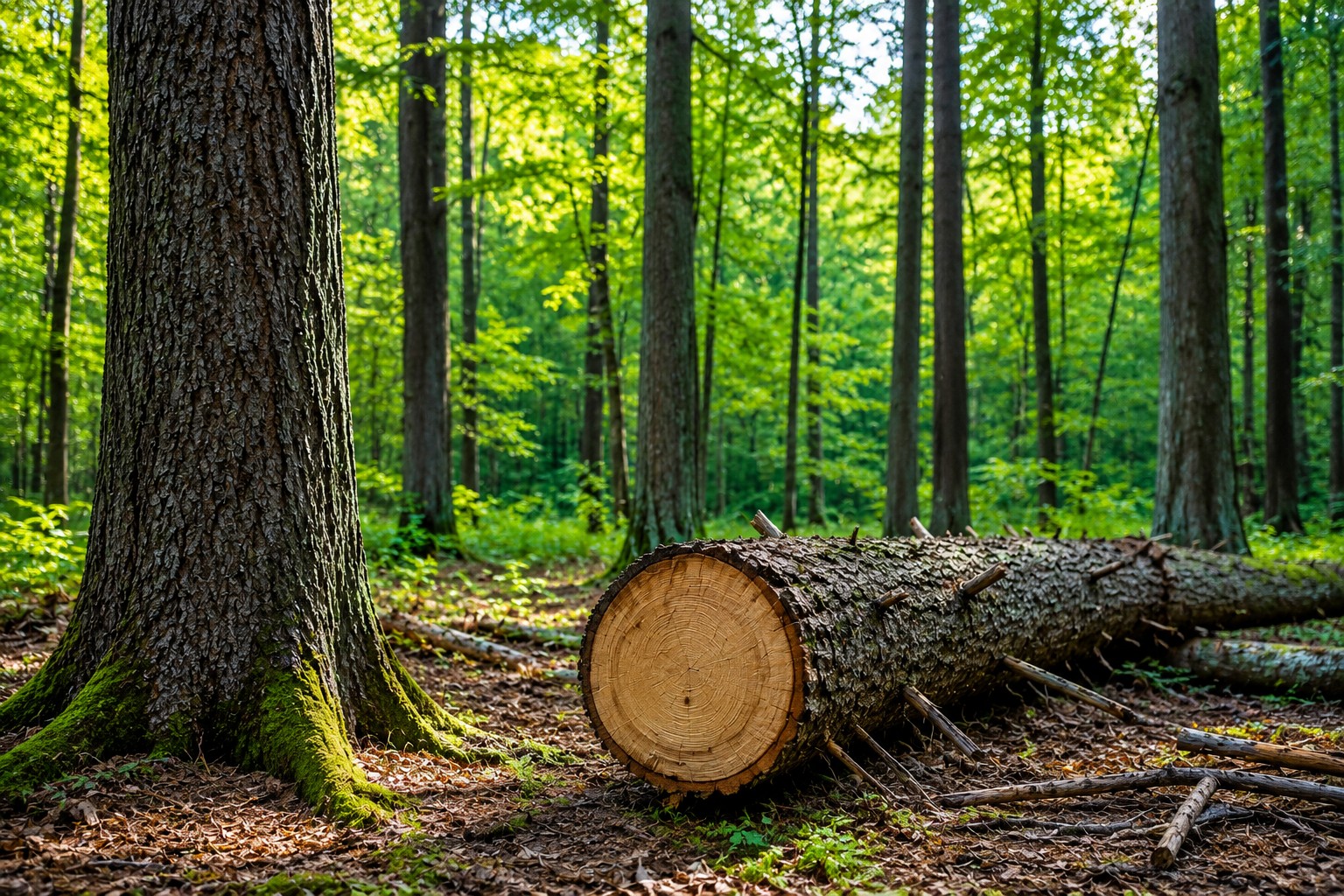
New scientific research suggests that forests may be storing significantly less carbon than previously estimated, raising fresh questions about one of the world’s most important natural tools for combating climate change. While trees continue to absorb carbon dioxide through photosynthesis, researchers have found that this process does not always translate into increased wood growth, meaning less carbon may ultimately be locked away in trunks and branches than climate models have assumed.
Photosynthesis is only part of the story
Trees remove carbon dioxide from the atmosphere by converting it into sugars through photosynthesis. A substantial proportion of this carbon is expected to become wood, allowing forests to store carbon for decades or even centuries.
However, the latest study indicates that a considerable amount of the carbon captured during photosynthesis is instead used for other biological functions, including respiration, root development, defence against disease and environmental stress. As a result, increases in photosynthesis do not necessarily lead to proportional increases in tree growth or long-term carbon storage.

The findings challenge a longstanding assumption that higher atmospheric carbon dioxide concentrations will automatically boost forests’ ability to act as carbon sinks.
Climate pressures limit growth
Researchers found that factors such as drought, rising temperatures, nutrient shortages and insect attacks can reduce the amount of carbon converted into new wood. Even when trees absorb more carbon dioxide, environmental stress often diverts that carbon towards survival rather than growth.
The study also highlights differences between species, ecosystems and climate zones, suggesting that forests do not all respond in the same way to changing environmental conditions.
Scientists emphasise that forests remain essential for regulating the global climate, but their future capacity to offset greenhouse gas emissions may be more limited than previously anticipated.
Implications for climate policy
Many international climate strategies rely heavily on forests to help achieve net-zero emissions. Reforestation, afforestation and forest conservation projects have become central components of carbon reduction programmes worldwide.
If forests ultimately store less carbon than current models estimate, governments and businesses may need to reassess the expected contribution of nature-based climate solutions. This could place greater emphasis on reducing fossil fuel emissions while improving the management and protection of existing forests.
The research also underlines the importance of preserving mature forests, which continue to provide significant carbon storage alongside biodiversity, water regulation and ecosystem resilience.
A reminder of nature’s complexity
The study does not suggest that tree planting is ineffective or that forests have lost their importance in addressing climate change. Instead, it demonstrates that the biological processes governing carbon storage are more complex than previously understood.
Researchers stress that healthy forests remain one of humanity’s strongest natural allies in reducing atmospheric carbon dioxide. However, accurately predicting their long-term contribution requires more sophisticated models that account for environmental stress, species diversity and changing climate conditions.
As policymakers prepare future climate strategies, the findings provide an important reminder that no single solution will be sufficient. Forest conservation, emissions reductions, technological innovation and sustainable land management will all need to work together if global climate targets are to remain within reach.
Newshub Editorial in Europe – 13 June 2026

If you have an account with ChatGPT you get deeper explanations,
background and context related to what you are reading.
Open an account:
Open an account
Recent Comments