
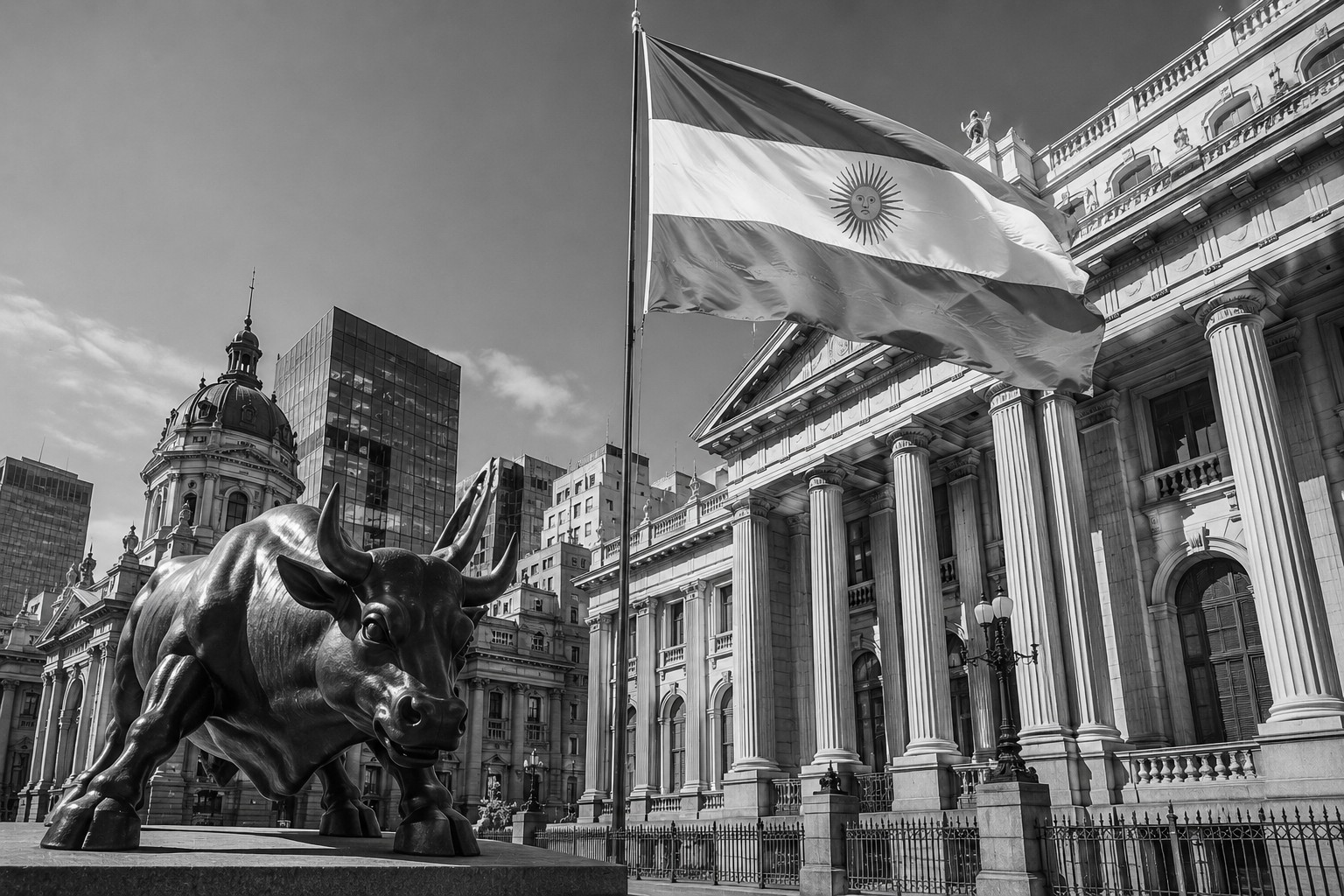
Argentine financial markets rallied after Standard & Poor’s upgraded the country’s sovereign credit rating to B-, following a similar move by Fitch Ratings. The decision pushed Argentina’s country risk premium to its lowest level since 2018, strengthening investor confidence that the government’s economic reforms are beginning to restore credibility after years of financial instability.
Credit agencies recognise economic progress
The latest upgrade from Standard & Poor’s marks another important milestone in Argentina’s efforts to rebuild international confidence. The agency cited improving fiscal discipline, a stronger macroeconomic framework and growing confidence in the government’s commitment to structural reforms as key reasons behind the decision.
The move follows a similar upgrade by Fitch Ratings, reinforcing the perception that Argentina’s economic outlook is gradually improving after years of sovereign debt restructurings, high inflation and restricted access to international capital markets.

Although the country’s rating remains below investment grade, analysts view the upgrade as an important signal that Argentina is moving in the right direction.
Risk premium falls to an eight-year low
One of the most closely watched indicators of investor confidence, Argentina’s sovereign risk premium, fell to its lowest level since 2018 following the announcement. Lower borrowing costs are significant because they improve the country’s ability to refinance debt and attract international investment.
Government bonds strengthened as investors responded positively to the rating action, while Argentine equities also advanced amid expectations that continued economic reforms could support stronger long-term growth.
The decline in the risk premium reflects growing optimism that Argentina’s financial position has become more sustainable than in recent years.
Markets respond to reform agenda
President Javier Milei’s administration has pursued an aggressive programme of fiscal consolidation, public spending reductions and deregulation since taking office. These measures have been welcomed by many international investors, who view fiscal discipline as essential for stabilising Argentina’s economy.
Inflation remains elevated, but recent data suggests that monthly price increases have slowed compared with previous peaks. Meanwhile, improvements in the government’s budget position have strengthened confidence that Argentina can gradually reduce its dependence on monetary financing.
Financial markets have rewarded these developments with stronger asset prices and increased foreign investor interest.
Challenges remain despite improving outlook
Despite the positive momentum, Argentina continues to face significant economic challenges. Inflation remains among the highest in the world, poverty levels are elevated and economic activity is still recovering from years of recession and financial instability.
Maintaining political support for continued reforms will also be critical. Fiscal tightening and structural adjustments have imposed short-term economic costs on households and businesses, making policy implementation increasingly sensitive.
Credit rating agencies have indicated that future upgrades will depend on the government’s ability to sustain reforms, strengthen foreign exchange reserves and maintain fiscal discipline over the longer term.
For investors, however, the latest sovereign rating upgrade represents another encouraging sign that Argentina’s economy may finally be entering a more stable and sustainable phase after nearly a decade of recurring financial crises.
Newshub Editorial in South America – 13 June 2026

If you have an account with ChatGPT you get deeper explanations,
background and context related to what you are reading.
Open an account:
Open an account
Recent Comments