
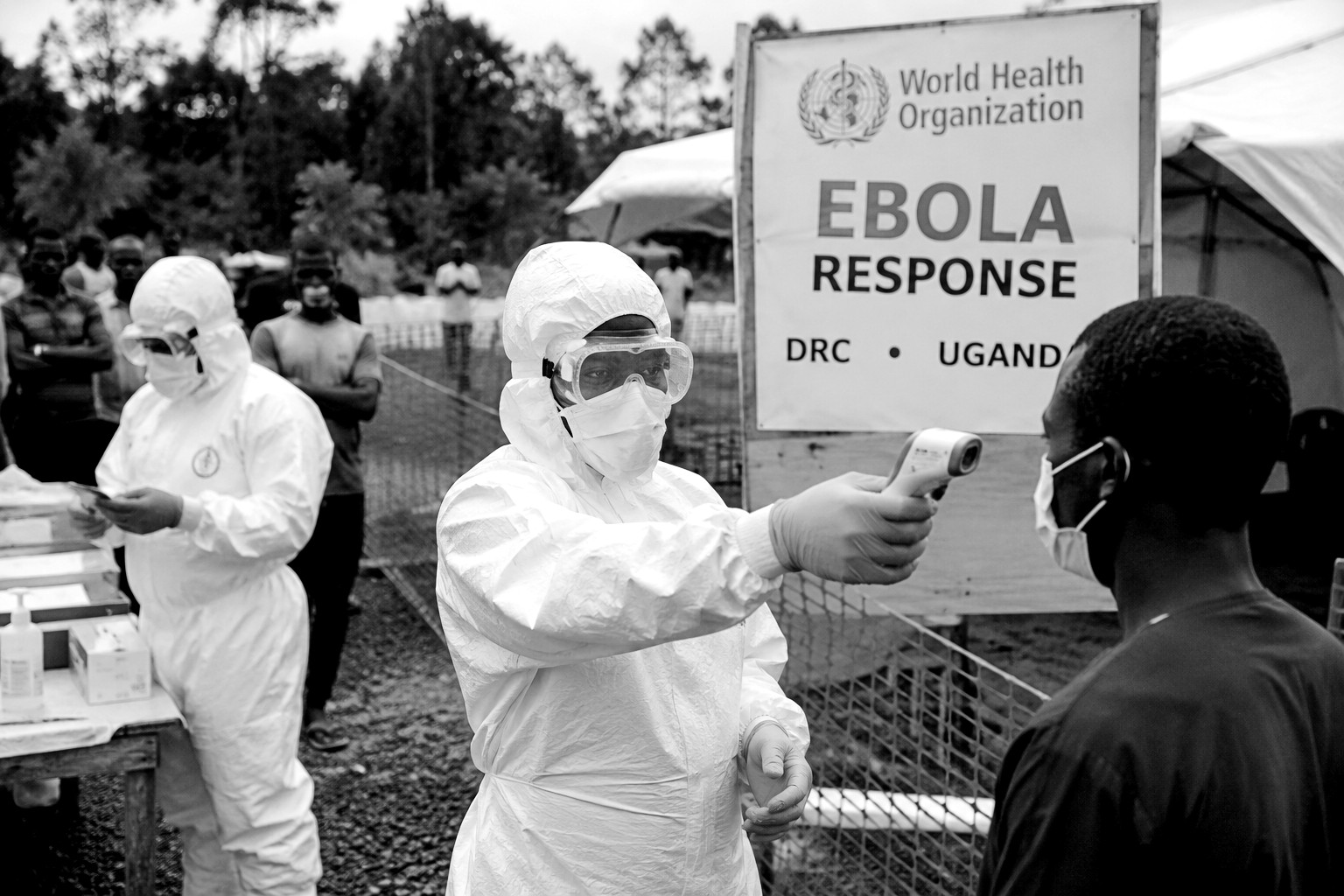
The World Health Organization has declared the Ebola outbreaks in the Democratic Republic of the Congo and Uganda a “public health emergency of international concern”, warning that cross-border transmission risks and fragile healthcare systems could accelerate the spread of one of the world’s deadliest infectious diseases. The declaration follows rising fatalities, increasing suspected infections and confirmed movement of infected travellers between regions.
Outbreak spreads across central Africa
Health authorities in the Democratic Republic of the Congo have reported at least 80 confirmed deaths and more than 300 suspected Ebola cases linked to the latest outbreak. The situation has raised alarm among regional and international agencies due to the speed of transmission in remote communities with limited healthcare infrastructure.
In neighbouring Uganda, officials confirmed that infected travellers had crossed into multiple areas, increasing fears of wider regional spread. Uganda has experience handling Ebola outbreaks, but authorities remain concerned that mobility across porous borders could complicate containment efforts.

The WHO said the emergency designation is intended to strengthen international coordination, unlock additional resources and accelerate emergency medical deployment across affected regions.
Pressure on fragile healthcare systems
Ebola outbreaks place enormous pressure on already stretched healthcare systems in parts of central and east Africa. Clinics in rural districts often face shortages of medical equipment, protective gear and trained personnel. In several affected areas, transportation challenges and insecurity continue to delay rapid treatment and contact tracing operations.
The WHO warned that delayed diagnosis and fear among local populations remain major obstacles. In some communities, mistrust of authorities and misinformation about Ebola continue to discourage infected individuals from seeking early medical care.
Healthcare workers are also facing heightened risks. Previous outbreaks demonstrated how quickly hospitals and clinics can become transmission centres when protective systems fail or resources become overwhelmed.
International response intensifies
The emergency declaration allows international agencies and donor governments to mobilise funding more rapidly and coordinate vaccine distribution strategies. Experimental Ebola vaccines and antiviral treatments have improved survival rates in recent years, but availability remains uneven in remote regions.
Neighbouring countries have intensified border screening procedures and emergency preparedness measures. Airports, transport hubs and local healthcare networks are being placed on heightened alert as authorities attempt to prevent further international transmission.
The WHO emphasised that the risk outside Africa currently remains relatively low, but officials warned that global travel patterns require continued vigilance and rapid information sharing between governments.
Economic and humanitarian concerns
Beyond the immediate health crisis, the outbreak threatens to disrupt local economies, food supply chains and regional trade routes. Restrictions on movement and fear of infection can rapidly damage agricultural production and small-scale commerce in affected communities.
Humanitarian organisations also warned that existing challenges, including displacement, poverty and political instability in parts of the region, may complicate containment efforts further. International aid agencies are preparing for the possibility of expanded emergency operations if infection numbers continue to rise.
The Ebola virus, first identified in central Africa in the 1970s, remains one of the world’s most lethal infectious diseases, with fatality rates capable of exceeding 50% during severe outbreaks. Public health experts stress that rapid isolation, vaccination campaigns and international cooperation remain essential to preventing a wider regional crisis.
Newshub Editorial in Africa – May 18, 2026

If you have an account with ChatGPT you get deeper explanations,
background and context related to what you are reading.
Open an account:
Open an account
Recent Comments