
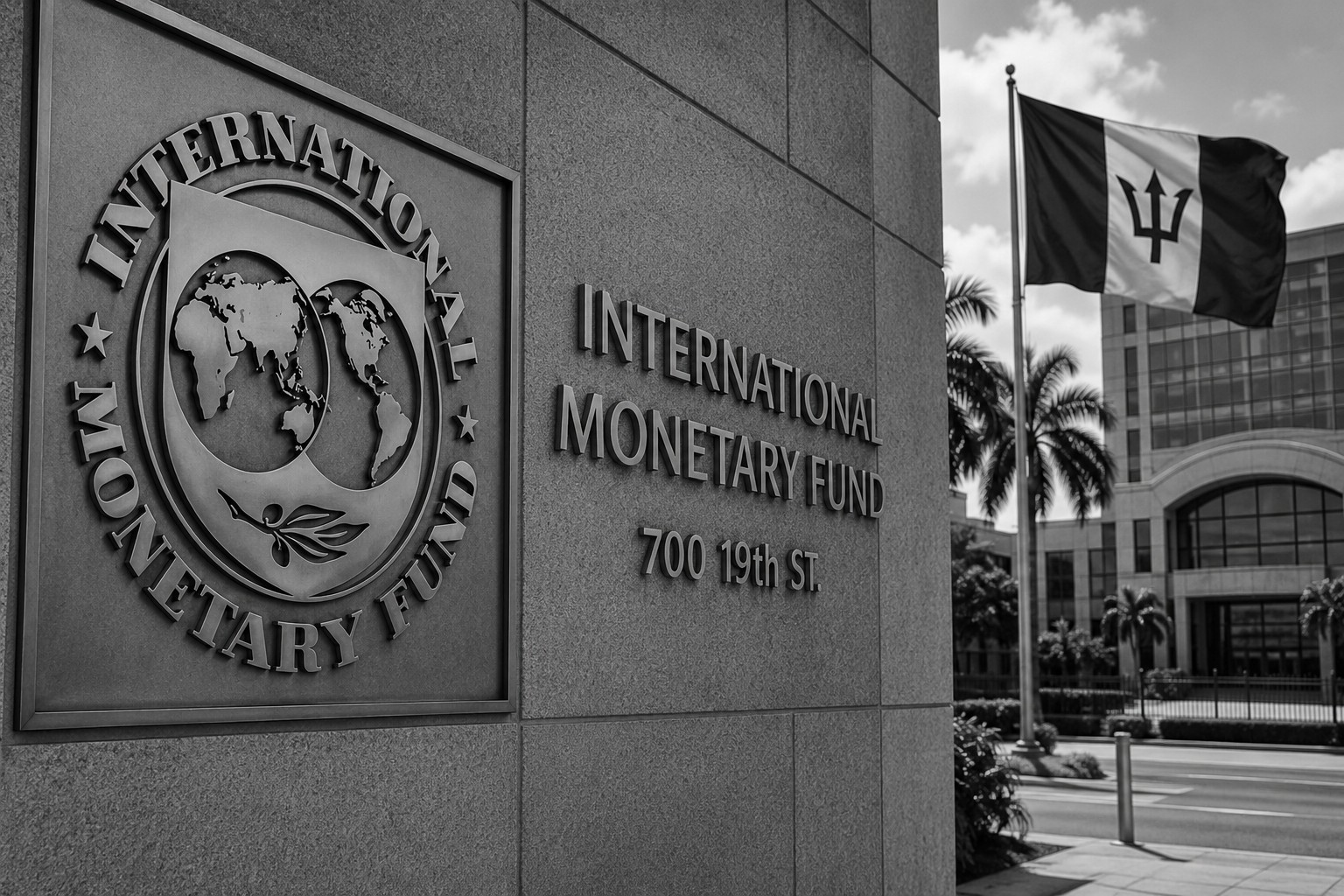
The International Monetary Fund and the government of Barbados have reached a staff-level agreement on a new 36-month precautionary Stand-By Arrangement (SBA), marking another significant step in the Caribbean nation’s ongoing economic stabilisation and fiscal reform efforts.
Agreement could unlock US$260 million
Under the proposed arrangement, Barbados would gain access to approximately SDR 189 million — equivalent to roughly US$260 million — subject to formal approval by the IMF Executive Board, which is expected to review the programme in June.
The agreement is structured as a precautionary facility, meaning the funds are intended primarily as financial support and market reassurance rather than immediate emergency financing.

The programme is designed to strengthen Barbados’ economic resilience against external shocks, while continuing reforms aimed at fiscal sustainability, debt management and long-term growth.
Officials from both the IMF and Barbados highlighted the country’s progress in rebuilding macroeconomic stability following several difficult years marked by debt restructuring, pandemic-related tourism collapse and global inflationary pressures.
Tourism recovery supports economic outlook
Barbados has experienced a notable recovery in tourism activity over the past two years, helping improve government revenues, employment levels and foreign exchange inflows.
The tourism sector remains central to the island’s economy, alongside international business services and financial activities. Increased visitor numbers from North America and Europe have helped support broader economic momentum, although authorities remain cautious about global growth risks and rising geopolitical uncertainty.
Inflation pressures, climate vulnerability and external financing conditions continue to represent important challenges for many Caribbean economies, including Barbados.
The IMF’s continued engagement is therefore viewed by many investors and regional observers as an important signal of confidence in the country’s economic management and policy direction.
Fiscal discipline remains a key priority
Barbadian authorities have spent recent years implementing fiscal reforms aimed at improving public finances and stabilising debt levels. These measures have included tax reforms, expenditure controls and institutional restructuring.
The precautionary nature of the arrangement suggests that Barbados is seeking to maintain a financial safety buffer while reinforcing international market confidence.
Analysts noted that maintaining fiscal discipline while simultaneously supporting economic growth and social stability remains a delicate balancing act for many small island economies.
Climate resilience also continues to play an increasingly important role in economic planning across the Caribbean, where hurricanes, rising sea levels and infrastructure vulnerability pose long-term financial risks.
Regional significance beyond Barbados
The agreement may also carry broader regional significance, as Caribbean governments increasingly seek partnerships with international institutions to strengthen economic resilience in an environment shaped by climate risk, tourism dependence and global financial volatility.
For Barbados, the proposed IMF arrangement represents both a financial safeguard and an endorsement of ongoing reform efforts as the island continues navigating a complex global economic environment.
Newshub Editorial in North America – May 15, 2026

If you have an account with ChatGPT you get deeper explanations,
background and context related to what you are reading.
Open an account:
Open an account
Recent Comments