
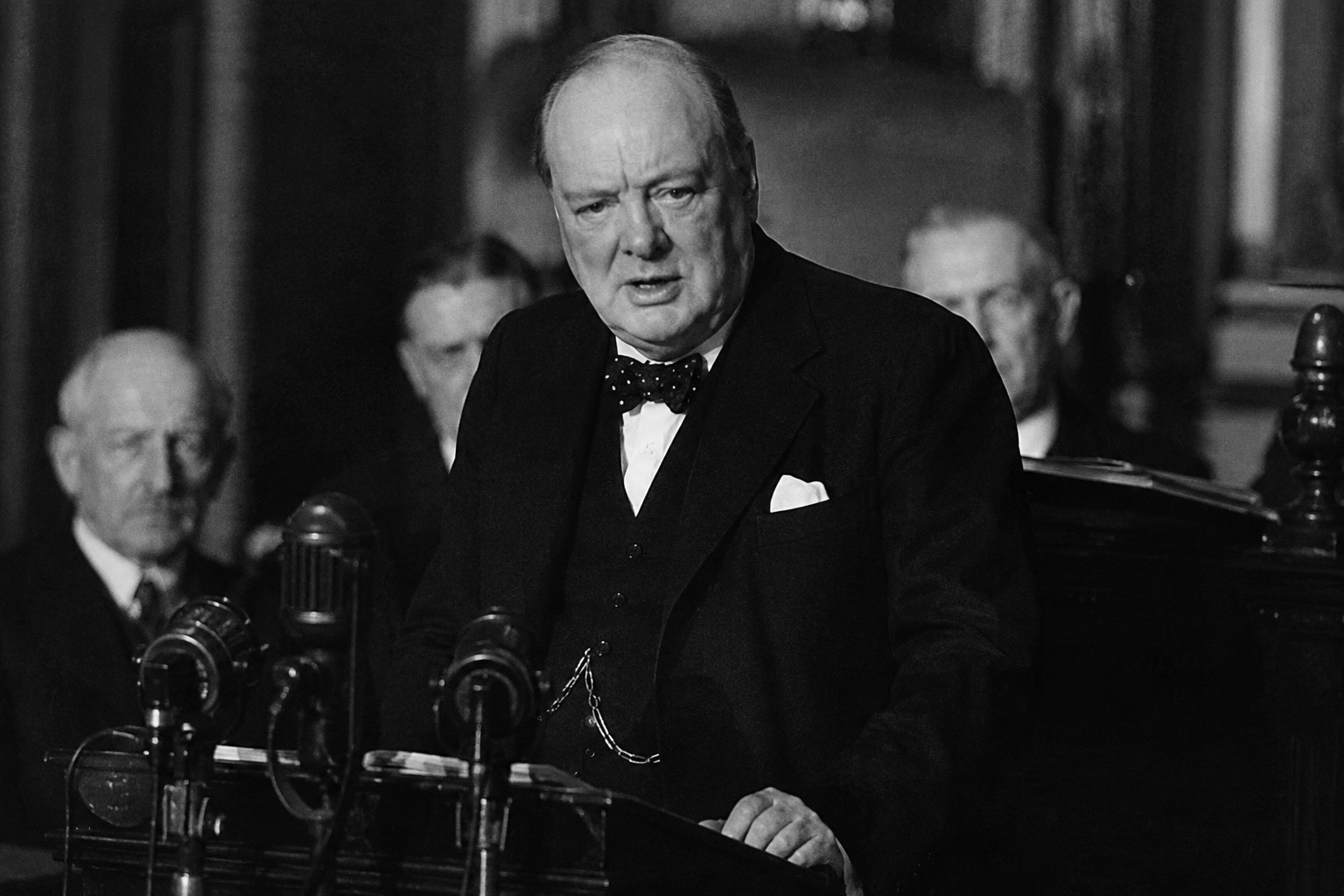
On this day in 1940, newly appointed British Prime Minister Winston Churchill delivered one of the most famous speeches in modern political history, telling the House of Commons that he had “nothing to offer but blood, toil, tears and sweat.” The address came at a moment of extreme uncertainty, with Nazi Germany advancing rapidly across Europe and Britain facing the possibility of invasion, isolation and national collapse.
Churchill had only become prime minister days earlier, replacing Neville Chamberlain as the military situation deteriorated dramatically. German forces had launched devastating offensives across Western Europe, and the future of Britain appeared deeply uncertain. Against this backdrop, Churchill chose not to offer reassurance or false optimism. Instead, he presented the war as a brutal and unavoidable struggle requiring total sacrifice from the British people.
A speech shaped by crisis

The speech was delivered on 13 May 1940 during Churchill’s first address to Parliament as prime minister. Britain had entered the Second World War months earlier, but the military and political atmosphere had now become far more dangerous. German troops were sweeping through Belgium, the Netherlands and France at alarming speed, exposing weaknesses in Allied planning and raising fears that Britain itself could soon stand alone against Adolf Hitler’s war machine.
Churchill understood that public trust depended on honesty. Rather than hiding the scale of the threat, he openly described the immense challenge facing the country. He declared that Britain’s objective was simple but uncompromising: victory at all costs.
The phrase “blood, toil, tears and sweat” immediately resonated because it rejected comforting illusions. It acknowledged hardship while simultaneously framing endurance as a patriotic duty. Historians later viewed the speech as one of the defining moments that helped unite British society during the darkest phase of the war.
The power of wartime rhetoric
Churchill’s speeches became central to Britain’s wartime identity. His use of language combined realism, emotional force and moral clarity. Unlike propaganda designed purely to inspire confidence, Churchill’s rhetoric often stressed danger and sacrifice before calling for resilience and determination.
This approach proved highly effective. Britain faced extensive bombing campaigns, rationing, economic strain and military setbacks during the years that followed. Yet Churchill’s speeches repeatedly reinforced the idea that survival depended on collective endurance.
The “blood, toil, tears and sweat” address also established Churchill as a symbol of wartime leadership. His speeches would later include other iconic declarations such as “We shall fight on the beaches” and “Their finest hour,” all of which contributed to his reputation as one of the twentieth century’s most influential political communicators.
A legacy that endures
More than eight decades later, Churchill’s words continue to be quoted during moments of crisis and national difficulty. The speech remains a reminder that leadership during turbulent periods often requires honesty more than comfort.
The phrase itself has become part of global political vocabulary, representing sacrifice, determination and collective struggle against overwhelming odds. It is frequently referenced in discussions about leadership, wartime morale and democratic resilience.
For Britain, the speech symbolised the beginning of a long and painful fight that would eventually reshape Europe and the modern world. Churchill’s message was simple: victory would demand immense sacrifice, but surrender was never presented as an option.
Newshub Editorial in Europe – May 13, 2026

If you have an account with ChatGPT you get deeper explanations,
background and context related to what you are reading.
Open an account:
Open an account
Recent Comments