
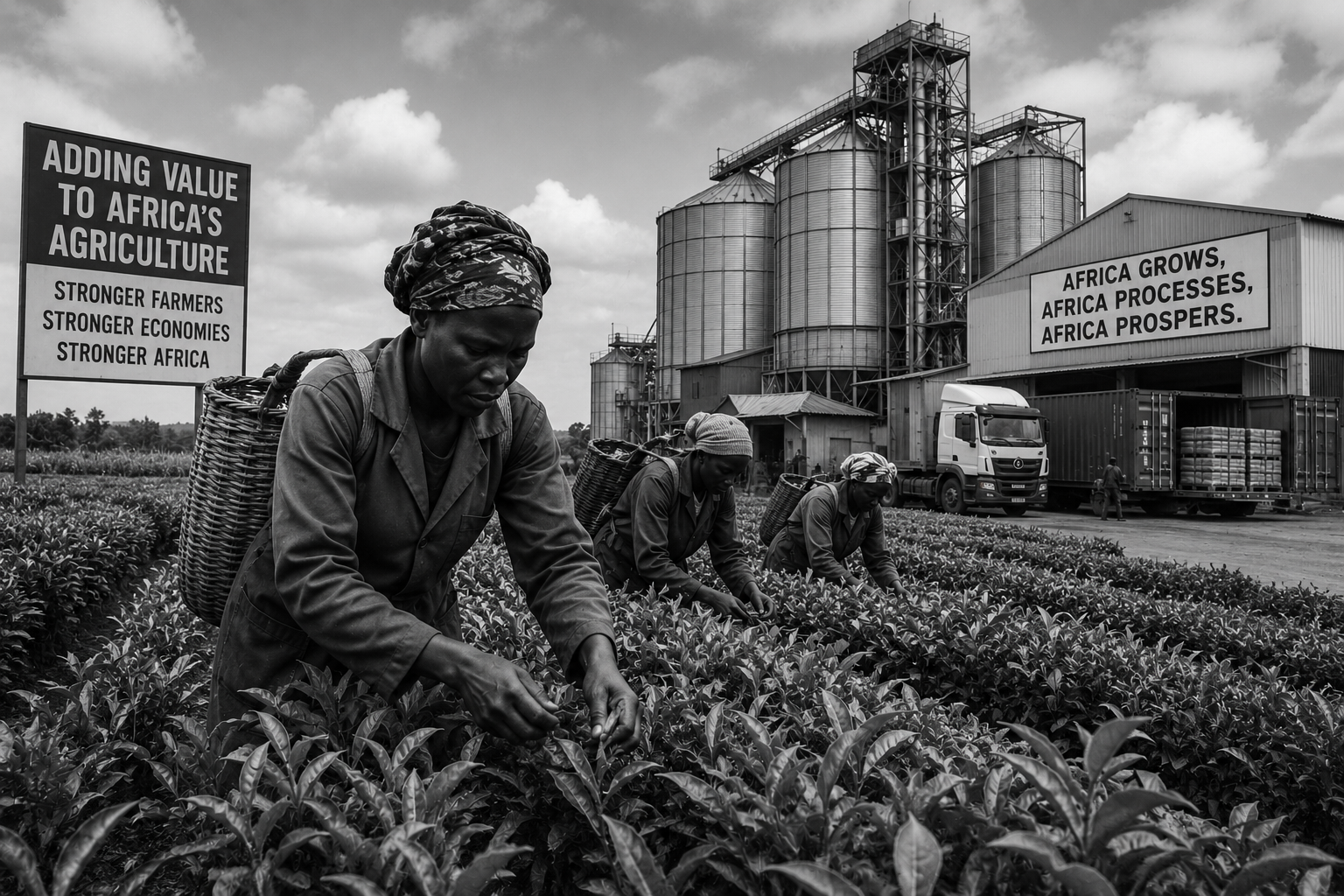
African policymakers are intensifying calls for a restructuring of global agricultural trade relationships, arguing that the continent can no longer remain primarily an exporter of raw commodities while importing higher-value processed goods. Kenya’s agriculture minister, Mutahi Kagwe, says Africa’s vast agricultural potential can only be fully realised through equitable partnerships, regional industrialisation and stronger local value chains.
Speaking on the future of African agriculture, Mutahi Kagwe argued that the current global trading system continues to disadvantage many African economies by limiting their participation in higher-margin processing, manufacturing and export activities.
According to Kagwe, the long-standing pattern in which African nations export unprocessed agricultural products while wealthier economies capture the majority of downstream profits is increasingly unsustainable. He stressed that the next phase of agricultural development must focus on value addition, food processing and regional production networks capable of retaining more wealth within the continent.

The comments reflect a broader push across Africa to transform agriculture from a largely commodity-based sector into a central driver of industrial growth, employment and economic resilience.
Agriculture remains central to Africa’s economy
Agriculture continues to employ a substantial portion of Africa’s workforce and contributes heavily to GDP across many countries. Yet despite its enormous resource base, the continent still imports billions of dollars’ worth of processed food products each year.
Analysts argue that weak infrastructure, fragmented supply chains, limited financing and dependence on commodity exports have prevented many African agricultural economies from capturing larger shares of global value creation.
Kagwe warned that unless African countries develop stronger domestic and regional processing industries, they will remain vulnerable to commodity price volatility and external economic shocks.
The Kenyan minister also highlighted the importance of improving transport networks, storage capacity, irrigation systems and access to technology. These investments, he argued, are necessary to reduce post-harvest losses and improve competitiveness in international markets.
At the same time, climate pressures continue to reshape agricultural planning across the continent. Droughts, unpredictable rainfall and rising temperatures are forcing governments to accelerate adaptation strategies and modernise farming systems.
Calls for equitable global partnerships
A key theme of Kagwe’s remarks was the need for fairer international trade relationships. He argued that partnerships between African nations and global markets should support industrial development rather than reinforce historical patterns of dependency.
This includes improving access for African agricultural products in international markets while encouraging investment into local processing and manufacturing industries.
Regional integration is also increasingly viewed as critical. The implementation of the African Continental Free Trade Area is expected to play a major role in strengthening intra-African trade and supporting cross-border agricultural supply chains.
Supporters believe the agreement could help create larger integrated markets capable of attracting investment into processing facilities, logistics infrastructure and agribusiness innovation.
International investors have also shown growing interest in Africa’s agricultural sector as global food security concerns intensify. The continent holds a large share of the world’s uncultivated arable land, while rising global populations continue to increase long-term food demand.
A strategic opportunity for long-term growth
African leaders increasingly view agriculture not only as a food-security issue but also as a strategic industrial opportunity capable of supporting broader economic transformation.
By moving further up the value chain, governments hope to create higher-skilled employment, expand export revenues and reduce dependence on imported food products.
Kagwe’s message reflects a wider shift in economic thinking across the continent: Africa’s agricultural future may depend less on producing more raw commodities and more on controlling the industries that process, package and distribute them.
As global supply chains continue to evolve, African policymakers appear increasingly determined to ensure the continent captures a larger share of the value generated from its own resources.
Newshub Editorial in Africa – May 13, 2026

If you have an account with ChatGPT you get deeper explanations,
background and context related to what you are reading.
Open an account:
Open an account
Recent Comments