
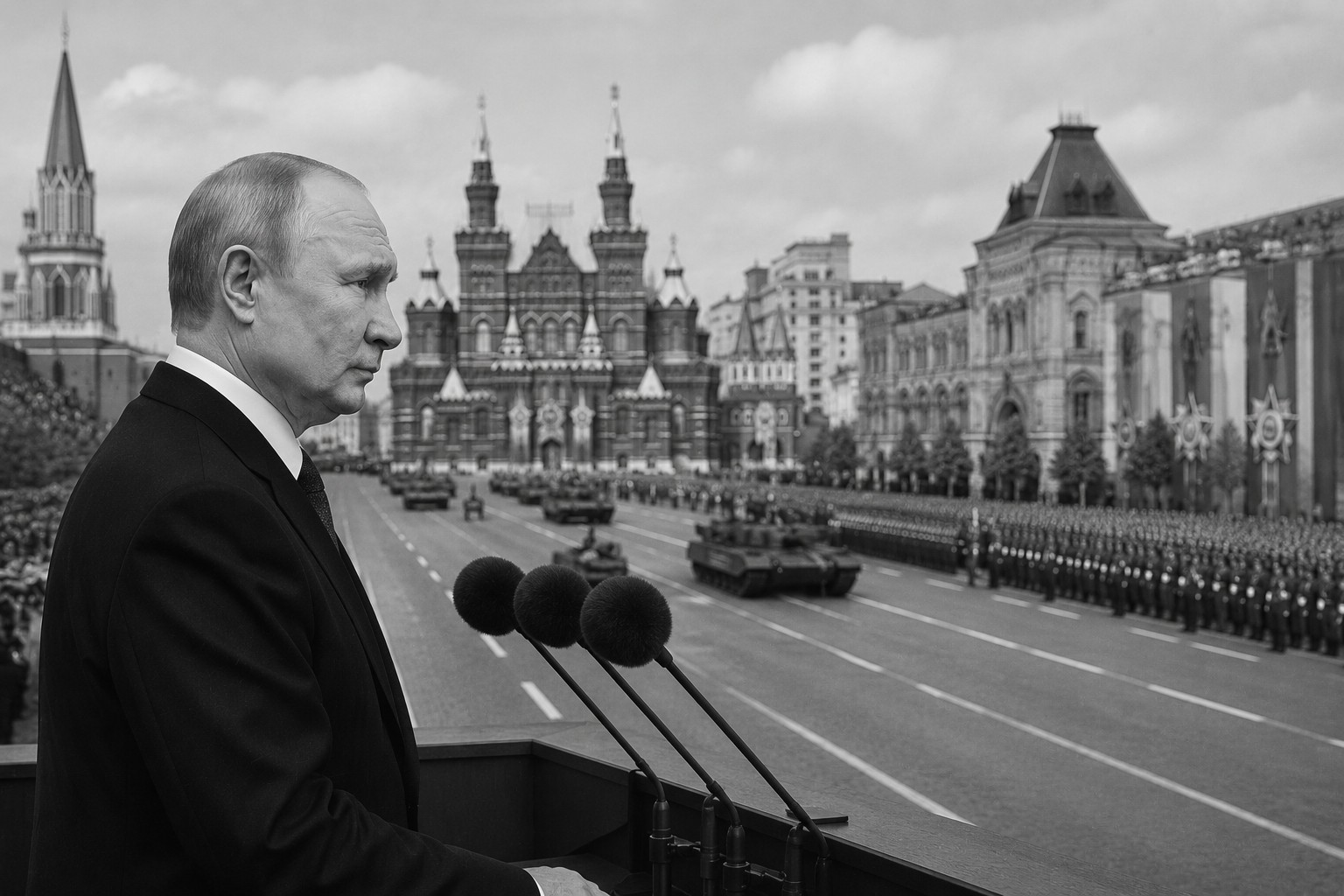
Vladimir Putin has suggested that the war in Ukraine may be “coming to an end”, delivering some of his clearest remarks yet indicating that the Kremlin could be preparing for a new phase of negotiations or strategic repositioning. Speaking after Russia’s subdued Victory Day commemorations in Moscow, Putin criticised continued Western military support for Ukraine while simultaneously hinting at renewed diplomatic engagement, including discussions involving former German Chancellor Gerhard Schröder.
The remarks came following a noticeably smaller Victory Day parade compared with previous years, reflecting both the prolonged nature of the conflict and the mounting economic and military pressures facing Russia. While the Kremlin still projected confidence publicly, analysts observed a more restrained tone than in earlier wartime celebrations.
Putin argued that Western military and financial backing had allowed Ukraine to prolong the conflict beyond what Russia had originally anticipated. He accused NATO countries of escalating tensions while portraying Moscow as remaining open to future dialogue under what he described as “realistic conditions”.


Signs of strategic recalibration
The Kremlin leader’s comments are already fuelling speculation that Russia may be exploring pathways toward a negotiated settlement, or at minimum attempting to reshape international perceptions surrounding the conflict.
Although no concrete peace framework has been announced, Putin’s reference to talks involving Schröder drew particular attention. The former German chancellor has long maintained ties to Russia and previously played a role in energy and diplomatic discussions between Moscow and European leaders.
Observers note that Russia continues facing substantial economic constraints despite adapting to sanctions over the past several years. Defence spending remains elevated, labour shortages have intensified and international isolation continues affecting technology imports and investment flows.
At the same time, Ukraine remains heavily dependent on Western military aid and financial support to sustain its defence operations. The battlefield situation remains fluid, with neither side achieving a decisive breakthrough despite years of fighting.
Western unity remains under pressure
Putin’s criticism of Western involvement appeared aimed partly at exploiting growing political divisions inside Europe and the United States regarding long-term support for Kyiv. Several Western governments are increasingly facing domestic pressure over military spending, inflation and energy costs linked to the war.
Despite this, NATO members continue publicly reaffirming support for Ukraine. European defence production has expanded significantly since the conflict began, while the United States remains Ukraine’s largest military backer.
However, concerns are growing among diplomats that prolonged stalemate risks creating “conflict fatigue” among Western populations, particularly as economic pressures continue affecting voters across Europe.
Global implications remain significant
The war continues shaping global energy markets, defence spending, food exports and geopolitical alliances far beyond Europe itself. Countries across Africa, Asia and the Middle East remain exposed to commodity volatility and supply-chain disruption linked to the conflict.
Meanwhile, Russia has increasingly deepened economic and diplomatic relations with China, parts of Africa and several emerging-market economies in an effort to offset Western sanctions and maintain trade flows.
Whether Putin’s latest remarks represent genuine interest in diplomacy or simply tactical positioning remains unclear. But the language used following this year’s muted Victory Day events suggests that Moscow may increasingly recognise the long-term costs of sustaining an open-ended war.
Newshub Editorial in Europe – May 10, 2026

If you have an account with ChatGPT you get deeper explanations,
background and context related to what you are reading.
Open an account:
Open an accountVladimir Putin has suggested that the war in Ukraine may be “coming to an end”, delivering some of his clearest remarks yet indicating that the Kremlin could be preparing for a new phase of negotiations or strategic repositioning. Speaking after Russia’s subdued Victory Day commemorations in Moscow, Putin criticised continued Western military support for Ukraine while simultaneously hinting at renewed diplomatic engagement, including discussions involving former German Chancellor Gerhard Schröder.
Recent Comments