
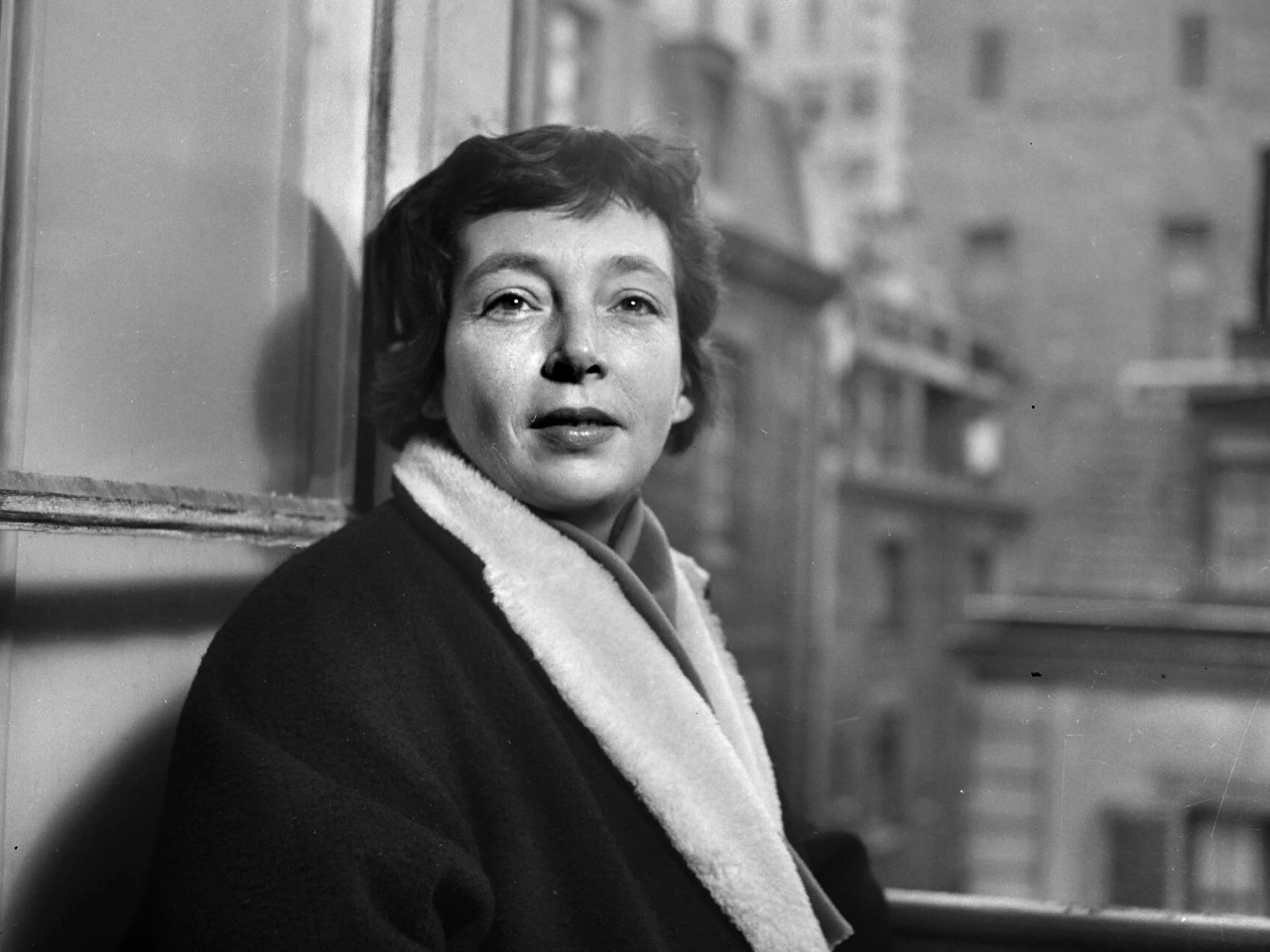
Marguerite Duras remains one of the most influential and unconventional voices in modern European literature and cinema, known for works that blurred the boundaries between autobiography, fiction and political reflection. Her minimalist style and emotional intensity reshaped post-war French writing and helped define a generation of intellectual thought in the twentieth century.
Early life shaped by colonial Indochina
Marguerite Duras was born Marguerite Donnadieu on April 4, 1914, in Gia Định, near Saigon in what was then French Indochina, today part of Vietnam. Her childhood experiences in colonial Southeast Asia would later become central themes in her literary work. Raised by a widowed schoolteacher mother, Duras grew up in a challenging environment marked by financial hardship and the complexities of colonial society.
The landscape, culture and emotional tensions of Indochina would later inspire one of her most famous works, The Lover, which drew heavily on her own youth and relationships during that period.

A writer shaped by war and politics
Duras moved to Paris in the early 1930s to study mathematics, law and political science. Her life soon became intertwined with the turbulent politics of the era. During the Second World War she joined the French Resistance and became associated with prominent intellectual and political circles.
Her husband, Robert Antelme, was arrested and deported to a concentration camp by the Gestapo, an experience that profoundly shaped Duras’s worldview and writing. After the war she became involved with the French Communist Party for a period before eventually distancing herself from organised political movements.
These experiences fed into her early literary works, which often explored trauma, silence and the emotional aftermath of war.
Literary breakthrough and international recognition
Duras’s writing style broke from traditional narrative structures. She favoured fragmented storytelling, sparse dialogue and psychological intensity. Her novels often examined memory, desire, and the blurred lines between truth and imagination.
Her global breakthrough came in 1984 with the publication of The Lover, a semi-autobiographical novel recounting the relationship between a young French girl and a wealthy Chinese man in colonial Vietnam. The book won the prestigious Prix Goncourt and became an international bestseller translated into dozens of languages.
Beyond novels, Duras also wrote plays, essays and film scripts. She gained particular recognition for writing the screenplay for the influential 1959 film Hiroshima mon amour, directed by Alain Resnais. The film’s fragmented narrative structure and philosophical dialogue became a landmark in modern cinema.
A singular voice in literature and film
Throughout her career Duras resisted literary conventions. She frequently experimented with form and narrative voice, often returning to similar themes across different works. Her writing style, sometimes described as hypnotic or minimalist, emphasised silence, repetition and emotional ambiguity.
In addition to writing, she directed several films and remained an active intellectual voice in French cultural debates. Her works were often deeply personal while also reflecting broader historical and political tensions.
Marguerite Duras died in Paris on March 3, 1996, leaving behind a literary legacy that continues to influence writers, filmmakers and scholars worldwide. Her work remains widely studied for its unique narrative structure and exploration of memory, identity and desire.
Newshub Editorial in Europe – March 3, 2026

If you have an account with ChatGPT you get deeper explanations,
background and context related to what you are reading.
Open an account:
Open an account
Recent Comments