
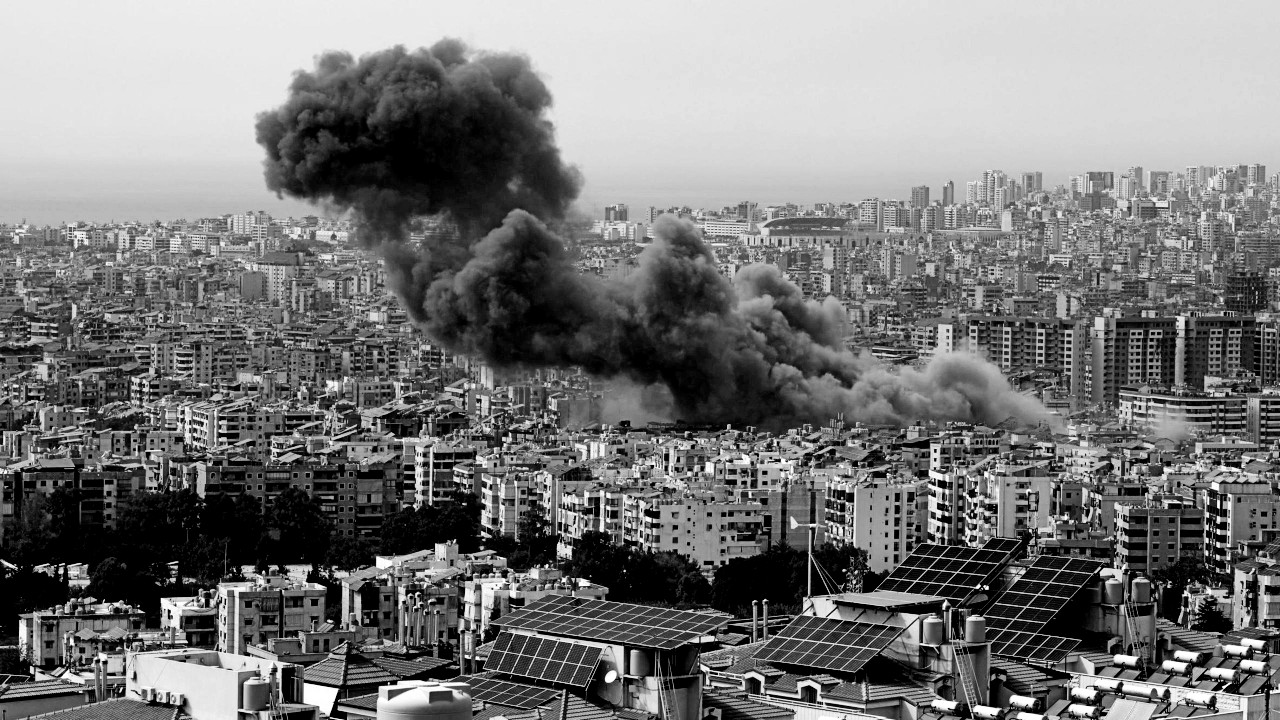
Israel’s military said it was carrying out air strikes on targets in Tehran and Beirut on Tuesday, marking a significant escalation in the rapidly widening conflict involving Israel, Iran and Iranian-aligned forces across the Middle East. The attacks came shortly after the Israeli Defence Forces issued urgent evacuation warnings to civilians in southern Beirut and nearby villages in Lebanon.
IDF confirms strikes in Iran and Lebanon
The Israeli Defence Forces (IDF) confirmed that it was conducting strikes simultaneously against targets in Tehran and Beirut, according to reports from international media including Reuters. Israeli officials said the operations targeted what they described as command infrastructure and weapons storage facilities connected to the Lebanese militant group Hezbollah.
The strikes occurred roughly one hour after the Israeli military issued what it called an “urgent warning” to residents in the southern suburbs of Beirut — particularly the Dahieh district — as well as in dozens of villages in southern Lebanon.


In its statement, the IDF urged civilians to evacuate immediately, saying the area contained Hezbollah command centres and weapons depots that were about to be targeted.
Tehran targeted as Israel expands operational scope
Reports of Israeli strikes in Tehran represent one of the most dramatic expansions of the current conflict. Until recently, most hostilities between Israel and Iran had occurred indirectly through proxy groups or covert operations.
The reported attacks suggest that Israel is now willing to strike targets inside Iran itself as part of its campaign to weaken Tehran’s military capabilities and the network of allied militias it supports across the region.
Iranian authorities have not yet provided a detailed assessment of the damage in Tehran, although state media reported explosions and heightened air defence activity around the capital.
Military analysts say strikes inside Iran carry a high risk of further escalation, as Tehran may feel compelled to respond more forcefully.
Hezbollah infrastructure targeted in Lebanon
In Lebanon, the strikes focused on Hezbollah-controlled areas in southern Beirut and surrounding regions. Hezbollah, a powerful Iranian-backed militant organisation and political movement, has been engaged in cross-border hostilities with Israel since the conflict intensified.
Israeli officials argue that Hezbollah has been using residential neighbourhoods to conceal command facilities and weapons storage sites. The IDF said its evacuation warnings were intended to minimise civilian casualties before the strikes began.
Residents in parts of Beirut reported loud explosions and visible smoke rising from several locations following the warnings.
Regional tensions continue to rise
The latest attacks highlight the growing scale of the confrontation spreading across the Middle East. Over recent days, missile exchanges, drone strikes and military alerts have been reported in several countries, including Iran, Israel, Lebanon and Gulf states.
The widening conflict has already disrupted regional air travel and pushed global energy markets higher as traders assess the risk to oil supplies from the Gulf.
Diplomatic efforts to contain the crisis are continuing, but so far there are few signs that the fighting is easing.
Risk of broader Middle East war
Security experts warn that direct strikes between Israel and Iran could mark a turning point in the conflict. If retaliatory attacks intensify or if additional regional actors become involved, the confrontation could develop into a wider war affecting multiple countries across the Middle East.
For now, both sides appear to be preparing for continued military exchanges while the international community attempts to prevent further escalation.
Newshub Editorial in Middle East – March 3, 2026

If you have an account with ChatGPT you get deeper explanations,
background and context related to what you are reading.
Open an account:
Open an accountIsrael’s military said it was carrying out air strikes on targets in Tehran and Beirut on Tuesday, marking a significant escalation in the rapidly widening conflict involving Israel, Iran and Iranian-aligned forces across the Middle East. The attacks came shortly after the Israeli Defence Forces issued urgent evacuation warnings to civilians in southern Beirut and nearby villages in Lebanon.
Recent Comments