
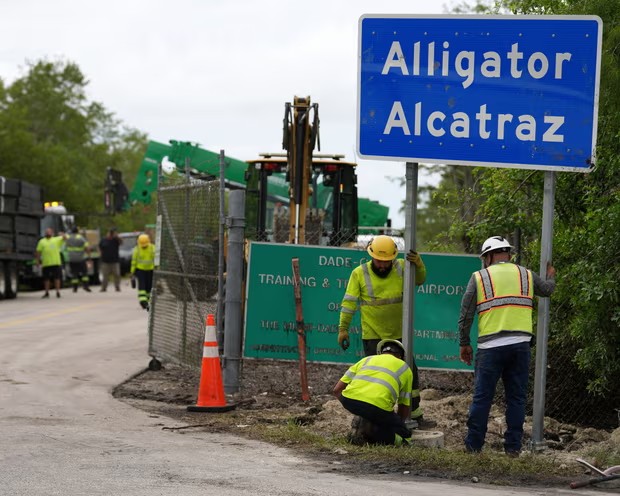
The Archbishop of Miami has issued a strong condemnation of the Glades County Detention Center in rural Florida, describing the immigration facility as morally unacceptable and a violation of human dignity. His intervention comes as public scrutiny intensifies over what detainees and advocates have labelled the ‘Alligator Alcatraz’.
Archbishop Thomas Wenski delivered his criticism during a homily over the weekend, later repeating his concerns in a formal statement to local media. He called on state and federal authorities to halt the use of the Glades facility and re-evaluate the United States’ wider approach to immigration detention. According to Wenski, the treatment of detainees at Glades reflects a disturbing departure from the values of justice, compassion and the rule of law.
Situated in an isolated region near Lake Okeechobee, the facility has faced multiple allegations of mistreatment, poor sanitation and limited access to legal aid. Reports from detainees describe verbal abuse by staff, inadequate medical care, and the psychological strain of long-term detention in remote conditions. The centre’s location—surrounded by swampland and wildlife—has contributed to its notorious nickname, evoking both physical isolation and systemic neglect.

Church calls for action
Wenski’s statement framed the use of Glades as a matter of moral urgency. He warned that detaining individuals in conditions that fail to meet basic humanitarian standards undermines the integrity of the immigration system and damages public trust. Quoting Catholic teaching on the dignity of the human person, he urged policymakers to replace punitive detention practices with more humane alternatives.
“The dignity of the migrant is not diminished by their status,” he said. “To detain people indefinitely, without fair process or adequate conditions, is neither just nor necessary.”
The Archdiocese of Miami has announced plans to expand its outreach efforts to detainees held in Glades and similar facilities, providing pastoral care, legal coordination and community support. Church officials said they hope to build alliances with local advocacy groups and pressure both the Florida government and immigration enforcement bodies to act.
Political silence and community response
Florida officials, including Governor Ron DeSantis, have so far remained silent on the Archbishop’s comments. Federal immigration authorities insist that all facilities, including Glades, are subject to inspection and adhere to operational standards. However, watchdog groups continue to document persistent failings at the site, including overcrowding, delays in medical attention, and obstruction of legal visits.
The Archbishop’s words have resonated with community leaders and religious organisations, many of whom have raised concerns about the criminalisation of immigration and the rise in state-level enforcement initiatives. Critics argue that Glades exemplifies the erosion of due process for migrants, especially for those with no criminal records or with established roots in the country.
A moral reckoning
Wenski’s condemnation forms part of a growing national dialogue about the ethics of immigration enforcement. While debate over border security and legal status continues in Washington, faith leaders have increasingly shifted the focus toward human dignity and moral accountability.
Whether the Archbishop’s remarks prompt immediate action remains uncertain. Yet they underscore a deeper question facing Florida and the nation at large: what kind of country does the United States wish to be when it comes to the treatment of migrants?
REFH – newshub finance
12 July 2025, 09:31
Recent Comments