
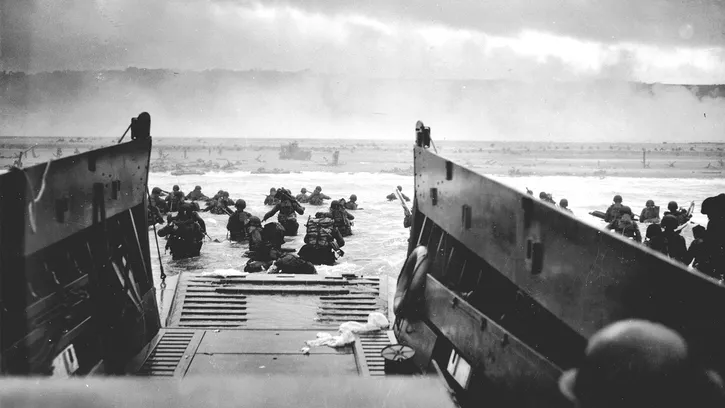
On this day, June 6, 1944, the Normandy Invasion, commonly known as D-Day, marked a pivotal turning point in World War II. This large-scale operation, the largest amphibious invasion in history, began the Allied effort to liberate Western Europe from Nazi control. The invasion was meticulously planned and executed by the Allied forces, primarily involving American, British, and Canadian troops.
The operation, codenamed Operation Overlord, involved over 156,000 troops who landed on five beachheads along a 50-mile stretch of the Normandy coast in France. These beaches were designated with the codenames Utah, Omaha, Gold, Juno, and Sword. The strategic planning and coordination requs, and amphibious landings.
The success of D-Day was due in large part to the element of surprise and the extensive deception tactics employed by the Allies. Operation Bodyguard, the overall deception plan, aimed to mislead the Germans about the actual landing site. This included fake equipment, a phantom army commanded by General George Patton, and misleading radio transmissions. The Germans were led to believe that the invasion would occur at Pas de Calais, the narrowest point between Britain and France, rather than Normandy.

The weather also played a critical role in the timing of the invasion. Originally planned for June 5, the operation was delayed by 24 hours due to unfavourable weather conditions. Supreme Commander General Dwight D. Eisenhower made the final decision to proceed on June 6, despite the still-challenging weather, as a further delay could have jeopardized the entire operation.
The landings at Normandy were met with fierce resistance from the German forces, particularly at Omaha Beach, where American troops faced heavy machine gun fire and significant obstacles. Despite the heavy casualties, the Allies managed to secure all five beachheads by the end of the day. The success of the Normandy Invasion laid the foundation for the Allied advance into France and ultimately led to the liberation of Paris in August 1944 and the defeat of Nazi Germany in May 1945.
D-Day is remembered not only for its strategic importance but also for the immense bravery and sacrifice of the soldiers who participated. The invasion demonstrated the resolve and cooperation of the Allied nations and marked the beginning of the end of World War II in Europe. The legacy of D-Day continues to be honored and remembered as a testament to the courage and determination of those who fought for freedom.
newshub
Recent Comments