
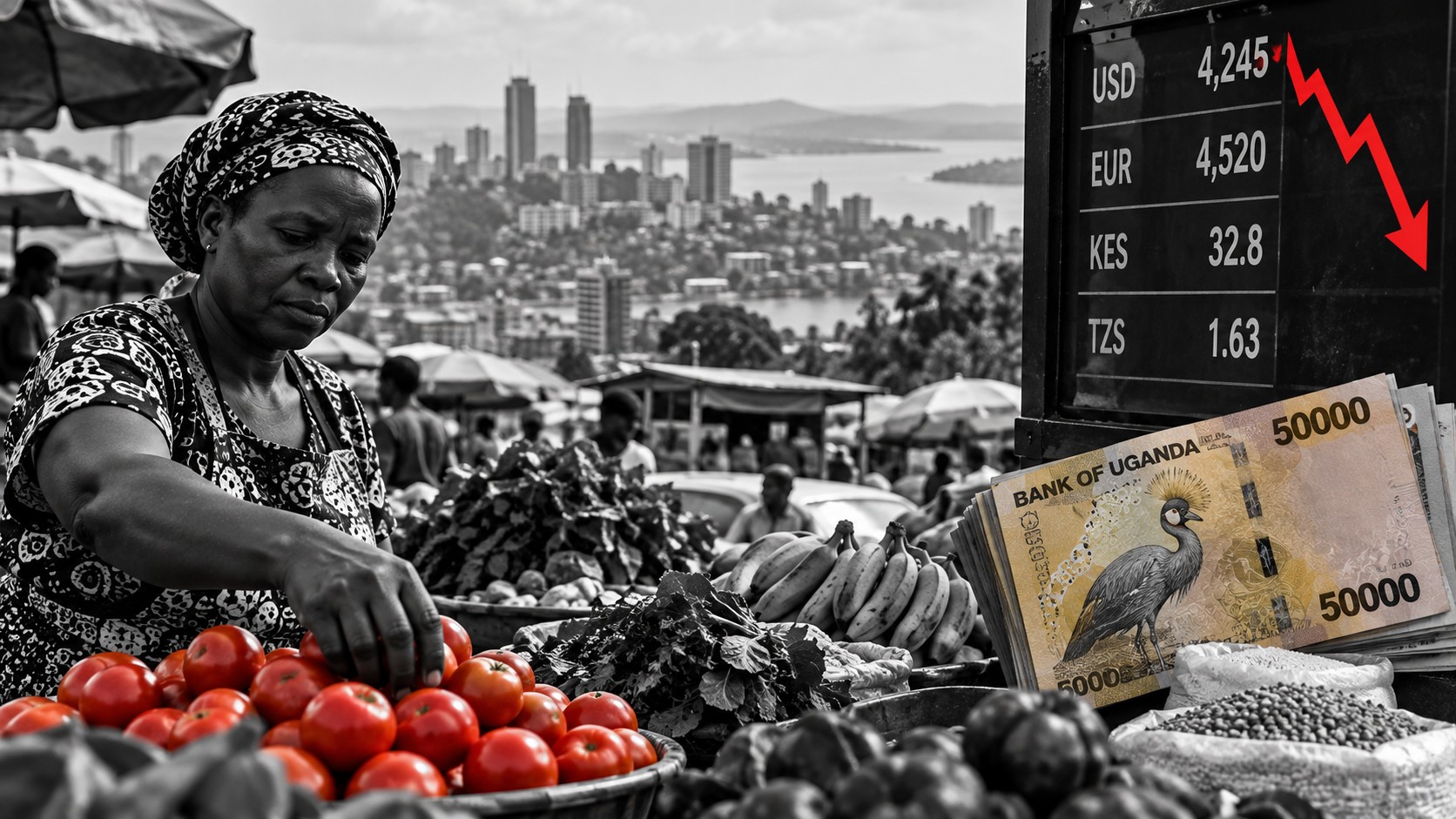
Uganda’s annual inflation has surged to 5.8%, its highest level since June 2023, as a weakening shilling, rising food prices and expensive imported energy force the central bank into emergency action and threaten household purchasing power.
KAMPALA, 31 October 2026 – Uganda is facing mounting economic pressure after official figures released on Friday showed inflation accelerating to 5.8% in October, compared with 4.6% in September, as the country’s currency continued its sharp decline against the US dollar.
The latest figures reveal growing vulnerabilities in one of East Africa’s important emerging economies, with higher food and fuel costs placing additional pressure on consumers, businesses and financial institutions.


Food prices accelerate sharply
Food inflation jumped to 10.7% in October from 4.5% in September, representing one of the most significant contributors to the increase in consumer prices.
The rising cost of essential goods is particularly concerning for lower-income households, which typically spend a larger proportion of their earnings on food and transportation.
For small businesses, rising input costs and declining consumer purchasing power could weaken profitability and discourage investment.
Ugandan shilling loses nearly 15%
The Ugandan shilling has depreciated by almost 15% against the US dollar since June, trading at approximately 4,245 shillings per dollar on Friday.
The currency’s weakness has increased the cost of imported products, including petroleum, machinery and essential industrial supplies.
Uganda currently imports approximately $2.5 billion worth of refined petroleum products annually, leaving its economy particularly sensitive to changes in global oil prices and foreign exchange markets.
Central bank raises interest rates
In response to mounting inflation and currency pressures, the Bank of Uganda implemented an emergency interest rate increase earlier in October.
The central bank raised its benchmark policy rate from 9.75% to 12%, an increase of 2.25 percentage points.
It also increased commercial banks’ reserve requirements to help contain financial pressures.
However, higher borrowing costs could make credit more expensive for businesses and consumers, potentially slowing private investment.
Further monetary tightening possible
Financial analysts believe additional intervention may be necessary if currency depreciation continues.
The Bank of Uganda’s next monetary policy meeting is scheduled for 12 November, when officials will assess inflation trends and exchange rate stability.
A further interest rate increase remains possible, although much will depend on international energy prices, capital movements and domestic demand for foreign currency.
A growing challenge for financial inclusion
The economic pressures also present difficulties for Uganda’s financial inclusion ambitions.
Higher borrowing costs and falling purchasing power could discourage households and microenterprises from using formal financial services.
Uganda’s immediate challenge is therefore twofold: restoring currency stability while ensuring that monetary tightening does not unnecessarily restrict access to affordable finance.
NewsHub Finance | African Economy | 31 October 2026
Uganda's annual inflation has surged to 5.8%, its highest level since June 2023, as a weakening shilling, rising food prices and expensive imported energy force the central bank into emergency action and threaten household purchasing power.

Recent Comments