
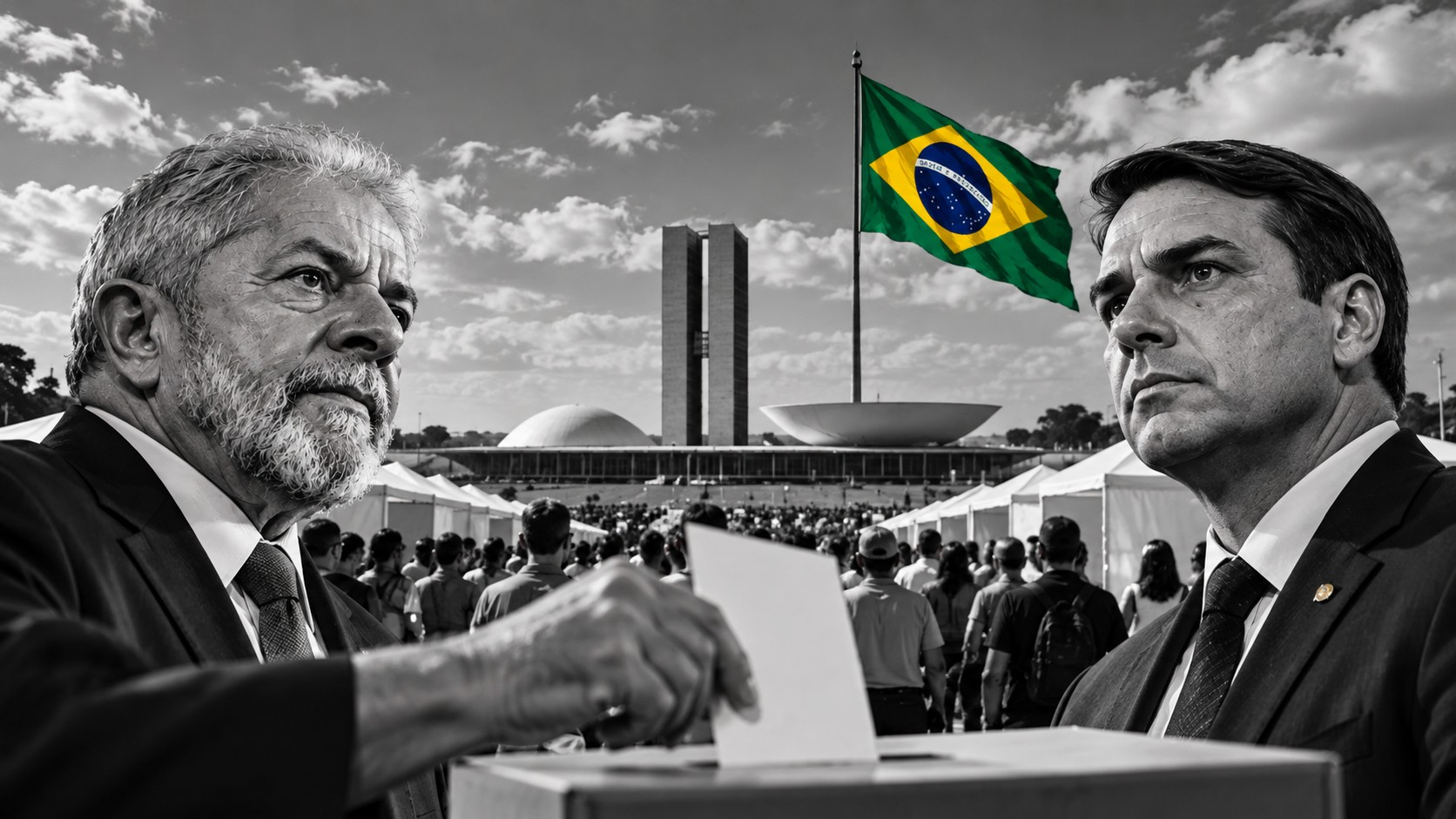
Millions of Brazilians are voting on Sunday in a fiercely contested presidential runoff between left-wing incumbent Luiz Inácio Lula da Silva and right-wing senator Flávio Bolsonaro, the son of convicted former president Jair Bolsonaro. The election could reshape Latin America’s largest economy, its relationship with Washington and the political direction of the wider region.
A remarkable first-round reversal
The 25 October vote follows an unexpected first-round result in which Bolsonaro secured approximately 47 per cent of valid votes, compared with Lula’s 45 per cent. The outcome surprised pollsters who had generally placed the incumbent ahead.
Bolsonaro, 45, has inherited much of the political movement established by his father, who was sentenced to 27 years in prison for plotting a coup following his defeat in the 2022 presidential election.


Lula, seeking a fourth non-consecutive presidential term, has attempted to recover lost ground by emphasising social programmes, economic stability and the protection of democratic institutions.
Final opinion polls indicated an exceptionally close contest, with both candidates competing for undecided voters and those who abstained in the first round.
Economy and security dominate the campaign
Economic uncertainty has been central to the election, particularly rising living costs, household indebtedness and concerns over Brazil’s public finances.
Lula has defended his government’s record on employment, poverty reduction and social welfare, while Bolsonaro has advocated spending restraint, business-friendly economic policies and tougher measures against organised crime.
Financial markets responded positively to Bolsonaro’s first-round performance, reflecting expectations among investors of a more market-oriented economic programme.
However, Brazil continues to face significant fiscal challenges, including public debt, pressure on government expenditure and the need to stimulate sustainable growth.
International consequences
The election carries substantial implications beyond Brazil’s borders.
Bolsonaro has signalled closer alignment with US President Donald Trump, while Lula has maintained a more independent foreign policy, emphasising cooperation with emerging economies and international institutions.
Environmental policy, particularly protection of the Amazon rainforest, also represents a significant difference between the candidates.
A deeply divided electorate
With nearly 160 million registered voters, Brazil faces an election that reflects profound political and social divisions.
The next president will inherit a powerful Congress, substantial economic challenges and an electorate sharply divided over the country’s future.
Polling stations close at 5pm Brasília time, with results expected to emerge within hours through Brazil’s electronic voting system.
Whatever the outcome, Sunday’s decision will influence Brazil’s domestic policies, financial markets and international relationships for years to come.
NewsHub Finance | Politics & Latin America | 25 October 2026
Millions of Brazilians are voting on Sunday in a fiercely contested presidential runoff between left-wing incumbent Luiz Inácio Lula da Silva and right-wing senator Flávio Bolsonaro, the son of convicted former president Jair Bolsonaro. The election could reshape Latin America's largest economy, its relationship with Washington and the political direction of the wider region.
Recent Comments