
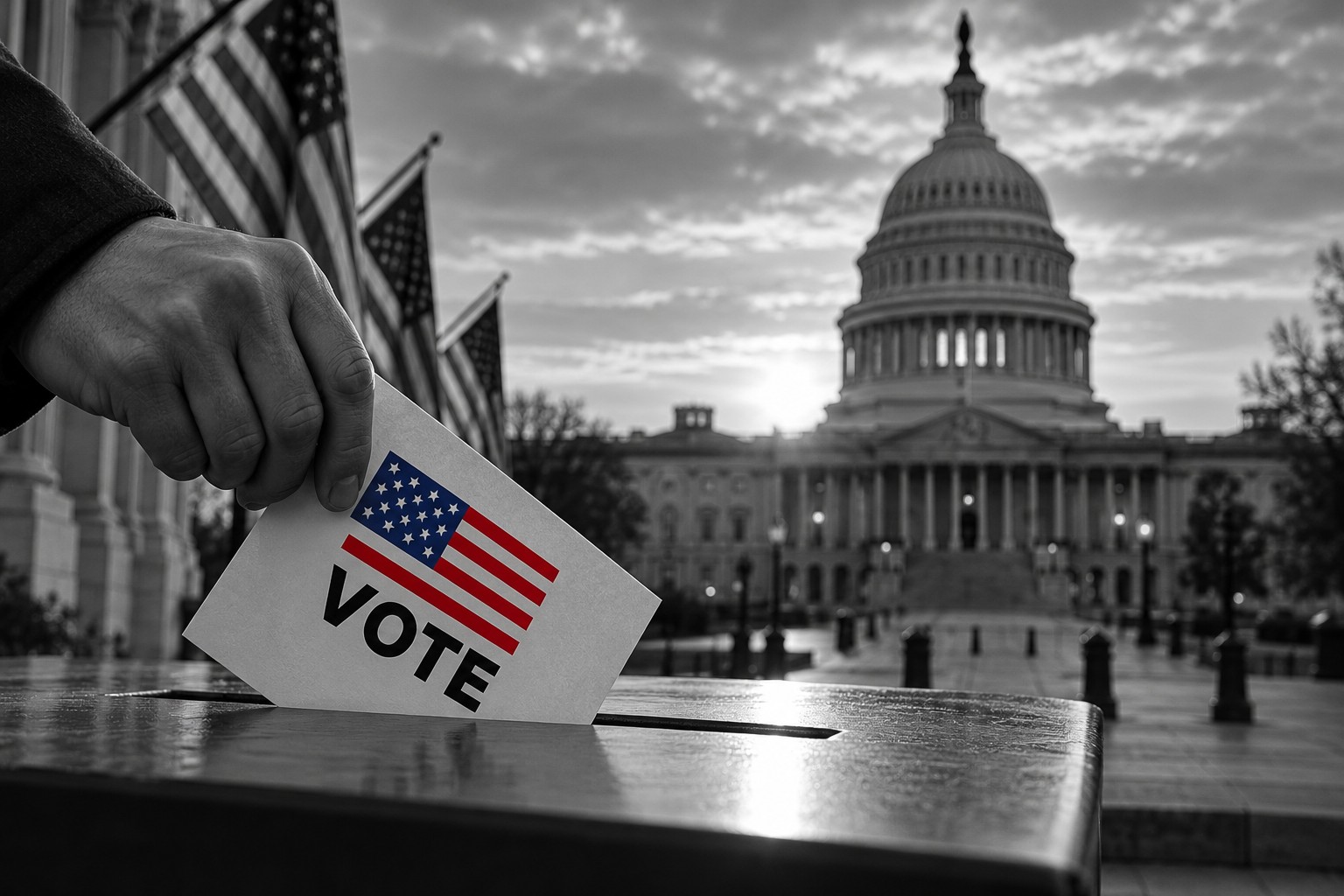
WASHINGTON — With two weeks remaining before the US midterm elections on 3 November, President Donald Trump faces the possibility of losing Republican control of Congress. Opinion polls increasingly favour the Democrats, particularly in the House of Representatives, while the Senate remains a more complicated contest that could determine the balance of power for the final two years of Trump’s presidency.
The elections will not decide who occupies the White House. Instead, Americans will choose representatives to Congress, the legislative branch responsible for federal laws, taxation, government spending and oversight of the executive.
The House of Representatives: All 435 seats at stake
The House consists of 435 voting members, each representing a congressional district determined by population. Representatives serve two-year terms, meaning every seat is contested at each midterm election.


A party normally needs 218 seats for a majority in the full House.
Republicans currently hold a narrow advantage, but the political environment increasingly favours Democrats. Recent national polling indicates a Democratic lead, while independent election analysts identify a growing number of competitive Republican-held districts.
The Cook Political Report considers a Democratic takeover increasingly likely, although the eventual size of the majority remains uncertain.
The Senate: A different electoral system
The Senate has 100 members, two from each state regardless of population. Senators serve six-year terms, with elections staggered so that approximately one-third of the chamber faces voters every two years.
This November, 35 Senate seats are being contested, including two special elections.
Republicans currently control the Senate with 53 seats against 47 held by Democrats and independents aligned with them.
Democrats therefore need a net gain of four seats to secure a majority, assuming Vice President JD Vance retains the casting vote in a 50–50 Senate.
Competitive contests in Maine, North Carolina, Ohio, Alaska, Texas and Iowa could prove decisive. Democrats must also defend vulnerable seats, including Michigan and Georgia.
What the forecasts indicate
Recent polling suggests significant public dissatisfaction with the Trump administration, particularly concerning inflation, household finances and the war with Iran.
An AP-NORC survey found widespread demands for political change, while some national polls give Democrats substantial leads.
The Cook Political Report estimates potential Democratic Senate gains of between two and six seats — enough to make control genuinely competitive.
Nevertheless, forecasts are not election results. Turnout, individual candidates, district boundaries and late developments could substantially influence the outcome.
What happens if Congress changes hands?
If Democrats capture the House, they could block legislation, investigate the administration and use congressional committees to demand documents and testimony.
Winning the Senate would additionally give Democrats influence over presidential appointments, including federal judges.
However, even control of both chambers would not automatically allow Democrats to enact their programme. Presidential veto powers and Senate procedural rules would remain significant obstacles.
Conversely, Republican victories in both chambers would preserve Trump’s ability to advance much of his legislative agenda.
A referendum on Trump’s presidency
Midterm elections traditionally serve as a judgement on the sitting president.
This year, voters will decide not only which party controls Congress but also how effectively the legislative branch can challenge or support the White House.
The House appears increasingly within Democratic reach. The Senate could be considerably closer.
The result on 3 November will determine whether Trump governs with congressional support or faces two years of divided government, confrontation and intensified scrutiny.
NewsHub Finance | US Politics & Elections | 20 October 2026
WASHINGTON — With two weeks remaining before the US midterm elections on 3 November, President Donald Trump faces the possibility of losing Republican control of Congress. Opinion polls increasingly favour the Democrats, particularly in the House of Representatives, while the Senate remains a more complicated contest that could determine the balance of power for the final two years of Trump's presidency.
Recent Comments