
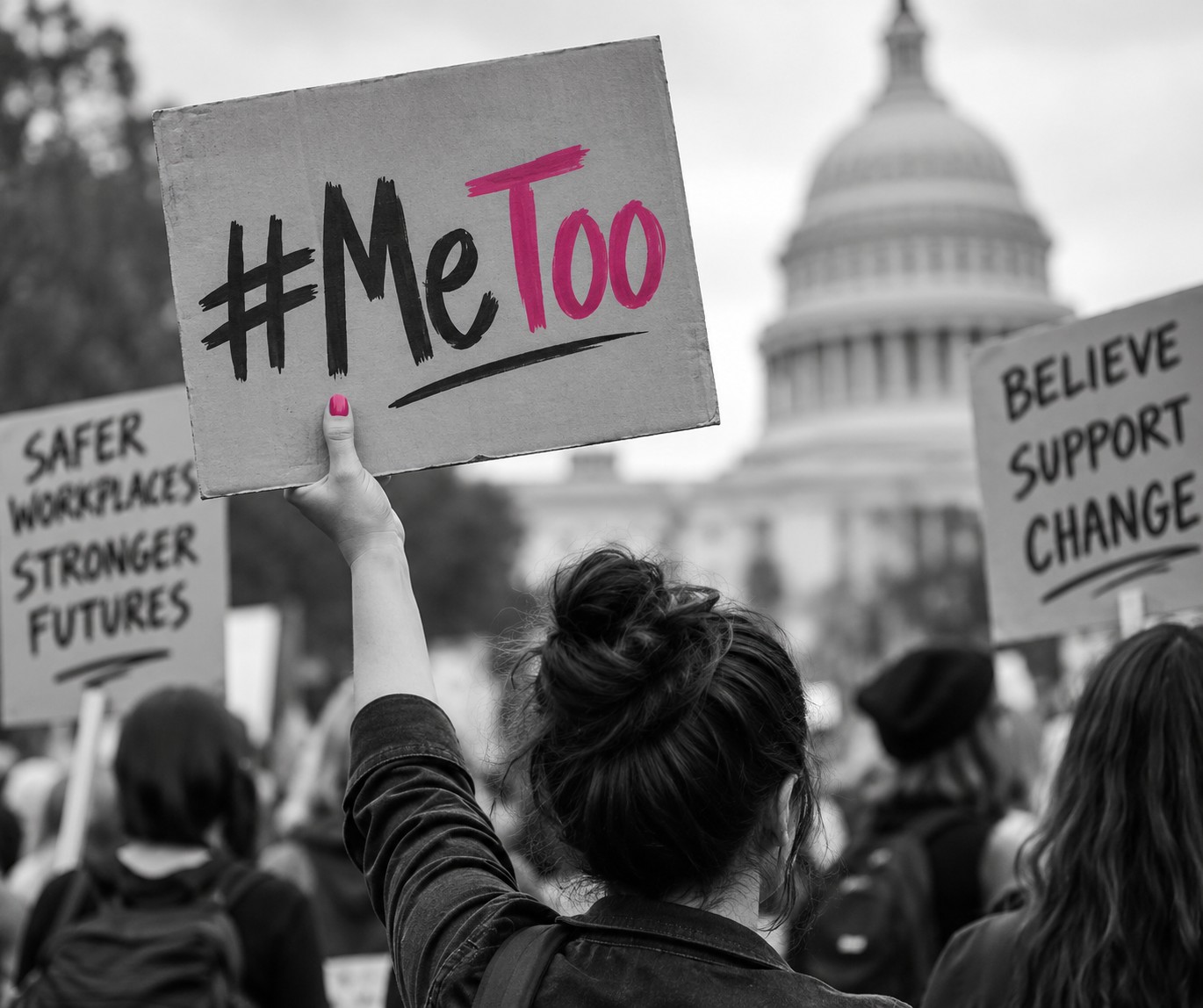
On 15 October 2017, a simple social media message helped transform years of largely private experiences of sexual harassment and assault into a worldwide public conversation. The Me Too movement would go on to challenge powerful institutions, reshape workplace policies and raise fundamental questions about accountability, gender equality and the abuse of power.
The hashtag that travelled around the world
On 15 October 2017, American actress Alyssa Milano encouraged women who had experienced sexual harassment or assault to write “me too” on social media.


Her message came amid allegations of sexual misconduct against Hollywood producer Harvey Weinstein, which had been reported earlier that month.
Within hours, the hashtag #MeToo spread rapidly across social media platforms. Millions of people would eventually share personal experiences, demonstrating the scale of harassment and abuse across industries, countries and social backgrounds.
A movement with earlier roots
Although October 2017 marked its global breakthrough, the movement had begun more than a decade earlier.
In 2006, American activist Tarana Burke founded Me Too to support survivors of sexual violence, particularly young women and girls from marginalised communities.
Burke’s original initiative focused on empathy, solidarity and access to support. The viral campaign of 2017 brought her work to international attention and dramatically expanded its reach.
From Hollywood to the global workplace
The movement quickly extended beyond the entertainment industry.
Women and men working in politics, journalism, finance, education, healthcare and other sectors began describing experiences of harassment and institutional silence.
In several countries, allegations led to investigations, resignations, dismissals and criminal proceedings.
Employers also faced growing pressure to review reporting procedures, workplace cultures and the protection available to employees who raised complaints.
The economic and institutional consequences
The movement highlighted the financial consequences of workplace harassment, including lost productivity, employee turnover, legal costs and reputational damage.
Companies and public institutions increasingly recognised that harassment was not simply an individual personnel issue but also a matter of organisational governance and accountability.
At the same time, debates emerged about due process, the handling of allegations and the distinction between different forms of misconduct.
A legacy that continues
Nine years after its global breakthrough, Me Too remains an important reference point in discussions about workplace safety, equality and institutional responsibility.
Its influence has varied considerably between countries and industries, and significant barriers to reporting abuse remain.
Nevertheless, 15 October 2017 stands as a defining moment in modern social history: the day a short message helped turn individual experiences into a global movement.
NewsHub Finance | History & Society | 15 October 2026
On 15 October 2017, a simple social media message helped transform years of largely private experiences of sexual harassment and assault into a worldwide public conversation. The Me Too movement would go on to challenge powerful institutions, reshape workplace policies and raise fundamental questions about accountability, gender equality and the abuse of power.
Recent Comments