
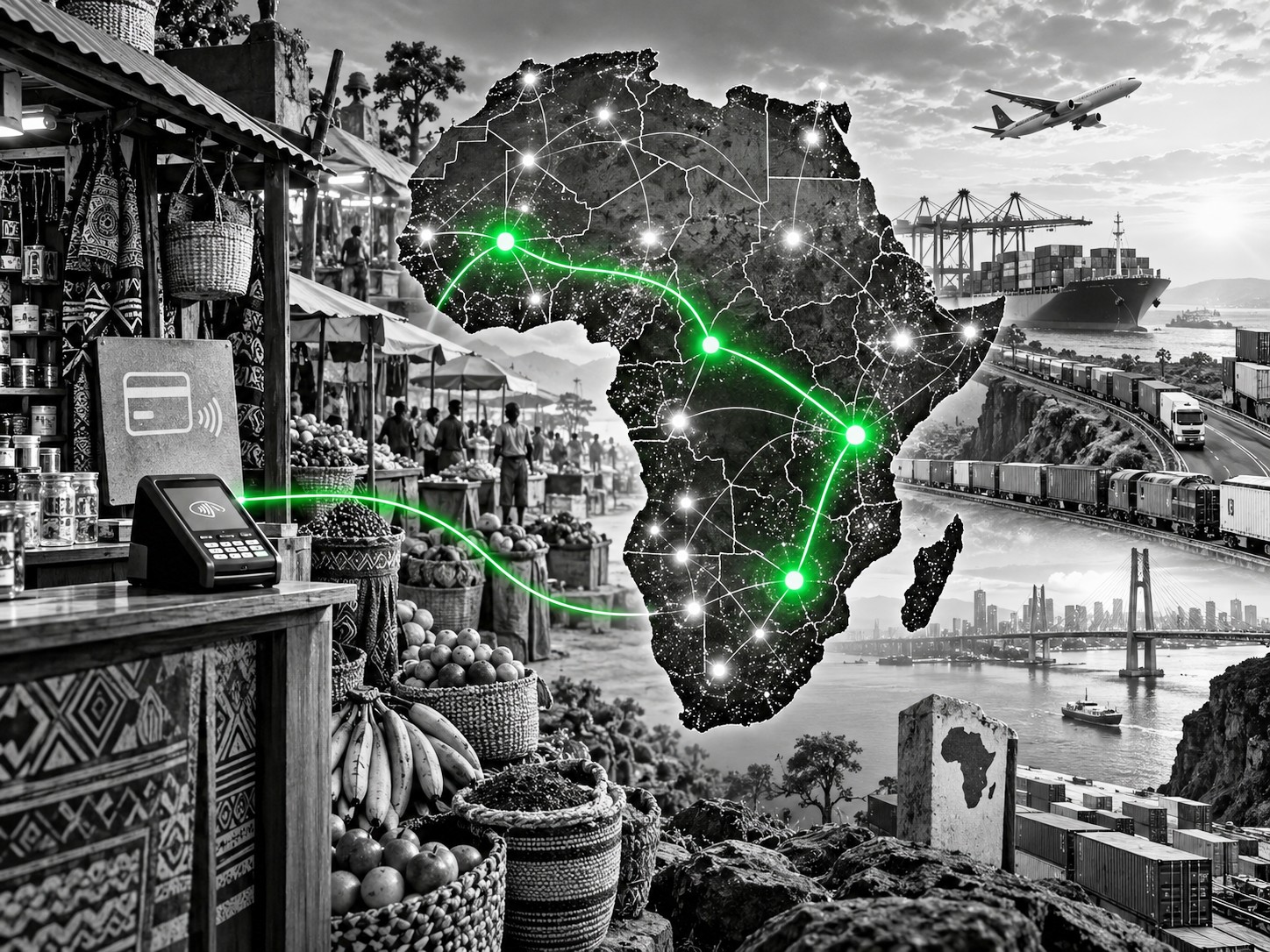
Ghana is taking a significant step towards deeper financial inclusion in Africa, testing a new generation of cross-border payments that could allow individuals and small businesses to transfer money directly between mobile wallets, bank accounts and digital currencies without relying on international correspondent banks.
A new chapter for African financial inclusion
The Bank of Ghana announced on 13 October 2026 that it is testing payment interoperability with Rwanda and Nigeria, combining central bank digital currencies, stablecoins, conventional bank accounts and mobile money.
The initiative aims to connect financial systems that have traditionally operated separately, reducing transaction costs and making cross-border payments more accessible.


Central Bank Governor Johnson Pandit Asiama outlined the programme during the IMF and World Bank annual meetings in Bangkok.
Mobile money moves beyond national borders
A central development is the extension of the Pan-African Payment and Settlement System (PAPSS) to mobile wallets in the Ghana–Nigeria payment corridor.
Previously focused on bank-based settlement, the expanded infrastructure could eventually enable a small trader in Accra to pay a supplier in Lagos directly in local currency.
Such a system would reduce dependence on the US dollar and foreign intermediary banks while potentially making transactions faster and less expensive.
The programme remains in its testing phase, with commercial deployment dependent on technical performance and regulatory approval.
Ghana’s digital economy reaches new heights
The announcement comes as Ghana experiences extraordinary growth in mobile financial services.
Mobile money transactions exceeded one billion in August 2026, reaching approximately GH¢519 billion in total value.
That represented a 46.5% increase compared with August 2025.
The figures demonstrate the growing importance of mobile-based financial infrastructure in everyday economic activity.
Financial inclusion requires more than access
For millions of Africans, mobile money has created an alternative to traditional bank branches. However, international transfers, affordable credit, savings and financial protection remain significant challenges.
Connecting national payment systems could help smaller businesses participate in regional trade while allowing individuals to move money more efficiently.
Consumer protection, cybersecurity, reliable identification and transparent transaction fees will nevertheless be essential.
Towards a connected African financial system
The initiative supports the broader ambitions of the African Continental Free Trade Area, which seeks to strengthen economic integration.
If successfully implemented, interoperable payments could transform how African businesses and consumers transact across borders.
The significance extends beyond technology. It represents a shift from simply providing access to financial accounts towards building a genuinely connected and inclusive African financial ecosystem.
NewsHub Finance | Africa & Financial Inclusion | 16 October 2026
Ghana is taking a significant step towards deeper financial inclusion in Africa, testing a new generation of cross-border payments that could allow individuals and small businesses to transfer money directly between mobile wallets, bank accounts and digital currencies without relying on international correspondent banks.
Recent Comments