
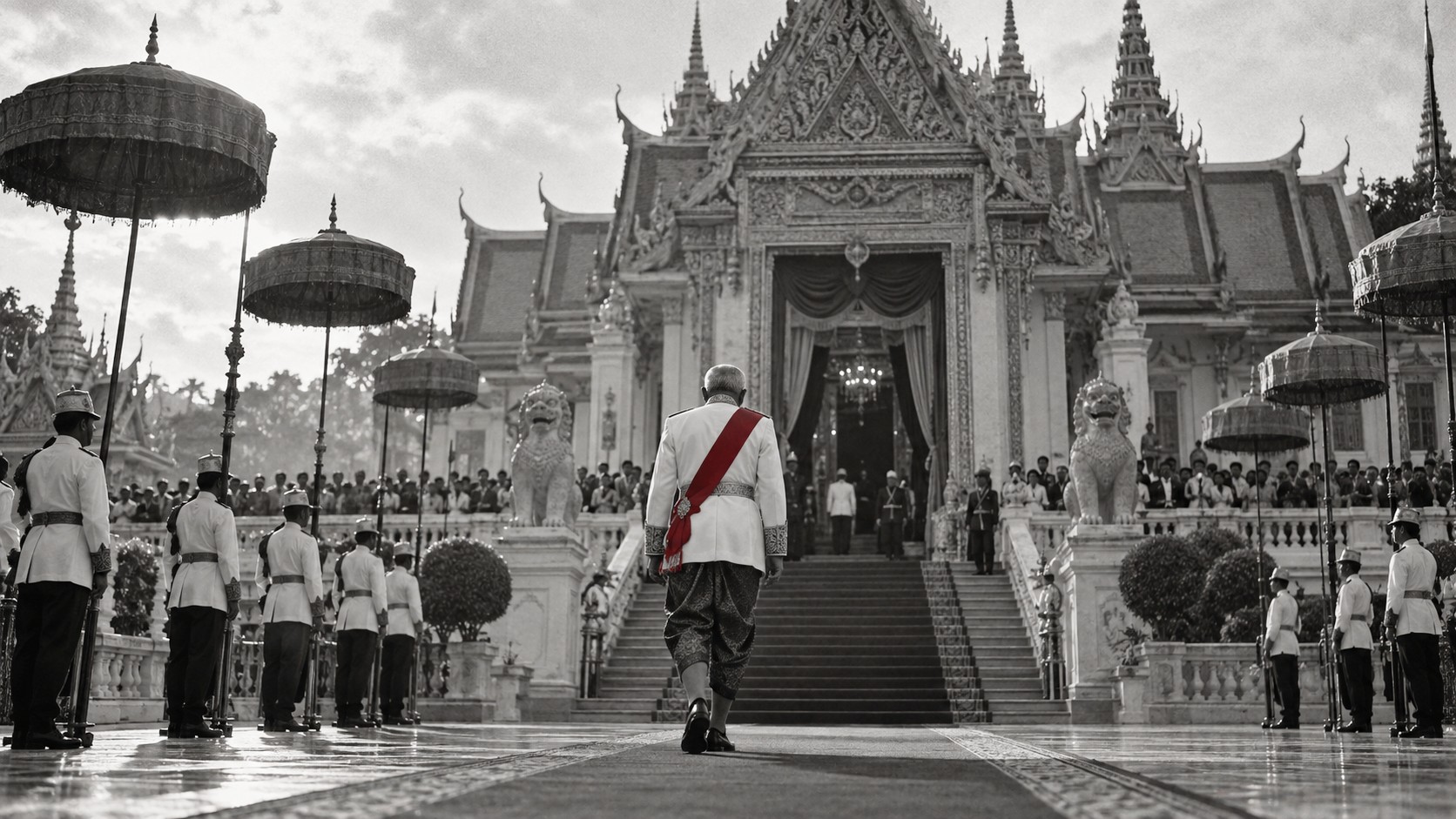
On 24 September 1993, Norodom Sihanouk became king of Cambodia for the second time. His return to the throne marked the restoration of the monarchy and a turning point after decades of conflict.
A reign separated by decades
Sihanouk first became king in 1941. He abdicated in 1955 to enter politics, remaining a central figure as Cambodia passed through independence, war and upheaval. When he resumed the throne in 1993, he returned as the head of a constitutional monarchy rather than to the position he had held as a young ruler.
A peace process takes shape
The 1991 Paris Peace Agreements set out a path towards elections and a new constitution. A United Nations transitional mission helped organise the May 1993 vote, and the elected assembly approved a constitution restoring the monarchy. Sihanouk promulgated it on 24 September, the day the new constitutional government was established.

A symbol of national unity
Sihanouk’s return carried weight beyond royal ceremony. His life had spanned sharply different chapters of Cambodia’s modern history, giving him a unique place in the country’s political memory. The restored crown offered a symbol around which a fractured nation could seek reconciliation, even as the difficult work of governing and rebuilding remained.
The events of September 1993 did not erase Cambodia’s divisions. They did, however, establish a new constitutional framework and close a remarkable circle in Sihanouk’s life: more than half a century after first ascending the throne, he was king once again.
Newshub Editorial in Asia – 24 September 2026

Ask NF GPT
If you have an account with ChatGPT you get deeper explanations,
background and context related to what you are reading.
Recent Comments