
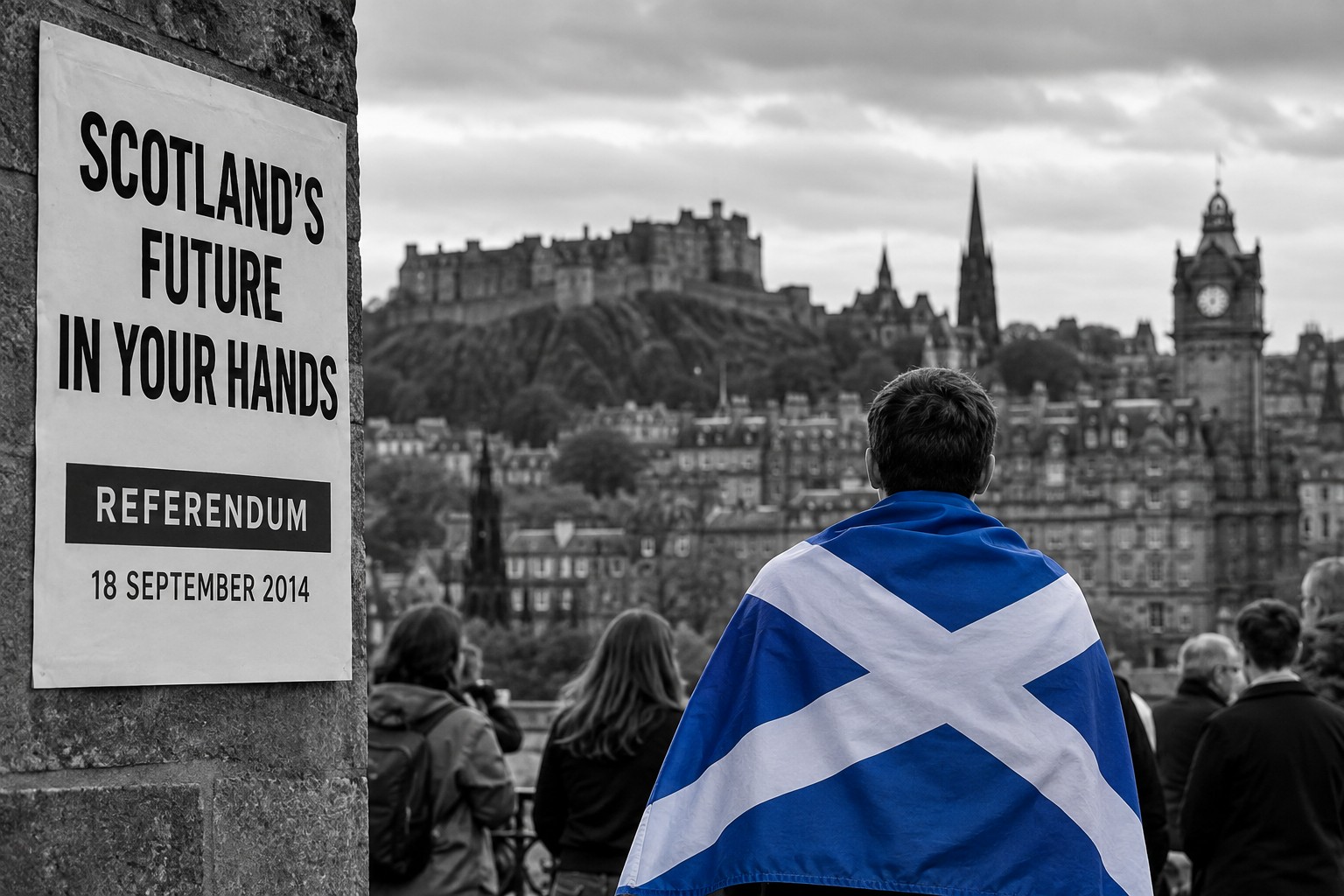
On 18 September 2014, voters in Scotland made one of the most consequential political decisions in the country’s modern history. Asked whether Scotland should become an independent country, a clear majority chose to remain within the United Kingdom.
The referendum followed years of political debate over Scotland’s constitutional future and was held after an agreement between the Scottish and UK governments established the legal framework for the vote.
The question presented to voters was deliberately straightforward: “Should Scotland be an independent country?”

A decisive No
When the ballots were counted, 2,001,926 people — 55.3 per cent — had voted No, while 1,617,989, or 44.7 per cent, voted Yes. The proposal for independence was therefore rejected by 10.6 percentage points.
The result also showed significant geographical differences. The No side secured a majority in 28 of Scotland’s 32 local authority areas, including Edinburgh. Glasgow, Dundee, North Lanarkshire and West Dunbartonshire voted in favour of independence.
An extraordinary turnout
Participation was exceptionally high. Around 3.62 million people cast ballots, representing 84.6 per cent of the electorate. It was the highest turnout at a nationwide referendum or parliamentary election in Scotland since the extension of the franchise to women in 1918.
The referendum was also notable because 16- and 17-year-olds were permitted to vote. More than 109,000 people in that age group had registered by polling day.
Scotland remains in the United Kingdom
The result meant that Scotland remained part of the United Kingdom alongside England, Wales and Northern Ireland.
The vote did not, however, end the constitutional debate. During the final stages of the campaign, the main pro-Union parties had committed themselves to transferring further powers to the Scottish Parliament if voters rejected independence. The result was subsequently followed by negotiations over additional devolution.
More than a decade later, the 2014 referendum remains a defining moment in Scotland’s political history: an exceptionally high-turnout democratic decision in which voters rejected independence while leaving the wider question of Scotland’s constitutional future at the centre of political debate.
Newshub Editorial in Europe – 18 September 2026
Recent Comments