
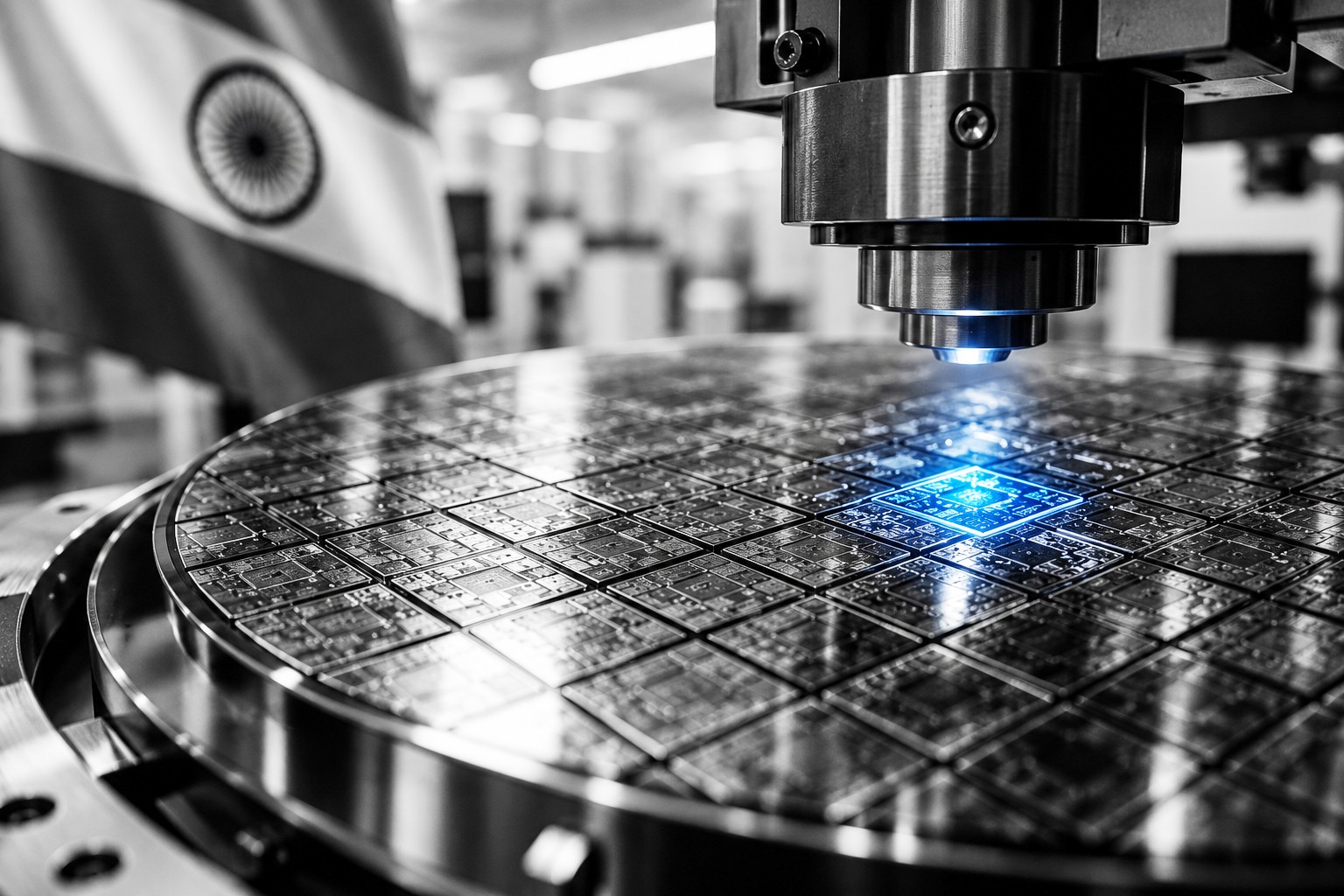
India is accelerating one of its most ambitious industrial projects: building a domestic semiconductor industry capable of moving beyond assembly and chip design towards manufacturing the technology that powers AI, smartphones, vehicles, communications and modern financial infrastructure.
NEW DELHI — September 17, 2026
India opened Semicon India 2026 on Thursday with a clear message to the global technology industry.

The country does not simply want more electronics factories.
It wants a place inside the semiconductor supply chain itself.
Prime Minister Narendra Modi inaugurated the three-day conference in New Delhi under the theme “Silicon to Systems: Building the Ecosystem”, bringing together semiconductor manufacturers, equipment suppliers, investors, researchers and technology companies.
From assembly to strategic infrastructure
India has already become an important global centre for software, engineering and electronics production.
Semiconductors represent a more difficult step.
Building chips requires enormous amounts of capital, specialised equipment, sophisticated manufacturing processes, reliable electricity and water, highly skilled engineers and an extensive network of suppliers.
India’s new Semicon 2.0 programme is designed to develop more of that ecosystem domestically — covering fabrication, packaging, semiconductor equipment, materials, chip design, research and startups.
The objective is not merely economic.
Semiconductors have become strategic infrastructure.
AI data centres need them.
Cars need them.
Telecommunications networks need them.
Payment systems, smartphones, satellites, defence systems and industrial machinery all depend on them.
Global companies are watching India
Ahead of the conference, Modi met senior representatives from major international semiconductor and technology companies including ASML, Micron Technology, Intel, AMD, Infineon, Applied Materials and Tokyo Electron, alongside India’s Tata Electronics.
That list illustrates the scale of India’s ambition.
The semiconductor industry cannot easily be created inside one country. Modern chips depend on highly specialised companies distributed across several economies.
India is therefore attempting to position itself as another major node in that global network.
The emerging-market advantage
India brings something unusual to the semiconductor race.
Scale.
The country has more than 1.4 billion people, a rapidly expanding digital economy, a large engineering workforce and growing domestic demand for electronics, vehicles, telecommunications and AI infrastructure.
That creates the possibility of combining manufacturing with a substantial home market.
India has already demonstrated a similar dynamic in digital finance.
Its Aadhaar digital identity infrastructure and Unified Payments Interface helped create financial infrastructure operating at population scale. Government figures describe India as an increasingly important global centre for fintech and digital public infrastructure.
Semiconductors are a much harder industrial challenge.
But the underlying strategy is familiar: build infrastructure domestically, achieve enormous scale and eventually export the model.
A new front in the chip economy
The global semiconductor industry remains concentrated.
Taiwan dominates advanced contract manufacturing, South Korea is powerful in memory chips, while the United States, Japan and Europe retain critical positions in design, manufacturing equipment and specialised technologies.
India is entering that landscape relatively late.
That could also be an advantage.
Governments and technology companies increasingly want geographically diversified semiconductor supply chains after years of shortages, geopolitical tensions and concerns about excessive concentration.
India wants to become one of the alternatives.
Success is far from guaranteed. Semiconductor manufacturing requires years of investment, technical expertise and reliable execution.
But India’s direction is increasingly clear.
The world’s most populous country does not want its next phase of digital growth to depend entirely on chips manufactured elsewhere.
It wants to build them.
Newshub Editorial in Asia – 17 September 2026
Recent Comments