
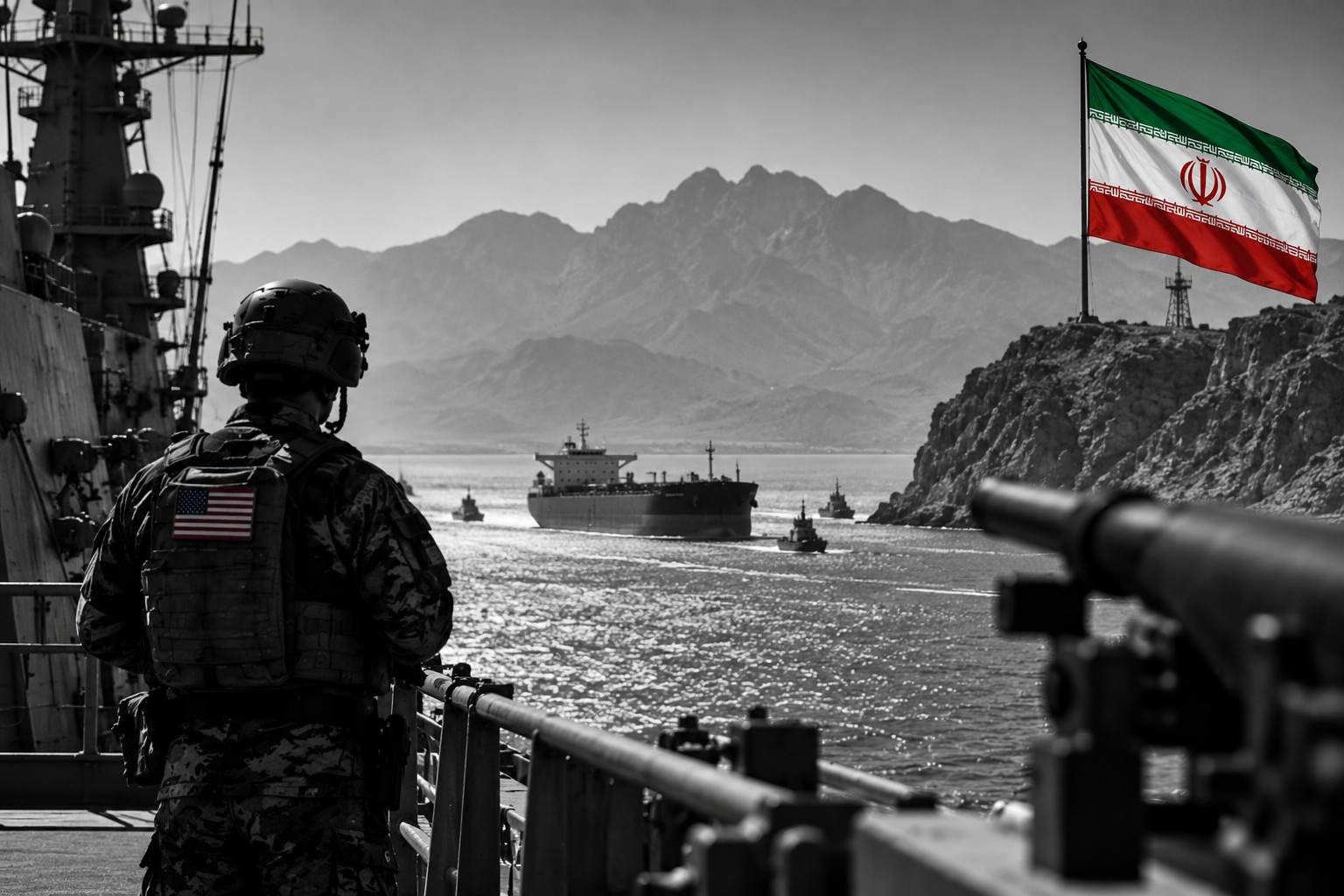
Iran has threatened to intensify its confrontation with the United States through what Tehran describes as “economic warfare”, announcing plans for a new maritime exclusion zone in the Gulf as military clashes and disruption to energy shipments through the Strait of Hormuz increase fears of another major escalation.
Tehran raises the stakes in the Gulf
Iranian officials said on Tuesday that the country intends to establish a restricted maritime zone extending towards the perimeter of the US blockade of Iran.
The announcement follows renewed military exchanges between the two countries, including US attacks on Iranian oil tankers and Iranian missile operations targeting American naval forces.

Iran has also highlighted its Qassem Basir ballistic missile, which Tehran says has improved manoeuvrability and resistance to electronic warfare. Iranian media reported that the missile was fired towards US warships near the Strait of Hormuz, although the US military said its vessels successfully avoided Iranian missile attacks.
Hormuz becomes an economic weapon
The Strait of Hormuz has become central to the confrontation because of its importance to global energy markets.
Before the current conflict, approximately one-fifth of global oil and liquefied natural gas shipments passed through the waterway.
Shipping activity has now fallen sharply. An average of only around 10 commodity vessels per day crossed the strait during the latest 10-day period, the lowest level since May.
Iran is attempting to use its geographical position to increase the economic cost of continued US military and sanctions pressure.
Oil markets feel the pressure
The consequences are already visible in international markets.
Brent crude climbed towards $97 a barrel on Tuesday, reaching its highest levels in several weeks as traders assessed the possibility of prolonged disruption to Gulf energy exports.
Further escalation could affect inflation, transport costs and economic growth far beyond the Middle East.
Nuclear confrontation also returns
Military tensions are developing alongside renewed pressure over Iran’s nuclear programme.
The United States, Britain, France and Germany are seeking action through the International Atomic Energy Agency that could refer Iran back to the UN Security Council.
Iran insists its nuclear programme is peaceful and has warned that it will respond if Western governments proceed with the initiative.
The result is an increasingly dangerous combination of military, economic and nuclear confrontation.
For Washington and Tehran, the Strait of Hormuz is no longer simply a strategic waterway. It is becoming one of the principal bargaining instruments in a conflict whose economic consequences are increasingly global.
Newshub Editorial in the Middle East – 8 September 2026

Ask NF GPT
If you have an account with ChatGPT you get deeper explanations,
background and context related to what you are reading.
Recent Comments